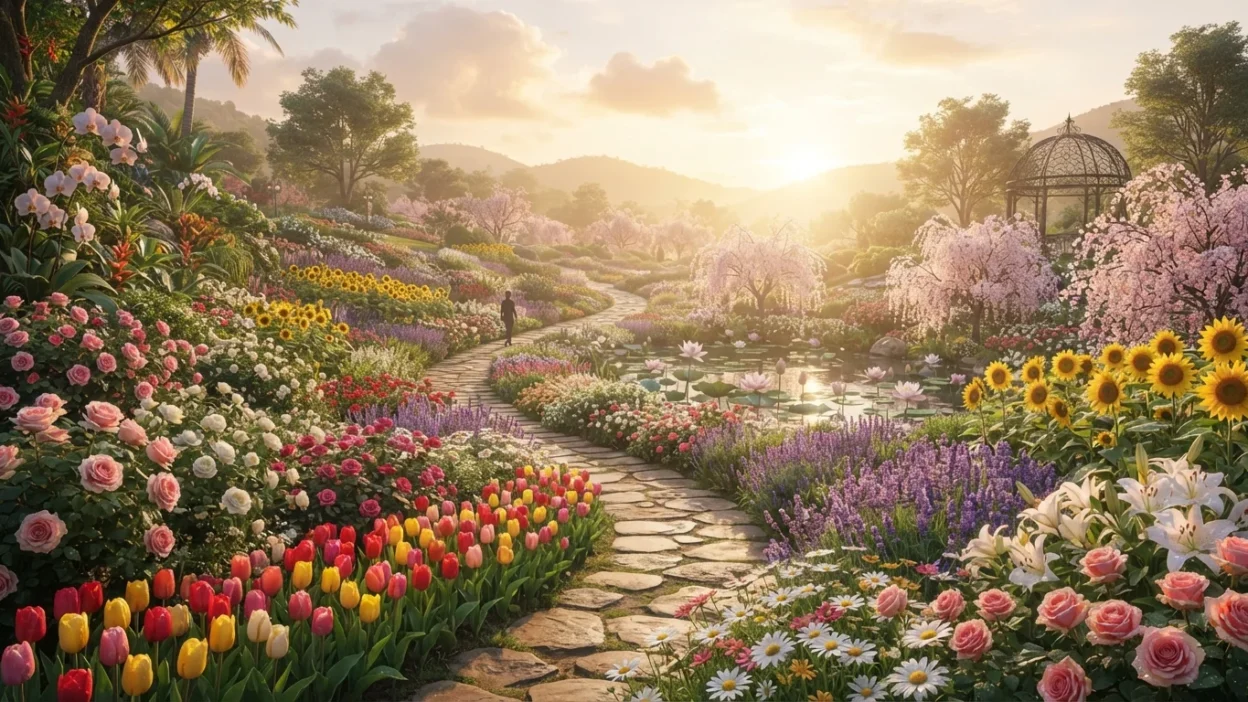
Flowers have fascinated people for thousands of years, carrying deep emotional and cultural significance across civilizations. Flower symbolism goes far beyond beauty, representing love, hope, growth, remembrance, purity, and life’s changing seasons.
If given as gifts, used in ceremonies, or admired in nature, flowers communicate feelings that words often cannot express. Understanding flower symbolism helps us appreciate the hidden meanings behind different blooms and the powerful messages they convey.
Flower Symbolism Meaning (Clear Definition)
Flower symbolism is the practice of assigning symbolic meanings to flowers based on their appearance, color, fragrance, cultural traditions, and historical significance.
Different flowers express different emotions, virtues, and life experiences, making them powerful symbols in art, literature, religion, and everyday life.
Throughout history, flowers have represented everything from romantic love and friendship to resilience, spiritual awakening, and remembrance. While meanings may vary between cultures, flowers universally symbolize life’s beauty, growth, and renewal.
Common Symbolic Meanings of Flowers
| Symbolic Meaning | What It Represents |
| Love | Affection, romance, devotion |
| Beauty | Grace, elegance, attractiveness |
| Hope | Optimism and brighter days |
| Growth | Personal development and transformation |
| New Beginnings | Fresh starts and opportunities |
| Peace | Harmony and emotional balance |
| Remembrance | Honoring memories and loved ones |
| Purity | Innocence and sincerity |
What Does Flower Symbolism Represent?
Flower symbolism represents both the beauty and fragility of life. Every bloom reminds us that growth requires patience and that even temporary moments can leave lasting impressions.
Flowers commonly symbolize:
- Love and affection
- Happiness and celebration
- Personal growth
- Spiritual awakening
- Renewal and rebirth
- Friendship and gratitude
- Peace and harmony
- Hope during difficult times
- Healing and emotional comfort
- Appreciation for nature
Their changing life cycle from bud to bloom to fading petals also reflects human experiences, reminding us that every stage of life has its own purpose.
Spiritual Meaning of Flower Symbolism
Spiritually, flowers symbolize the unfolding of the soul. Just as a flower slowly opens toward the sunlight, spiritual growth involves becoming more aware, compassionate, and connected to life’s deeper meaning.
Many spiritual traditions view flowers as reminders to live with gratitude, kindness, and presence. Blossoming flowers represent awakening, while blooming gardens symbolize abundance, inner peace, and divine blessings.
Different spiritual meanings include:
- Inner transformation
- Divine beauty
- Faith and trust
- Enlightenment
- Healing energy
- Emotional renewal
- Balance between body and spirit
- Connection with nature
Flowers encourage people to embrace change while maintaining hope through every season of life.
Biblical / Religious Meaning of Flower Symbolism
Flowers appear throughout the Bible as symbols of God’s creativity, beauty, and the temporary nature of earthly life.
Biblical symbolism often associates flowers with:
- God’s provision
- Human humility
- Spiritual beauty
- Resurrection and new life
- Purity of heart
- Hope in God’s promises
Verses describing lilies and blooming fields remind believers that God cares for creation and provides for His people. Flowers also symbolize the fleeting nature of worldly achievements while pointing toward eternal spiritual values.
In Christianity, white flowers often represent purity, lilies symbolize resurrection, and blooming gardens reflect paradise and divine blessing.
Flower Symbolism in History and Culture
Across civilizations, flowers have communicated emotions, beliefs, and traditions.
Ancient Egypt
Lotus flowers symbolized creation, rebirth, and the rising sun. They were closely connected with spiritual renewal.
Ancient Greece and Rome
Flowers honored gods and heroes while representing beauty, victory, and divine favor.
Victorian England
During the Victorian era, people developed the “language of flowers,” known as floriography. Different flowers allowed individuals to express emotions without speaking directly.
Eastern Cultures
In many Asian traditions, flowers symbolize harmony, prosperity, longevity, and spiritual wisdom.
Indigenous Traditions
Many Indigenous cultures honor flowers as sacred gifts from nature, representing healing, gratitude, and respect for the earth.
Although meanings differ across cultures, flowers consistently symbolize life’s beauty and emotional connection.
Flower Symbolism in Literature and Art
Flowers have inspired writers, poets, painters, and artists for centuries.
In literature, flowers often represent:
- Love and romance
- Innocence
- Mortality
- Hope
- Emotional transformation
- Hidden feelings
Artists frequently use flowers to communicate themes of beauty, renewal, and the passing of time. A blooming flower may symbolize youth and opportunity, while fading petals often represent change or life’s temporary nature.
Because flowers carry universal emotional meaning, they continue to appear in novels, paintings, music, and films worldwide.
Dream Meaning of Flower Symbolism
Dreaming about flowers usually carries positive symbolism, although the exact meaning depends on the flower’s condition and context.
Common interpretations include:
| Dream Symbol | Possible Meaning |
| Blooming flowers | Success, happiness, personal growth |
| Fresh bouquet | Good news or loving relationships |
| White flowers | Peace, healing, spiritual guidance |
| Colorful garden | Abundance and emotional fulfillment |
| Wilted flowers | Disappointment or missed opportunities |
| Planting flowers | New beginnings and future success |
| Receiving flowers | Appreciation, affection, recognition |
Dream flowers often encourage emotional healing and personal development.
Modern Meaning of Flower Symbolism
Today, flower symbolism remains just as meaningful as ever.
People use flowers to celebrate birthdays, weddings, graduations, anniversaries, and achievements. They also offer comfort during difficult times, expressing sympathy, encouragement, and remembrance.
Modern interpretations emphasize:
- Self care
- Mental wellness
- Mindfulness
- Gratitude
- Personal growth
- Positive relationships
- Environmental appreciation
- Emotional expression
Flowers continue to remind people to celebrate life’s beauty while staying hopeful during challenges.
Popular Flowers and Their Symbolic Meanings
| Flower | Symbolic Meaning |
| Rose | Love, passion, respect |
| Lily | Purity, faith, renewal |
| Sunflower | Joy, loyalty, optimism |
| Lotus | Spiritual awakening, enlightenment |
| Daisy | Innocence, simplicity |
| Tulip | Perfect love, fresh beginnings |
| Orchid | Beauty, elegance, strength |
| Cherry Blossom | Impermanence, renewal |
| Lavender | Calmness, healing |
| Peony | Prosperity, honor, happiness |
Why Flower Symbolism Still Matters
Flowers remain meaningful because they express emotions that are often difficult to describe with words.
Their symbolism helps people:
- Celebrate milestones
- Express sympathy
- Strengthen relationships
- Encourage healing
- Reflect on personal growth
- Connect with spirituality
- Appreciate nature’s beauty
These timeless meanings continue to make flowers one of humanity’s most powerful symbols.
##### What is the main meaning of flower symbolism?
Flower symbolism generally represents love, beauty, growth, hope, renewal, and emotional expression. Individual flower types may have unique meanings.
##### Why are flowers used as symbols?
Flowers naturally reflect life’s cycles of growth, beauty, and change, making them meaningful symbols across cultures and traditions.
##### Does every flower have a different symbolic meaning?
Yes. While flowers share general symbolism, individual species and colors often represent specific emotions, virtues, or life events.
##### What do flowers symbolize spiritually?
Spiritually, flowers symbolize awakening, inner growth, divine beauty, healing, and the continuous journey of the soul.
##### Why is flower symbolism important today?
Flower symbolism helps people express emotions, celebrate important moments, offer comfort, and maintain meaningful traditions in modern life.
Conclusion
Flower symbolism reminds us that beauty carries deeper meaning than appearance alone. Across history, religion, literature, dreams, and everyday life, flowers have represented love, hope, renewal, and personal growth.
Their timeless messages continue to inspire people to embrace life’s changes with gratitude, compassion, and optimism.

Henry Jack is a passionate writer at SymbolTrue, dedicated to exploring the meanings, history, and cultural significance of symbols. He creates clear, engaging, and well-researched content that helps readers understand symbols from around the world.