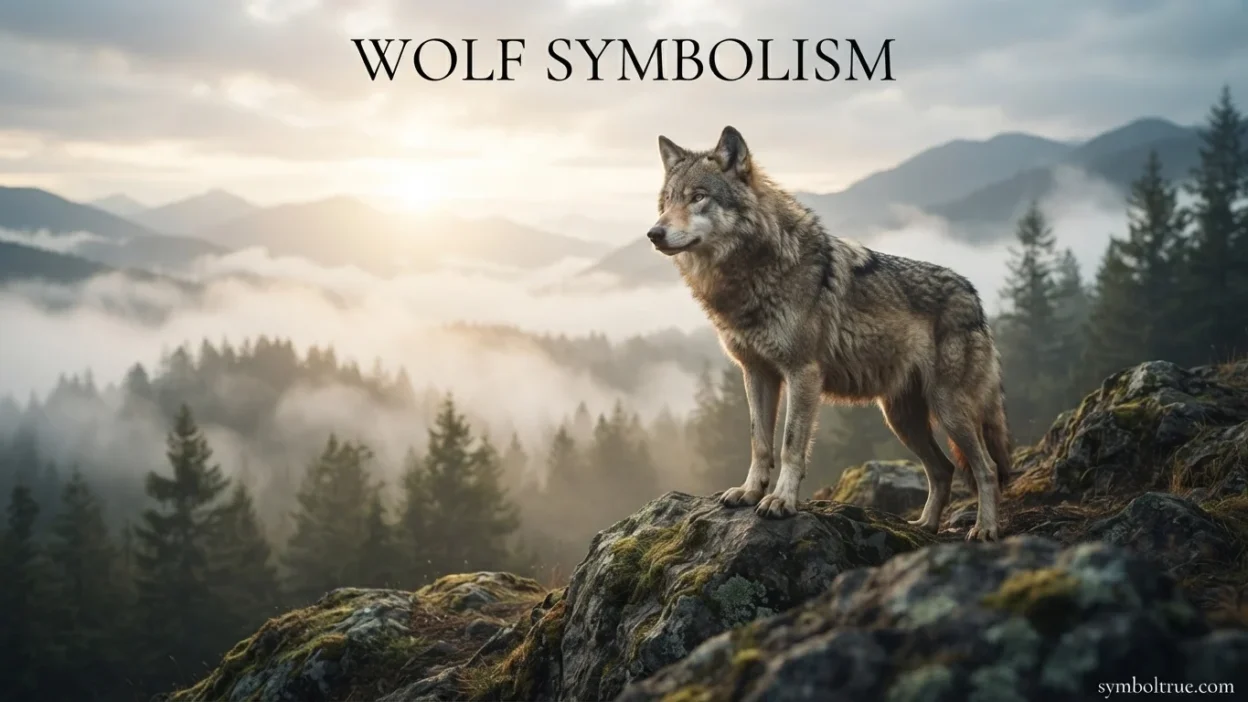
Wolf symbolism has fascinated people for centuries because the wolf represents a powerful mix of independence, loyalty, instinct, courage, and mystery. Across different cultures, wolves can symbolize both protection and danger, showing that their meaning depends greatly on context.
Whether you saw a wolf in a dream, feel connected to the animal, or simply want to understand its deeper meaning, wolf symbolism offers several important ideas about human nature. The wolf can remind us to trust our instincts while still valuing the strength that comes from family, friendship, and community.
Wolf Symbolism Meaning (Clear Definition)
Wolf symbolism refers to the ideas and qualities people associate with wolves, both in nature and in cultural traditions. The most common meanings include strength, loyalty, freedom, instinct, protection, courage, intelligence, and independence.
A wolf is often viewed as a creature that can survive through both personal strength and cooperation. Although wolves are capable hunters, they are also strongly connected to their packs. This combination gives the wolf a unique symbolic meaning.
In simple terms, wolf symbolism can represent:
- Loyalty — staying committed to those you care about
- Independence — following your own path
- Strength — having the courage to face difficulties
- Instinct — trusting your inner sense of direction
- Protection — defending yourself or others
- Freedom — living according to your own nature
- Family and community — recognizing the importance of belonging
- Intelligence — observing carefully before acting
- Transformation — becoming stronger through challenges
The wolf therefore has a dual nature in symbolism. It can represent the independent individual, but it can also represent the loyal member of a close-knit group.
What Does Wolf Symbolism Represent?
Wolf symbolism represents different qualities depending on the situation and the culture interpreting it. However, several themes appear again and again.
Strength and Courage
The wolf is often associated with physical and emotional strength. Its ability to survive difficult conditions makes it a symbol of resilience.
Seeing a wolf symbolically may suggest that you have more strength than you realize. It can encourage you to face difficult situations rather than allowing fear to control your choices.
Loyalty and Family
Wolves are strongly associated with their packs, making them a natural symbol of loyalty and family bonds.
Wolf symbolism can therefore represent commitment to loved ones, teamwork, trust, and the responsibility of protecting people who matter to you.
Independence and Freedom
The wolf also represents freedom. Its connection with forests, wilderness, and open landscapes creates an image of an animal that is not easily controlled.
This side of wolf symbolism can encourage people to become more independent and make decisions based on their own values.
Instinct and Intuition
One of the strongest symbolic meanings of the wolf is instinct. The wolf is often imagined as an animal that listens carefully to its surroundings and responds quickly to danger.
For this reason, wolf symbolism may represent intuition, awareness, and the ability to recognize something before it becomes obvious.
Protection
A wolf can also symbolize protection. In many symbolic interpretations, the wolf stands as a guardian of its territory, family, or pack.
This meaning can relate to emotional boundaries as well. A wolf may represent the need to protect your time, energy, relationships, and personal values.
Mystery and the Unknown
Because wolves are associated with forests, nighttime, and the wilderness, they often carry an element of mystery.
This can symbolize the unknown parts of life, hidden emotions, personal discovery, or a journey into something that has not yet been understood.
Quick Symbolism Table
| Wolf Symbol | Common Meaning |
|---|---|
| Wolf | Strength, instinct, independence |
| Wolf pack | Family, loyalty, community |
| Lone wolf | Independence, solitude, self-reliance |
| White wolf | Purity, guidance, spiritual awareness |
| Black wolf | Mystery, power, hidden emotions |
| Howling wolf | Communication, longing, connection |
| Wolf pup | Innocence, growth, family |
| Wolf attacking | Conflict, fear, inner struggle |
| Wolf protecting | Courage, boundaries, guardianship |
Spiritual Meaning of Wolf Symbolism
The spiritual meaning of wolf symbolism is often connected to intuition, inner strength, guidance, transformation, and a deeper connection with nature.
In spiritual interpretations, the wolf may appear as a reminder to listen to your inner voice. Instead of always relying on outside opinions, you may need to pay attention to what your instincts are telling you.
The wolf can also symbolize a spiritual journey. Its movement through the wilderness can represent traveling through uncertainty while learning more about yourself.
Wolf as a Spiritual Guide
In some spiritual traditions and modern spiritual practices, the wolf is viewed as a symbolic guide. It can represent a person learning to balance independence with connection.
The message is not necessarily to isolate yourself. Instead, wolf symbolism can encourage you to know when to walk alone and when to rely on your community.
Wolf and Inner Wisdom
A wolf may symbolize wisdom gained through experience. It encourages careful observation, patience, and awareness.
If wolf imagery repeatedly appears in your life, some people interpret it as an invitation to trust themselves more deeply and become aware of what their instincts are communicating.
Wolf and Personal Transformation
The wolf can also represent transformation. Difficult experiences may change you, but they can also reveal strength that was already inside you.
From this perspective, the wolf symbolizes becoming more confident, aware, and comfortable with your true nature.
Biblical / Religious Meaning of Wolf Symbolism
The biblical meaning of wolves is generally more complicated than the positive meanings often found in modern symbolism.
In the Bible, wolves are frequently used as images of danger, destruction, false teaching, or people who may harm others. For example, the image of a wolf can contrast with the qualities of a shepherd, emphasizing the importance of protection and discernment.
Because of this, wolf symbolism in Christianity can carry a warning rather than simply representing strength or independence.
A wolf may symbolize:
- Spiritual danger
- Deception
- Threat from harmful people
- Aggression
- The need for discernment
- Protection of the vulnerable
However, this does not mean that every appearance of a wolf has a negative religious meaning. Symbolic interpretation depends on the surrounding context, the specific passage, and the individual’s beliefs.
In broader religious and cultural traditions, wolves have also been given very different meanings. Some traditions emphasize their danger, while others view them as powerful creatures connected with nature, survival, and spiritual strength.
Wolf Symbolism in History and Culture
Wolf symbolism has a long and varied history. Different societies have interpreted wolves according to their environments, beliefs, stories, and experiences with the animal.
Wolves in Ancient Rome
One of the best-known wolf symbols comes from Roman mythology. The story of Romulus and Remus describes twin brothers who were abandoned as infants and cared for by a she-wolf.
The she-wolf became an important image associated with the origins of Rome. In this context, the wolf can represent nurturing, survival, protection, and the beginning of a powerful civilization.
Wolves in Norse Mythology
Wolves also play major roles in Norse mythology. Fenrir is one of the most famous wolves in these stories and is associated with enormous power and destruction.
Other wolf figures also appear in Norse traditions. These stories helped establish wolves as symbols of forces that can be both powerful and difficult to control.
Wolves in Indigenous Traditions
Wolf symbolism varies greatly among Indigenous cultures, so it should not be treated as one single belief system.
In some traditions, wolves have been associated with qualities such as loyalty, family, hunting skill, cooperation, and spiritual power. Their strong social relationships can make them meaningful symbols of community and responsibility.
It is important to recognize that Indigenous nations have distinct cultures and traditions, meaning the meaning of the wolf differs from one community to another.
Wolves in European Folklore
European folklore often presents wolves in a darker way. Stories of dangerous wolves entering villages or threatening travelers contributed to the animal’s association with fear and the unknown.
Fairy tales and legends sometimes portray wolves as symbols of danger, deception, or predatory behavior.
This darker tradition helped create the familiar image of the “big bad wolf,” particularly in Western storytelling.
Wolf Symbolism in Literature and Art
Wolves have been powerful symbols in literature and art because they can represent many different sides of human nature.
In stories, a wolf may represent the wild part of a person that society cannot completely control. It can also represent fear, freedom, loyalty, danger, or the struggle between civilization and nature.
The Wolf as a Symbol of the Wild
Authors often use wolves to represent wilderness. A wolf entering a human setting can symbolize the arrival of something unfamiliar or uncontrollable.
This makes the animal useful when writers want to explore themes of freedom, instinct, and the conflict between nature and civilization.
The Wolf as a Symbol of Loneliness
The phrase “lone wolf” has become a common expression for someone who prefers to work or live independently.
Literature often uses this idea to explore isolation. A lone wolf may be strong and self-sufficient, but the image can also suggest loneliness or difficulty connecting with others.
The Wolf as a Symbol of Loyalty
Other stories focus on the wolf pack. In these works, wolves can symbolize family, cooperation, trust, and belonging.
This creates an interesting contrast: the same animal can represent both solitude and community.
Wolves in Visual Art
Artists have frequently used wolves to create feelings of mystery, power, and wilderness. A wolf beneath a full moon, for example, can evoke themes of instinct, freedom, solitude, and the unknown.
The artistic meaning depends heavily on details such as the wolf’s expression, surroundings, posture, color, and relationship with other animals or people.
Dream Meaning of Wolf Symbolism
Dreaming about a wolf can have different meanings depending on what happens in the dream and how you feel during it.
There is no single universal interpretation of a wolf dream. Your personal experiences, emotions, and beliefs are important when understanding the symbolism.
Dreaming of a Friendly Wolf
A friendly wolf may symbolize trust, protection, loyalty, or a growing connection with your instincts.
It could represent someone who makes you feel protected or your own increasing confidence.
Dreaming of a Wolf Attacking You
An attacking wolf may represent fear, conflict, pressure, or something you feel threatened by in waking life.
The dream may also reflect an internal struggle rather than an actual external danger.
Dreaming of a Wolf Pack
A wolf pack can symbolize family, friendship, teamwork, or the desire to belong.
If the pack feels welcoming, the dream may reflect connection and support. If it feels threatening, it may represent social pressure or fear of being judged.
Dreaming of a Lone Wolf
A lone wolf may reflect independence or solitude.
The dream could suggest that you value personal freedom, or it might indicate that you have been feeling disconnected from other people.
Dreaming of a White Wolf
A white wolf is often associated with guidance, purity, strength, and spiritual awareness in modern symbolic interpretations.
Its meaning can become especially positive if the wolf appears calm or protective.
Dreaming of a Howling Wolf
A howling wolf may symbolize communication, longing, emotional expression, or the need to reconnect with someone.
The sound of the wolf can represent a message that you have been trying to hear—or something you need to express yourself.
Modern Meaning of Wolf Symbolism
Today, wolf symbolism appears in tattoos, jewelry, clothing, logos, stories, social media, personal identities, and spiritual practices.
The modern wolf is often presented as a symbol of independence, confidence, loyalty, resilience, and personal freedom.
Wolf Tattoo Symbolism
Wolf tattoos can carry deeply personal meanings. Someone may choose a wolf tattoo to represent strength after overcoming hardship, loyalty to family, independence, or a connection with nature.
A wolf tattoo does not have one fixed meaning. Details such as a wolf’s eyes, moon, forest, flowers, or pack can change the overall message.
Lone Wolf Symbolism
The lone wolf has become a popular modern symbol of self-reliance.
It can represent someone who feels comfortable making their own decisions and following a personal path. However, independence does not always mean rejecting relationships or community.
Wolf and Leadership
Wolves are sometimes used as symbols of leadership because of their intelligence, cooperation, and social organization.
Modern interpretations often connect the wolf with leaders who protect their group while understanding when cooperation is necessary.
Wolf and Resilience
The wolf can also symbolize survival and resilience. Its ability to adapt to challenging environments makes it an inspiring image for people who have faced difficult periods in life.
The symbolic message is simple: hardship does not have to define your future.
Common Wolf Symbolism and Their Meanings
Different wolf images can communicate different ideas.
- Lone wolf: independence, solitude, self-reliance
- Wolf pack: loyalty, family, teamwork, belonging
- White wolf: guidance, purity, spiritual strength
- Black wolf: mystery, power, hidden emotions
- Wolf pup: innocence, learning, growth, family
- Howling wolf: communication, longing, emotional expression
- Wolf eyes: awareness, intuition, observation
- Wolf and moon: mystery, instinct, freedom
- Wolf in a forest: wilderness, exploration, the unknown
- Protective wolf: courage, loyalty, guardianship
Is Wolf Symbolism Positive or Negative?
Wolf symbolism can be either positive or negative depending on the context.
Positive interpretations often include strength, loyalty, courage, protection, intelligence, freedom, and resilience. Negative interpretations can include aggression, danger, isolation, deception, fear, and uncontrolled instincts.
The surrounding situation matters more than the animal itself. A protective wolf and an attacking wolf communicate very different symbolic messages.
Why Is the Wolf Such a Powerful Symbol?
The wolf is powerful as a symbol because it combines qualities that appear to contradict one another.
It can be independent but deeply connected to its pack. It can be protective but dangerous. It can be mysterious yet highly observant. It can represent both solitude and belonging.
This balance makes the wolf especially meaningful when people are thinking about identity, relationships, personal freedom, and inner strength.
What Can Wolf Symbolism Teach Us?
The deeper lesson of wolf symbolism is often about balance.
You can be independent without becoming isolated. You can protect yourself without closing yourself off from others. You can trust your instincts while still thinking carefully.
The wolf reminds us that strength is not always about standing alone. Sometimes strength means knowing when to walk your own path and when to stand beside the people you trust.
FAQs About Wolf Symbolism
What does wolf symbolism mean spiritually?
Spiritually, wolf symbolism is often associated with intuition, inner strength, protection, freedom, and personal transformation. It can represent learning to trust your instincts while staying connected to others.
What does a wolf symbolize in love?
A wolf can symbolize loyalty, devotion, protection, and strong emotional bonds. Because wolves are associated with packs, they can also represent commitment and lasting relationships.
What does a lone wolf symbolize?
A lone wolf commonly symbolizes independence, self-reliance, freedom, and solitude. Depending on the context, it can represent healthy independence or feelings of isolation.
What does a wolf symbolize in a dream?
A wolf in a dream can symbolize instinct, fear, protection, independence, or emotional conflict. The wolf’s behavior and your feelings during the dream are important for understanding its possible meaning.
Is wolf symbolism good or bad?
Wolf symbolism can be positive or negative. It may represent courage, loyalty, and strength, but it can also symbolize danger, aggression, deception, or isolation depending on the context.
Conclusion
Wolf symbolism is rich because the wolf represents more than simple strength. It can symbolize instinct, loyalty, independence, protection, courage, freedom, and resilience, while also reminding us about the importance of community.
Whether the wolf appears in mythology, art, dreams, spirituality, or modern life, its message often comes back to one powerful idea: know your own strength, trust your instincts, and understand when you need to walk alone or stand with your pack.

Abigail Alice is a passionate writer at SymbolTrue, exploring the history, meanings, and cultural significance of symbols worldwide. She creates clear, engaging, and well-researched content that helps readers uncover the fascinating stories behind everyday and ancient symbols.