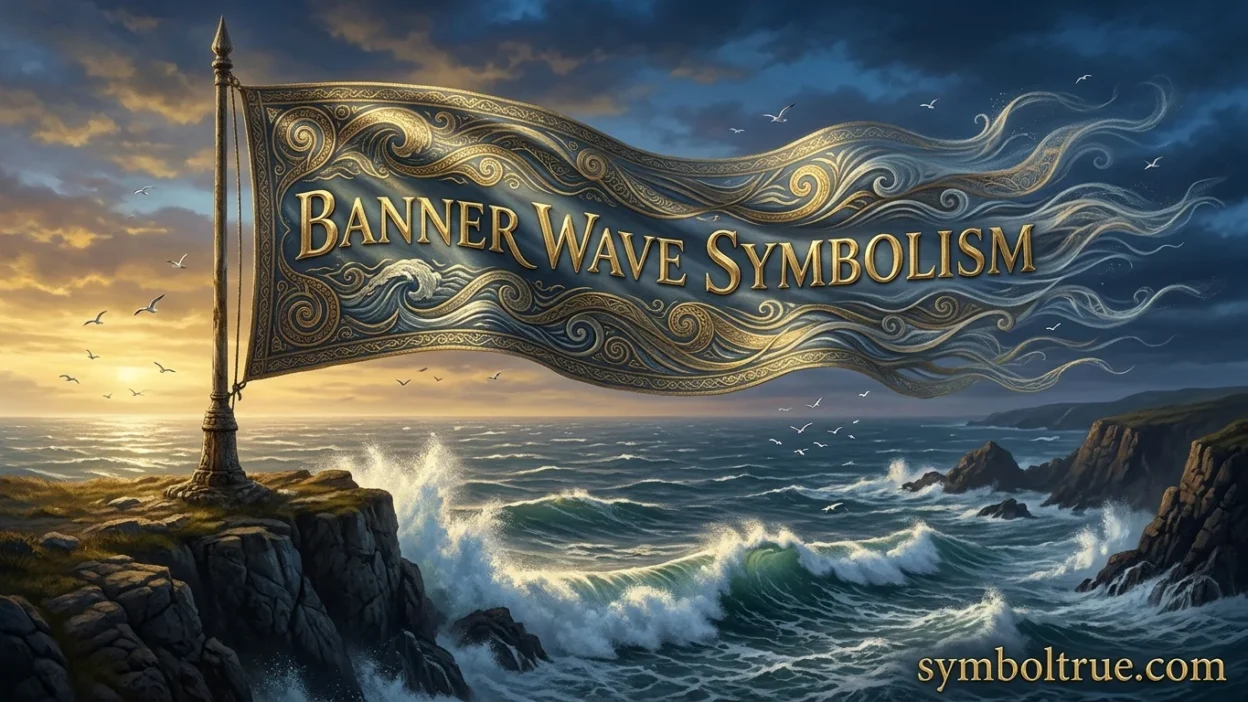
A banner waving in the wind is a powerful visual symbol that can represent freedom, identity, unity, pride, and change. Its movement often attracts attention and communicates a message without using words. Banner wave symbolism explores what a moving banner represents in different situations, including spiritual beliefs, cultural traditions, historical events, dreams, and artistic expression.
Whether it appears at a celebration, political gathering, religious ceremony, sporting event, or peaceful protest, a waving banner can carry deep emotional meaning. Its colors, designs, movement, and surrounding environment all influence its interpretation.
Understanding this symbolism helps explain why a simple piece of fabric moving in the wind can represent powerful human ideas and shared experiences.
Banner Wave Symbolism Meaning (Clear Definition)
Banner wave symbolism refers to the meanings associated with a banner moving or flowing in the wind. It commonly represents freedom, expression, identity, unity, leadership, and the movement of ideas.
A banner is often created to communicate a message, represent a group, or identify a particular belief or cause. When it waves, its movement makes that message more visible and gives it a sense of life and energy.
For example:
- A national banner waving may represent patriotism and national identity.
- A protest banner moving in the wind may symbolize resistance and the desire for change.
- A religious banner may represent faith, devotion, and spiritual belonging.
- A celebratory banner may communicate happiness, achievement, and community pride.
The meaning depends on the banner’s design, purpose, and cultural context.
What Does Banner Wave Symbolism Represent?
A waving banner can communicate several important ideas. Its interpretation changes depending on where it appears and what it represents.
1. Freedom and Independence
One of the strongest symbolic meanings of a waving banner is freedom. Its movement through open air can suggest independence, personal choice, and the ability to express oneself.
National and independence banners are particularly associated with the struggles and achievements of communities seeking self-determination.
2. Unity and Togetherness
A banner often represents a group of people who share common values, beliefs, or goals.
When it waves above a crowd, it can symbolize collective strength and belonging. It reminds people that they are connected through a shared identity.
3. Identity and Pride
Banners help individuals and communities communicate who they are.
A school banner, national banner, or organizational banner can represent history, achievements, traditions, and shared identity.
Its movement makes that identity visible to others.
4. Hope and New Beginnings
A banner moving in a fresh breeze can symbolize optimism, renewal, and the possibility of positive change.
In artistic interpretations, this movement may suggest that a new chapter is beginning.
5. Leadership and Authority
Historically, banners have been used to identify leaders, armies, kingdoms, and important organizations.
A banner displayed prominently can therefore represent authority, responsibility, recognition, and influence.
6. Resistance and Courage
During protests and social movements, banners often communicate demands for justice, equality, and reform.
A waving banner can represent courage, determination, and the willingness to stand up for important principles.
Spiritual Meaning of Banner Wave Symbolism
From a spiritual perspective, a waving banner can be interpreted as a symbol of guidance, faith, hope, protection, and personal transformation.
These meanings are interpretations rather than universal spiritual rules. Different traditions may understand banners and their movement in different ways.
A Sign of Spiritual Freedom
The movement of a banner can represent releasing emotional limitations and becoming more open to personal growth.
It may encourage people to explore their beliefs, develop confidence, and follow a meaningful direction.
Connection With Higher Purpose
A banner raised above the ground can symbolize inspiration and the desire to pursue something greater than everyday concerns.
Spiritually, it may represent commitment to personal values, compassion, or a meaningful life purpose.
Faith and Devotion
In religious and spiritual ceremonies, banners can communicate devotion and belonging.
Their presence may remind participants of shared beliefs, sacred traditions, and the importance of maintaining faith.
Transformation and Renewal
A banner moving with the wind can also represent life’s changing circumstances.
Its flowing movement may encourage acceptance, adaptability, and openness to new experiences.
Biblical / Religious Meaning of Banner Wave Symbolism
In biblical symbolism, a banner can represent identity, protection, unity, and gathering around a shared purpose.
One important biblical reference appears in Exodus 17:15, where Moses builds an altar and names it The LORD Is My Banner (Yahweh-Nissi).
This expression connects the banner with God’s support and the Israelites’ experience of victory.
Banner as a Symbol of God’s Protection
In some Christian interpretations, the biblical banner represents divine protection, guidance, and reassurance.
It can remind believers to place their trust in God during difficult circumstances.
Banner as a Symbol of Victory
A raised banner may represent triumph over challenges and confidence in spiritual strength.
This interpretation is often connected with biblical stories involving battles and deliverance.
Banner as a Symbol of Belonging
Banners can also represent people gathering under a shared identity or purpose.
In religious settings, this may symbolize a community united through faith and devotion.
Important distinction: The Bible provides meaningful references to banners, but it does not establish a universal spiritual meaning for every modern image of a banner waving in the wind.
Banner Wave in History and Culture
Banners have played important roles throughout human history. Before modern communication systems, they helped identify groups, communicate authority, and provide recognizable symbols during public events.
Ancient Civilizations
Ancient societies used standards, flags, and banner-like objects to identify rulers, military groups, and communities.
These objects often carried distinctive colors, symbols, and designs that communicated authority or group identity.
Medieval Europe
During medieval times, banners were important in warfare, tournaments, royal ceremonies, and public displays.
They helped distinguish different noble families, military forces, and political authorities.
National Identity and Independence
As national identities developed, flags and banners became important symbols of sovereignty and collective belonging.
Waving national flags during independence celebrations often represents historical struggles, shared achievements, and national pride.
Religious and Cultural Festivals
Many cultures use decorative banners during festivals, processions, and religious gatherings.
Depending on the tradition, these banners may represent celebration, devotion, good fortune, community identity, or spiritual teachings.
Modern Social Movements
Today, banners are frequently used during demonstrations, awareness campaigns, and public gatherings.
They help people communicate shared concerns and make important messages visible.
Banner Wave in Literature and Art
In literature and visual art, a waving banner can communicate emotions and ideas beyond its practical purpose.
Artists and writers often use banners to represent identity, freedom, conflict, ambition, and hope.
Symbol of Freedom in Literature
A banner moving freely in the wind can represent independence and the desire to escape restrictions.
Writers may use this image when describing characters who seek personal freedom or social change.
Symbol of Victory in Paintings
Historical paintings frequently show banners raised above crowds or battlefields.
These images can communicate achievement, leadership, courage, and collective success.
Symbol of Hope in Visual Art
A bright banner against a dark background may represent optimism during difficult circumstances.
Its movement can create a sense of possibility and forward motion.
Symbol of Conflict
Not every waving banner communicates peace or celebration.
In dramatic artwork, competing banners may symbolize political disagreement, opposing beliefs, rivalry, or social division.
Banner Wave Symbolism in Dreams
Dreaming about a waving banner can have different possible interpretations depending on its color, movement, condition, and emotional atmosphere.
Dream symbolism is subjective and does not provide a scientifically established prediction of future events.
Here are some common interpretations.
Dreaming of a Banner Waving Freely
A banner waving smoothly in the wind may represent freedom, confidence, and emotional openness.
It could reflect a desire to express yourself or move forward with an important goal.
Dreaming of a National Banner
Seeing a national banner in a dream may connect with identity, belonging, family background, or feelings about your community.
Your personal experiences will influence its meaning.
Dreaming of a Torn Banner
A damaged or torn banner may symbolize disappointment, conflict, weakened trust, or uncertainty about a personal belief.
It could reflect concerns about a group or relationship that once felt important.
Dreaming of a Banner Falling
A falling banner may represent lost confidence, changing priorities, or the end of a particular commitment.
It may also reflect anxiety about losing recognition or support.
Dreaming of Holding a Banner
Holding a banner may suggest responsibility, leadership, or a desire to stand up for something meaningful.
Dreaming of a Colorful Banner
A colorful banner may symbolize celebration, creativity, diversity, and positive emotional experiences.
However, its meaning also depends on the feelings experienced during the dream.
Positive Symbolism of Banner Wave
A waving banner often carries positive associations, especially when it appears in peaceful, celebratory, or inspiring situations.
Its positive symbolic meanings include:
- Freedom: The ability to express personal beliefs and make independent choices.
- Unity: Bringing people together around shared values.
- Hope: Believing in better opportunities and possibilities.
- Victory: Celebrating achievements and overcoming difficulties.
- Courage: Standing firmly for important principles.
- Identity: Expressing personal, cultural, or national belonging.
- Inspiration: Encouraging people to pursue meaningful goals.
- Renewal: Welcoming change and fresh beginnings.
These interpretations explain why waving banners are common during celebrations, ceremonies, and important public occasions.
Negative or Hidden Symbolism of Banner Wave
Although banners often represent positive ideas, their symbolism can also have more complicated meanings.
Division and Conflict
Different banners may represent opposing groups, political disagreements, or competing beliefs.
In some situations, they can become symbols of separation rather than unity.
Blind Loyalty
A banner may represent loyalty to a group or leader. However, excessive loyalty can sometimes discourage independent thinking.
This interpretation is particularly relevant when banners are used to promote extreme or harmful ideologies.
Loss of Identity
A damaged or abandoned banner may symbolize a weakened connection with cultural traditions, personal beliefs, or community identity.
Manipulation and Propaganda
Throughout history, banners and flags have sometimes been used to influence public opinion or promote political messages.
Their visual power can encourage emotional reactions, making it important to understand the ideas behind the symbols they display.
Uncertainty and Instability
A banner struggling against strong winds may be interpreted artistically as a symbol of difficulty, resistance, or uncertain circumstances.
Its movement can suggest the challenge of maintaining direction during changing conditions.
Common Interpretations of Banner Wave Symbolism
The following table summarizes common interpretations based on the banner’s appearance and setting.
| Banner appearance or situation | Possible symbolic meaning |
| Banner waving freely | Freedom and independence |
| National banner | Patriotism and identity |
| White banner | Peace and surrender |
| Red banner | Courage, revolution, or warning |
| Religious banner | Faith and devotion |
| Torn banner | Conflict or lost confidence |
| Falling banner | Change or defeat |
| Colorful banner | Celebration and diversity |
| Banner above a crowd | Unity and collective identity |
| Banner in strong wind | Resistance and determination |
| Golden banner | Honor and achievement |
| Black banner | Mourning, protest, or resistance |
These are general symbolic associations, not fixed meanings. Colors and designs can have different interpretations across cultures and historical periods.
Why Does Banner Wave Symbolism Matter Today?
Banners remain meaningful because people still use visual symbols to communicate identity, values, and shared experiences.
In today’s world, they appear in many settings.
Social and Political Expression
People use banners during demonstrations and public campaigns to communicate their demands and beliefs.
Sports and Entertainment
Supporters wave team banners to express loyalty, excitement, and community pride.
Religious Celebrations
Decorative and ceremonial banners help create meaningful environments during religious events and traditional festivals.
Education and Organizations
Schools, universities, and organizations use banners to communicate their identity, celebrate achievements, and promote important messages.
Personal Expression
Banners can also communicate personal values, creative ideas, and individual interests.
Their continued use demonstrates that visual communication remains an important part of human society.
FAQs:
1. What does a waving banner symbolize?
A waving banner commonly symbolizes freedom, unity, identity, pride, leadership, and hope. Its meaning depends on its design and the situation in which it appears.
2. What is the spiritual meaning of a waving banner?
Spiritually, a waving banner may represent faith, guidance, protection, devotion, and personal transformation. These interpretations vary between spiritual traditions.
3. Does a waving banner symbolize freedom?
Yes. A banner moving freely in the wind is often used as an artistic representation of independence, personal expression, and freedom.
4. What does a banner represent in the Bible?
In the Bible, a banner can represent protection, victory, identity, and belonging. Exodus 17:15 describes Moses naming an altar Yahweh-Nissi, meaning “The LORD Is My Banner.”
5. What does a torn banner symbolize?
A torn banner may symbolize conflict, disappointment, weakened loyalty, lost identity, or the breakdown of a shared purpose.
6. What does a white waving banner mean?
A white banner is traditionally associated with peace, a truce, or surrender, particularly in military contexts. Its interpretation can vary depending on the situation.
7. What does dreaming about a waving banner mean?
Dreaming about a waving banner may reflect personal identity, freedom, confidence, belonging, or a desire to express your beliefs. The dream’s emotional context is important.
8. Why are banners important in different cultures?
Banners help communities express shared identity, preserve traditions, communicate beliefs, celebrate achievements, and represent important historical events.
9. What does a banner waving in strong wind symbolize?
In artistic interpretations, it may represent resilience, determination, resistance, and the ability to remain committed during challenging circumstances.
10. Is banner wave symbolism always positive?
No. Although banners often symbolize freedom and unity, they can also represent conflict, division, political manipulation, or excessive loyalty.
Conclusion
Banner wave symbolism carries powerful meanings connected with freedom, unity, identity, courage, hope, and collective expression. Throughout history, banners have helped communities communicate their beliefs, celebrate achievements, and represent important causes.
Their movement in the wind can suggest freedom, change, and determination, while their colors and designs add further layers of meaning. Whether seen in dreams, religious ceremonies, historical events, or modern celebrations, a waving banner reminds us how simple visual symbols can communicate powerful human ideas.

Ryan Thomas is a passionate writer at SymbolTrue, dedicated to exploring the meanings, history, and cultural significance of symbols worldwide. He creates engaging, well-researched content that helps readers discover the stories and symbolism behind everyday signs, icons, and traditions.