Cage symbolism often represents restriction, captivity, control, fear, and the desire for freedom. A cage can protect something valuable, but it can also prevent movement and independence. Because of this contrast, the meaning of a cage depends greatly on its context.
A cage may symbolize feeling trapped in a relationship, job, situation, belief, or emotional state. In other situations, it can represent safety, boundaries, protection, or self-control. Understanding cage symbolism means looking beyond the physical object and asking what is being contained—and why.
Cage Symbolism Meaning (Clear Definition)
The basic meaning of cage symbolism is being confined or restricted from complete freedom. A cage creates a boundary between what is inside and what is outside, making it a powerful symbol of limitations.
At the same time, a cage does not always have a negative meaning. It can protect an animal from danger or keep something precious safe. Therefore, cage symbolism can express both protection and imprisonment.
Common symbolic meanings of a cage include:
| Cage Symbolism | Meaning |
|---|---|
| Captivity | Being unable to leave a situation |
| Restriction | Limited choices or personal freedom |
| Protection | Safety from outside dangers |
| Control | Someone or something controlling another |
| Fear | Anxiety about taking risks or escaping |
| Emotional confinement | Feeling trapped by thoughts or emotions |
| Freedom | The desire to break boundaries and become independent |
The most important question is whether the cage is protecting you or preventing you from living freely.
What Does Cage Symbolism Represent?
Cage symbolism can represent several powerful ideas in everyday life and human experience.
1. Feeling trapped
A cage can symbolize a situation where a person feels they have no way out. This could be an unhealthy relationship, stressful career, family pressure, or personal struggle.
2. Loss of freedom
Because a cage restricts movement, it naturally represents a loss of independence. A person may physically be free but emotionally feel as though invisible bars surround them.
3. Control and power
Cages can symbolize control because the person or creature inside cannot decide where to go. In stories and artwork, a cage may represent domination by another person, society, or authority.
4. Protection and security
A cage can also provide protection. It may keep something vulnerable away from danger, showing that boundaries can sometimes be necessary.
5. Emotional imprisonment
Invisible emotional barriers can function like cages. Fear, guilt, insecurity, regret, and negative beliefs may prevent someone from moving forward.
6. The desire for freedom
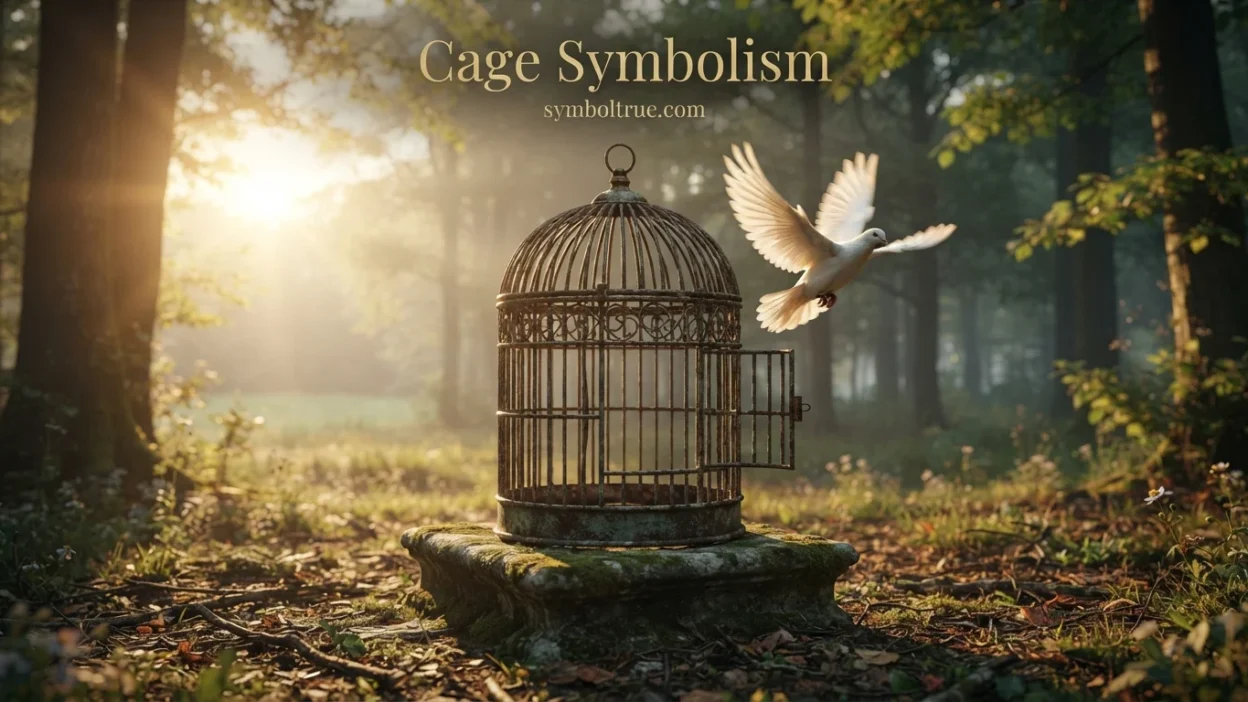
An open cage is especially powerful because it suggests escape, opportunity, transformation, and a new beginning.
These interpretations make cage symbolism closely connected with freedom symbolism, captivity symbolism, emotional confinement, personal boundaries, control, and liberation.
Spiritual Meaning of Cage Symbolism
Spiritually, cage symbolism often points to the difference between inner freedom and inner restriction.
A cage may represent a soul that feels limited by fear, doubt, attachment, or unhealthy patterns. The physical bars can symbolize invisible barriers that prevent spiritual growth.
An empty cage may have a more hopeful meaning. It can represent release, awakening, or freedom from something that once controlled you.
An open cage may symbolize an invitation to step beyond old limitations. It can suggest that the door to change is already available, but courage is needed to walk through it.
A locked cage can represent unresolved emotional or spiritual struggles. It may encourage a person to examine what is keeping them from experiencing peace and growth.
In this sense, cage symbolism can carry a simple spiritual message: freedom often begins when we recognize the barriers we have accepted.
Biblical / Religious Meaning of Cage Symbolism
Cages are not among the strongest standalone symbols in biblical tradition, but the broader ideas of captivity, imprisonment, bondage, deliverance, and freedom are important themes in religious thought.
A cage can therefore be interpreted symbolically as a form of bondage. It may represent circumstances, temptation, fear, sin, oppression, or anything that prevents a person from living according to their spiritual values.
The image of release from confinement can represent deliverance and hope. In Christian interpretations, freedom from spiritual bondage may be connected with redemption and transformation.
In a broader religious context, the cage can also remind people that external circumstances do not always determine inner freedom. A person may experience hardship while maintaining faith, hope, and spiritual strength.
Because interpretations differ between religions and traditions, the meaning of a cage should always be considered within its specific cultural or spiritual context.
Cage Symbolism in History and Culture
Throughout history, cages have had practical as well as symbolic purposes. They have been used to contain animals, protect valuable objects, restrict prisoners, and separate people or creatures from their surroundings.
These physical uses helped create powerful cultural associations.
In many cultures, cages became symbols of captivity and unequal power. The person or creature outside the cage possesses freedom, while the one inside has limited control.
Birdcages have developed an especially strong symbolic meaning. A beautiful bird inside an ornate cage may represent a person who appears comfortable or privileged but secretly longs for freedom.
An empty cage can tell a completely different story. It may symbolize escape, liberation, loss, or the end of confinement.
The contrast between a closed cage and an open cage is therefore important. One suggests limitation, while the other can suggest possibility.
Cage Symbolism in Literature and Art
Cage symbolism is widely useful in literature and art because it provides a simple visual representation of complicated human emotions.
Writers may use a cage to symbolize a character’s restricted life. The character might feel trapped by social expectations, family obligations, love, fear, wealth, poverty, or personal beliefs.
Artists often use cages alongside birds, flowers, people, or other objects to create visual contrasts.
A bird inside a cage can represent a person whose potential is being suppressed. A broken cage can suggest rebellion or escape. An empty cage can suggest that freedom has already been achieved—or that something important has disappeared.
The cage can also symbolize the conflict between security and freedom. Sometimes people remain inside familiar boundaries because leaving them feels more frightening than staying.
This makes the cage a particularly powerful artistic symbol because it asks a universal question: Is safety worth giving up freedom?
Dream Meaning of Cage Symbolism
Dreams about cages can have different meanings depending on what happens in the dream and how you feel.
A cage in a dream may symbolize a situation where you feel restricted, controlled, or unable to express yourself.
Here are some common interpretations:
- Being inside a cage: You may feel trapped or powerless in some part of your life.
- A locked cage: This may represent a strong sense of limitation or an obstacle that seems difficult to overcome.
- An open cage: It can symbolize freedom, opportunity, or the possibility of change.
- Escaping from a cage: This may represent breaking away from an unhealthy situation or overcoming fear.
- A bird in a cage: It can symbolize suppressed dreams, independence, creativity, or emotional freedom.
- An empty cage: This may represent release, separation, loss, or the completion of a difficult period.
- Breaking cage bars: This often suggests determination, resistance, and a desire to regain control.
Dream interpretation is personal rather than universal. The strongest clue is usually the emotion you experienced during the dream.
Modern Meaning of Cage Symbolism
Today, cage symbolism continues to appear in conversations about relationships, mental freedom, social pressure, identity, work, and personal growth.
A modern cage does not have to be physical. It may be a routine that leaves no room for growth, a relationship that limits independence, or fear that prevents someone from pursuing a dream.
Social media and digital life can also inspire cage imagery. People may feel trapped by expectations, comparison, constant attention, or the pressure to present a certain version of themselves.
At the same time, modern interpretations recognize that boundaries are not always harmful. Healthy boundaries can create safety and stability without taking away personal freedom.
This creates an important distinction:
A healthy boundary protects your freedom; an unhealthy cage takes it away.
Cage Symbolism in Relationships
In relationships, a cage can symbolize control, dependence, possessiveness, or the loss of individuality.
For example, an artistic image of a person standing beside an open cage might represent choosing independence after a controlling relationship.
However, cage symbolism can also represent emotional attachment. Someone may feel unable to leave a relationship even when they know it is no longer healthy.
The symbol therefore encourages reflection on whether love creates room for growth or becomes a form of confinement.
Cage Symbolism and Personal Growth
A cage can also represent the limitations people place on themselves.
Fear of failure, fear of judgment, perfectionism, insecurity, and negative self-beliefs can become invisible bars.
The encouraging side of cage symbolism is that invisible bars can often be challenged.
Recognizing what limits you is the first step toward changing it. In this way, the cage becomes more than a symbol of confinement—it becomes a reminder that personal growth often begins with questioning the boundaries that hold you back.
What Does an Open Cage Symbolize?
An open cage commonly symbolizes freedom, release, opportunity, escape, and new beginnings.
It may represent leaving behind an old identity or situation and becoming ready to move forward. An open cage can also suggest that freedom is available, even if taking the first step requires courage.
What Does a Bird in a Cage Symbolize?
A bird in a cage often symbolizes freedom being restricted. It may represent suppressed dreams, limited choices, emotional confinement, or a person whose potential is being held back.
The bird can also symbolize hope because its natural ability to fly reminds us of the freedom that exists beyond the cage.
Is Cage Symbolism Always Negative?
No. A cage can symbolize both restriction and protection.
If the cage keeps something safe from danger, it may represent security, boundaries, responsibility, or care. Its meaning depends on the context and the condition of the cage.
What Does a Broken Cage Symbolize?
A broken cage often represents liberation, resistance, transformation, and freedom from limitations.
It can suggest that a person has overcome an obstacle or is finally ready to reject restrictions that no longer serve them.
What Does an Empty Cage Symbolize?
An empty cage can symbolize freedom, escape, absence, loss, or a completed period of confinement.
Its meaning depends on the surrounding imagery and emotional context. An empty cage may feel hopeful in one situation and lonely in another.
Conclusion
Cage symbolism is powerful because it captures a universal human struggle: the tension between security and freedom. A cage can represent captivity, control, fear, and emotional restriction, but it can also symbolize protection, boundaries, and the moment before liberation.
An open or broken cage often carries a hopeful message. It reminds us that growth sometimes requires recognizing the invisible barriers that keep us from moving forward. Ultimately, cage symbolism asks us to consider one important question: Are the boundaries around you protecting your life or preventing you from living it fully?

Henry Jack is the Administrator of SymbolTrue, ensuring the website runs smoothly while overseeing content quality, user experience, and daily operations. He is passionate about helping readers explore symbols, meanings, and cultural insights.