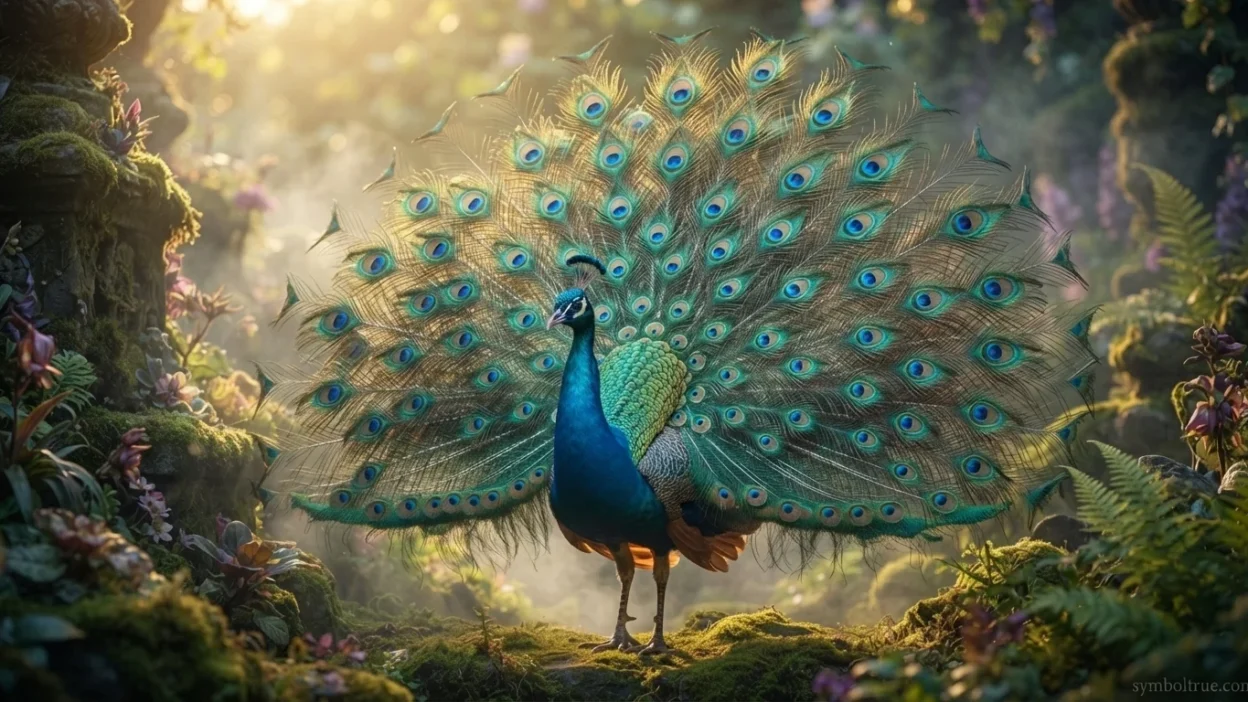
Peacock symbolism is often connected with beauty, confidence, pride, renewal, and self-expression. With its brilliant feathers and striking appearance, the peacock has fascinated people across cultures for centuries. But its symbolism goes deeper than physical beauty.
It can represent personal transformation, spiritual awareness, dignity, and the courage to show your true self. Understanding peacock symbolism can help explain why this bird appears so often in myths, religious traditions, dreams, art, and modern designs.
Peacock Symbolism Meaning (Clear Definition)
Peacock symbolism generally represents beauty, confidence, renewal, pride, dignity, visibility, and self-expression. The peacock’s ability to display its magnificent feathers makes it a powerful symbol of being seen and embracing one’s unique qualities.
In simple terms, the peacock can symbolize:
- Beauty and elegance
- Confidence and self-worth
- Pride and personal identity
- Renewal and transformation
- Spiritual awareness
- Protection and watchfulness
- Prosperity and good fortune
- Self-expression and individuality
The meaning can change depending on the culture and situation. A peacock may represent healthy confidence in one context but excessive pride or vanity in another.
What Does Peacock Symbolism Represent?
The peacock’s symbolism comes largely from its appearance, behavior, and natural life cycle. Its colorful feathers naturally draw attention, while the bird’s ability to display them creates an image of confidence and self-expression.
Beauty and Elegance
The peacock is one of nature’s clearest symbols of beauty. Its colorful feathers can represent grace, attractiveness, creativity, and appreciation for the beauty around us.
Confidence and Self-Expression
When a peacock spreads its tail, it does not hide its appearance. Symbolically, this can encourage people to recognize their strengths and express themselves without unnecessary fear.
Pride and Vanity
The same beauty that makes the peacock a positive symbol can also represent vanity. Peacock symbolism can therefore remind us that confidence is valuable, but excessive concern with appearance can become unhealthy pride.
Renewal and Transformation
Peacocks shed and regrow their feathers, making them a natural symbol of renewal. Their symbolism can suggest leaving an old stage of life behind and entering a period of growth.
Protection and Awareness
The eye-like markings on peacock feathers are sometimes interpreted symbolically as watchful eyes. Because of this, the bird can represent awareness, observation, and protection.
| Peacock Symbolism | Common Meaning |
|---|---|
| Colorful feathers | Beauty, creativity, self-expression |
| Open tail | Confidence, visibility, pride |
| Eye-like feather patterns | Awareness, protection, watchfulness |
| Feather shedding | Renewal and transformation |
| Peacock colors | Spirituality, richness, vitality |
| Graceful appearance | Dignity, elegance, confidence |
Spiritual Meaning of Peacock Symbolism
The spiritual meaning of peacock symbolism often centers on renewal, inner beauty, spiritual awareness, and personal growth.
The peacock’s impressive outer appearance can serve as a reminder that transformation can happen both inside and outside. Just as its feathers return after being shed, the bird can symbolize the possibility of rebuilding yourself after difficult experiences.
In spiritual symbolism, the peacock may encourage you to:
- Trust your personal growth.
- Show your authentic self.
- Recognize your inner beauty.
- Release outdated parts of your life.
- Develop greater awareness.
- Balance confidence with humility.
The bird’s eye-like feather patterns can also be viewed as symbols of spiritual vision. In this interpretation, the peacock represents the ability to look beyond surface appearances and become more aware of yourself and the world around you.
Biblical / Religious Meaning of Peacock Symbolism
Peacocks do not have a major symbolic role in the Bible itself, so biblical interpretations should be distinguished from later Christian symbolism.
In Christian art and tradition, the peacock became associated with immortality, resurrection, and eternal life. This association partly developed from ancient beliefs about the bird’s flesh and its apparent resistance to decay, beliefs that were symbolic rather than scientifically accurate.
The peacock also appeared in early Christian art, where its beautiful feathers could represent paradise, spiritual renewal, and the hope of life beyond death.
In Hindu traditions, the peacock has much stronger religious importance. It is associated with deities such as Krishna, Kartikeya, and Saraswati in different cultural and artistic contexts. The bird can symbolize beauty, divine presence, protection, knowledge, and spiritual power.
In ancient Greek mythology, the peacock was associated with Hera, queen of the gods. Its eye-like feather markings became connected with watchfulness and the story of Argus.
These traditions show that peacock symbolism is not limited to one religious meaning. Its interpretation changes across cultures and historical periods.
Peacock Symbolism in History and Culture
Peacocks have held symbolic importance across Asia, Europe, the Middle East, and other regions.
In ancient cultures, their striking appearance made them symbols of royalty, wealth, and prestige. Their elaborate feathers suggested something rare and extraordinary, which helped connect them with powerful people and sacred spaces.
In India, the peacock has a particularly important cultural position. The Indian peafowl is closely connected with Indian art, mythology, architecture, and traditional decoration.
In ancient Greece, the peacock was connected with Hera and became a symbol of divine watchfulness.
In Persian and later Islamic art traditions, peacock imagery could appear in decorative designs and luxurious objects. Its beauty made it especially suitable for artistic representations of paradise, elegance, and abundance.
Across these cultures, recurring themes include beauty, status, spirituality, protection, and renewal.
Peacock Symbolism in Literature and Art
Peacocks have been powerful artistic symbols because their appearance immediately attracts attention.
In literature, the peacock can represent pride, beauty, vanity, confidence, or transformation. Writers may use the bird to describe a character who wants recognition or someone whose outer beauty hides a more complicated inner life.
In visual art, peacocks frequently appear in paintings, textiles, jewelry, architecture, ceramics, tattoos, and decorative patterns.
The famous “eyes” in the feathers are especially useful in art because they can suggest observation, mystery, or spiritual awareness.
The bird’s brilliant colors can also symbolize abundance and creativity. For artists, the peacock provides a natural image of individuality: it stands out rather than blending into its surroundings.
Dream Meaning of Peacock Symbolism
Dreaming about a peacock can have several possible meanings depending on the dream’s details and your personal feelings.
A peacock appearing in a dream may symbolize confidence, recognition, beauty, personal growth, or a desire to be noticed.
Common interpretations include:
- Seeing a peacock: You may be becoming more aware of your confidence or personal qualities.
- A peacock spreading its feathers: This may symbolize self-expression, recognition, or a desire to show your abilities.
- A colorful peacock: It can represent creativity, optimism, beauty, or emotional richness.
- A peacock with damaged feathers: This may reflect insecurity, disappointment, or concerns about how others see you.
- A peaceful peacock: It can suggest harmony, confidence, and emotional balance.
- A threatening peacock: It may symbolize excessive pride, competition, or fear of judgment.
Dream symbolism is personal rather than universal. Your emotions during the dream and what the peacock means to you can be more important than any fixed interpretation.
Modern Meaning of Peacock Symbolism
Today, peacock symbolism is often used to express individuality, confidence, beauty, creativity, and personal transformation.
The peacock is especially popular in fashion, tattoos, jewelry, home decoration, branding, photography, and contemporary artwork.
For many people, the bird represents the idea of being comfortable with who you are. Its dramatic display can serve as a reminder that you do not always have to make yourself smaller to fit into your surroundings.
At the same time, the peacock can represent a healthy balance between confidence and humility. Its symbolism asks an important question: Are you expressing your true qualities, or are you seeking approval only for appearance?
This makes the peacock a meaningful modern symbol of authentic self-expression.
Peacock Feather Symbolism
Peacock feather symbolism has its own important meanings. A feather can represent beauty, protection, spiritual awareness, renewal, and good fortune.
The distinctive eye-like markings are often interpreted as symbols of vision and awareness. In some traditions, they are associated with protection from harmful influences.
A peacock feather may therefore symbolize the ability to see clearly, remain aware, and move forward with confidence.
Peacock Colors and Their Symbolic Meanings
The peacock’s colors also contribute to its symbolism.
- Blue: Calmness, wisdom, confidence, and spirituality
- Green: Growth, renewal, nature, and abundance
- Gold: Wealth, success, prestige, and achievement
- Turquoise: Creativity, emotional balance, and communication
- Multiple colors: Individuality, richness, transformation, and self-expression
Because the peacock combines many colors in one display, it can also symbolize the idea that different qualities can exist together in harmony.
What Does a Peacock Symbolize in Love?
In love and relationships, peacock symbolism can represent attraction, confidence, beauty, loyalty, and romantic expression.
Its dramatic display can symbolize the desire to impress or attract someone. In a positive sense, it can represent proudly appreciating your partner and expressing affection openly.
However, the peacock can also warn against vanity or constantly seeking admiration. In relationships, its deeper message may be to value genuine connection rather than appearance alone.
What Does a Peacock Symbolize in Personal Growth?
The peacock can be a powerful symbol of personal growth because its feathers are renewed over time.
Its symbolism can represent moving beyond an earlier version of yourself and becoming more confident in who you are today.
The message is simple: growth does not require you to remain the person you once were.
FAQs:
What is the main meaning of peacock symbolism?
Peacock symbolism commonly represents beauty, confidence, pride, renewal, spiritual awareness, and self-expression. Its meaning can be positive or negative depending on the context.
What does a peacock symbolize spiritually?
Spiritually, a peacock can symbolize transformation, inner beauty, awareness, renewal, and the courage to express your authentic self.
What does a peacock feather symbolize?
A peacock feather can symbolize beauty, protection, spiritual vision, awareness, renewal, and good fortune. Its eye-like markings are often connected with watchfulness and perception.
What does seeing a peacock mean spiritually?
Seeing a peacock may be interpreted as a reminder to embrace your strengths, recognize your growth, and express yourself confidently while remaining humble.
What does a peacock symbolize in dreams?
A peacock in a dream can symbolize confidence, recognition, beauty, self-expression, or personal transformation. The exact meaning depends on the dream’s details and the emotions you experienced.
Conclusion
Peacock symbolism brings together beauty, confidence, transformation, spirituality, and self-expression. Its magnificent feathers remind us to appreciate our individuality, while its renewal can symbolize the possibility of growth and a fresh beginning. At its deepest level, the peacock encourages us to show our true colors without allowing pride to overshadow humility.

Henry Jack is the Administrator of SymbolTrue, ensuring the website runs smoothly while overseeing content quality, user experience, and daily operations. He is passionate about helping readers explore symbols, meanings, and cultural insights.