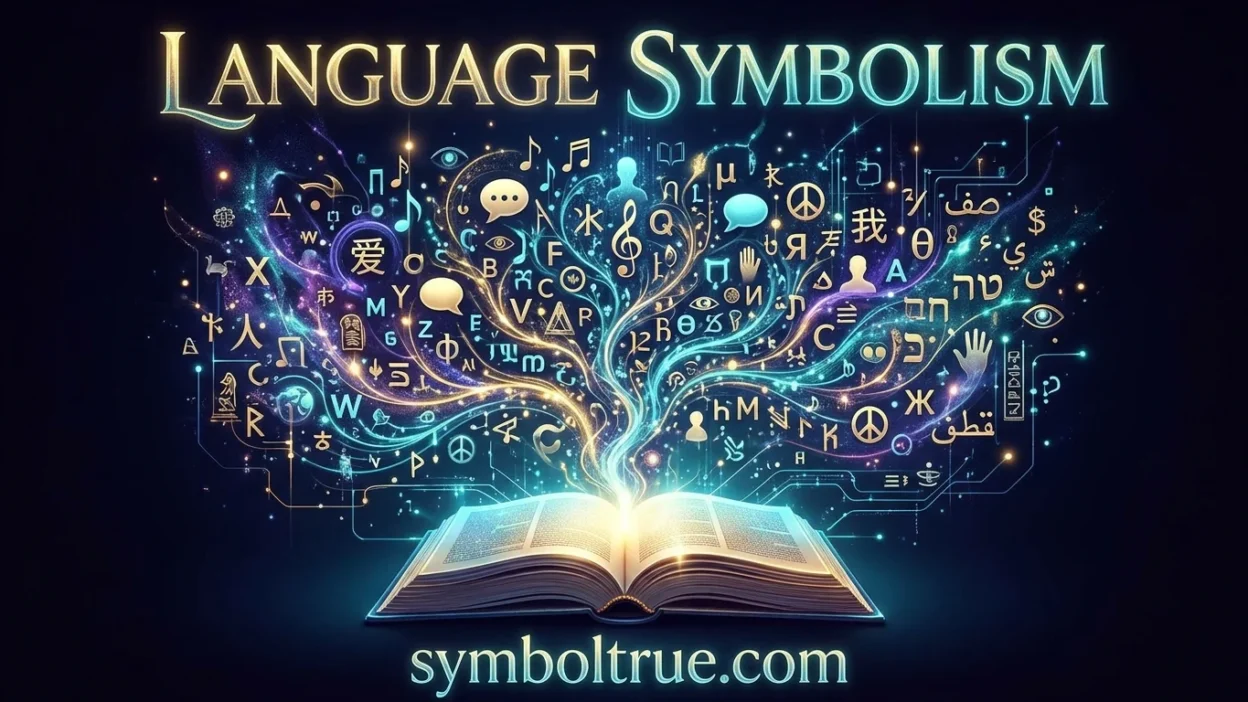
Language is far more than a practical system for exchanging information. At its core, language symbolism allows human beings to assign profound meaning, emotion, and abstract thought to spoken words, written characters, and gestures.
Through symbolic communication, a single word, emblem, or phrase can evoke deep historical memory, ignite cultural pride, or convey complex spiritual truths. Understanding how language functions symbolically opens a doorway into the human mind, revealing how we construct reality, pass down traditions, and connect with one another across time and space.
Language Symbolism Meaning (Clear Definition)
Language symbolism refers to the cognitive and cultural process where words, letters, sounds, and visual signs represent ideas, concepts, or objects beyond their literal definitions. While literal language focuses on direct descriptions, symbolic language relies on shared cultural understanding, metaphors, and allegories.
In linguistics and semiotics (the study of signs and symbols), language symbolism bridges the gap between a physical signifier (the spoken word or written symbol) and the signified (the concept or emotion it represents). For example, the word “home” literally denotes a physical shelter, but symbolically, it evokes feelings of warmth, safety, belonging, and memory.
What Does Language Symbolism Represent?
Language symbolism represents the collective human ability to transform abstract thought into tangible expression. It acts as the structural foundation for:
- Cultural Identity: Preserving the values, mythologies, and heritage of a community.
- Abstract Reasoning: Allowing humans to discuss complex ideas like justice, love, time, and morality.
- Social Connection: Creating shared meaning that binds groups together through common idioms, sacred texts, or national slogans.
- Emotional Depth: Expressing nuanced feelings that literal descriptions fail to capture fully.
Spiritual Meaning of Language Symbolism
In many spiritual and metaphysical traditions, language is considered a creative force rather than merely a communication tool. Spiritual perspectives often view words as carriers of vibrational energy and intent.
- Sacred Sounds and Mantras: In traditions such as Hinduism and Buddhism, specific sacred syllables (like Om) are believed to resonate with the fundamental frequency of the universe.
- The Power of Naming: Many ancient esoteric traditions hold that knowing the “true name” of an object, spirit, or individual grants spiritual insight or influence over it.
- Invocations and Prayers: Spiritual language symbolism uses ritualized phrases to bridge the gap between the earthly realm and the divine, acting as a channel for blessings, protection, or inner transformation.
Biblical / Religious Meaning of Language Symbolism
Religious texts across the globe rely heavily on symbolic language to communicate divine principles and moral guidance.
- The Creation through Speech: In Genesis, God creates the universe through spoken commands (“Let there be light”), establishing speech as an instrument of divine order and creation.
- The Word (Logos): The Gospel of John introduces Christ as the “Logos” (the Word made flesh), utilizing linguistic symbolism to represent ultimate truth, reason, and divine revelation.
- The Tower of Babel: This biblical narrative uses the multiplication of languages as a symbol of human pride, division, and the limitations of human ambition when detached from divine purpose.
- Sacred Alphabets: In Jewish Kabbalah, the Hebrew alphabet is studied as a set of divine symbols through which the cosmos was engineered, giving every letter spiritual and numerical weight.
Language Symbolism in History and Culture
Throughout history, civilisations have developed distinct linguistic symbols to reflect their worldview and preserve their history.
- Hieroglyphs and Ancient Scripts: Ancient Egyptian hieroglyphs combined phonetic sounds with pictorial symbols, turning writing into a sacred art form meant to communicate with both mortals and gods.
- National Language and Pride: During the 19th and 20th centuries, language became a powerful symbol of national unity and sovereignty across Europe, Asia, and Africa.
- Indigenous Storytelling: Many Indigenous cultures utilize oral traditions rich in symbolic metaphors to pass down ecological knowledge, tribal history, and ethical systems without relying on written text.
Language Symbolism in Literature and Art
Writers, poets, and visual artists rely on symbolic language to create layered meanings that resonate with audiences on an emotional level.
- Metaphor and Allegory: Literary classics, such as George Orwell’s Animal Farm, use symbolic language to critique real-world political systems under the guise of simple stories.
- Poetic Imagery: Poets select words not just for their literal definitions, but for their rhythmic cadence, emotional connotation, and symbolic associations.
- Calligraphy: In Islamic and East Asian artistic traditions, written language itself becomes visual art. The physical form of the script carries aesthetic and spiritual symbolism beyond the words written.
Language Symbolism in Dreams
In dream analysis and psychology, language often appears symbolically to highlight subconscious thoughts, unresolved emotions, or intuitive insights.
- Hearing Foreign Languages: Dreaming of speaking or hearing an unfamiliar language can symbolize feeling misunderstood, isolated, or facing an unfamiliar situation in waking life.
- Inability to Speak: A common dream motif where one loses the ability to talk often represents felt helplessness, suppressed emotions, or fear of self-expression.
- Written Messages in Dreams: Discovering a letter, book, or sign in a dream often symbolizes a hidden truth or realization that your subconscious mind is attempting to bring to light.
Positive Symbolism of Language Symbolism
When used constructively, language symbolism serves as a force for unity, enlightenment, and healing.
| Positive Theme | Symbolic Role |
| Unity & Peace | Diplomatic phrasing, universal symbols, and shared mottos foster harmony. |
| Empowerment | Positive affirmations and inspiring speeches motivate individuals and communities. |
| Knowledge Transfer | Symbolic scripts allow wisdom to be preserved across generations. |
| Cultural Expression | Idioms and folk expressions celebrate local heritage and identity. |
Negative or Hidden Symbolism of Language Symbolism
Language symbolism can also be manipulated to obscure truth, enforce authority, or create division.
- Propaganda and Dogwhistles: Political agendas often employ coded symbolic language to manipulate public emotion, shift perspectives, or signal specific ideologies discreetly.
- Euphemisms: Using mild or vague language to disguise harsh realities (such as referring to war casualties as “collateral damage”) can desensitise people to real-world consequences.
- Exclusion and Jargon: Specialized insider language can be used symbolically to gatekeep knowledge, establish social hierarchies, or exclude outsiders.
Common Interpretations of Language Symbolism
Understanding language symbolism often depends on the context in which it appears. Here are three common frameworks:
- Linguistic Relativity (Sapir-Whorf Hypothesis): Suggests that the structure and symbolic nature of a language influence how its speakers perceive and think about the world around them.
- Semantics and Semiotics: Analyzes how signs, symbols, and words acquire their meanings through social agreement and cultural evolution.
- Psychological Expression: Carl Jung and Sigmund Freud emphasized that human language is deeply intertwined with subconscious symbols, archetypes, and hidden motivations.
Why Does Language Symbolism Matter Today?
In the modern digital age, language symbolism is evolving faster than ever before.
- Digital Communication: Emojis, memes, and acronyms have created a global, visual dialect where single symbols replace full sentences, proving that symbolic communication adapts to technology.
- Brand Identity: Companies spend millions crafting logos, slogans, and brand names that rely on linguistic symbolism to evoke trust, prestige, or innovation.
- Cross-Cultural Dialogue: As global interconnectedness increases, recognizing the symbolic weight of language helps prevent misunderstandings and fosters genuine empathy between diverse cultures.
FAQs:
What is the main purpose of language symbolism?
The main purpose of language symbolism is to allow humans to express abstract thoughts, complex emotions, cultural values, and spiritual concepts that cannot be conveyed through simple, literal descriptions.
How does symbolic language differ from literal language?
Literal language states facts directly as they are (e.g., “The sun rose”), whereas symbolic language uses metaphors, signs, or associations to convey deeper or secondary meanings (e.g., “A new dawn symbolizes hope”).
Can emojis be considered a modern form of language symbolism?
Yes. Emojis function as visual symbols in modern digital communication, conveying tone, emotion, and context in a concise way similar to ancient ideograms.
Why is language symbolism important in religion?
In religion, symbolic language allows believers to describe divine, transcendent, or invisible concepts that exceed human physical experience, making abstract spiritual truths relatable and memorable.
Conclusion
Language symbolism is a fundamental aspect of the human experience, turning simple sounds and markings into powerful vehicles for meaning, art, and spirituality. From ancient religious scriptures and historical literature to modern digital communication, the symbolic weight of language continues to shape how we understand ourselves and the world around us. By paying attention to the subtle symbolic meanings embedded in our daily speech, we gain a richer appreciation for the art of human connection.

Ryan Thomas is a passionate writer at SymbolTrue, dedicated to exploring the meanings, history, and cultural significance of symbols worldwide. He creates engaging, well-researched content that helps readers discover the stories and symbolism behind everyday signs, icons, and traditions.