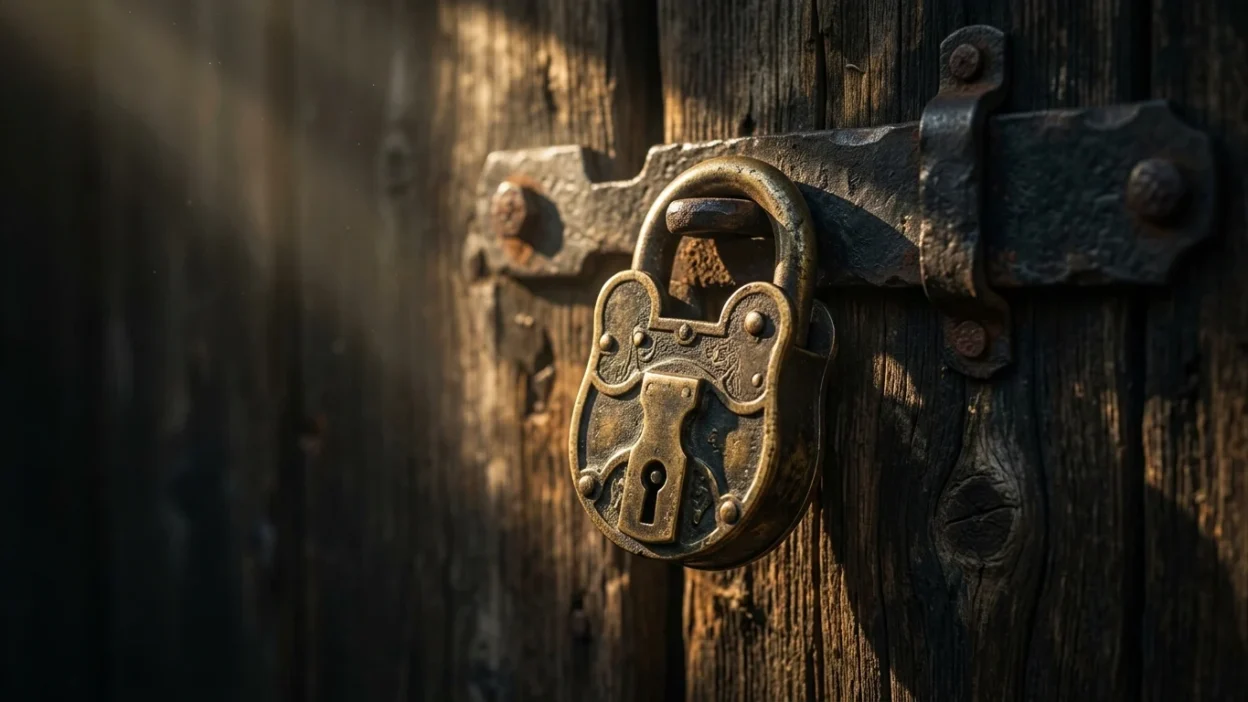
A lock is more than a device used to secure a door, box, or gate. It can also represent protection, privacy, trust, emotional barriers, and secrets.
Lock symbolism explores the deeper meanings associated with keeping something safe, restricting access, or deciding who deserves entry into a private space.
In everyday life, locks help protect valuable belongings and personal information. Symbolically, they can represent the boundaries people create around their emotions, relationships, beliefs, and personal experiences. A locked door might suggest safety and security, while a broken lock could represent vulnerability or the loss of control.
The meaning of a lock depends on its context. In spiritual interpretations, it may represent protection or a personal barrier. In literature and art, it can suggest secrecy, mystery, or restricted freedom. In dreams, it may reflect feelings about trust, access, or unresolved situations.
Understanding lock symbolism helps explain why this ordinary object can carry such powerful meanings in different areas of life.
Lock Symbolism Meaning: A Clear Definition
Lock symbolism refers to the meanings associated with a lock beyond its practical function of securing something. It commonly represents protection, privacy, boundaries, control, trust, secrecy, and restricted access.
A lock creates a distinction between what is accessible and what is protected. This makes it a useful symbol for understanding personal boundaries and the relationship between safety and freedom.
For example, a lock on a treasure chest might represent something valuable that needs protection. A lock on a prison cell could represent confinement and a lack of freedom. A lock on a diary might symbolize private thoughts that someone does not wish to share.
The same object can communicate opposite ideas depending on its setting. A lock may provide peace of mind when it protects a home, but it may create frustration when it prevents someone from reaching an important opportunity.
Therefore, lock symbolism is best understood by considering what is being protected, who controls the lock, and whether the restriction feels helpful or limiting.
What Does a Lock Represent?
Locks have several common symbolic meanings that appear in everyday experiences, storytelling, and visual art.
1. Protection and Security
One of the clearest meanings of a lock is protection. Its primary purpose is to prevent unauthorized access, making it a natural symbol of safety and security.
Symbolically, a lock may represent protecting personal values, relationships, possessions, or emotional well-being.
For example, someone who has experienced disappointment may become more careful about whom they trust. A lock can represent the boundaries they establish to protect themselves while they rebuild confidence.
2. Privacy and Personal Boundaries
A lock can symbolize the right to keep certain aspects of life private.
A locked journal, bedroom door, or personal storage box communicates that access is limited. In a broader sense, this can represent the importance of having personal space and deciding when to share private information.
Healthy boundaries do not necessarily mean rejecting others. They can help people maintain independence while building respectful relationships.
3. Secrets and Hidden Information
A locked container often creates curiosity because its contents cannot be seen immediately.
In symbolic terms, a lock may represent a secret, hidden memory, confidential information, or a truth that has not yet been revealed.
This interpretation is common in mystery stories, where a locked room or box creates suspense and encourages characters to search for answers.
However, privacy and deception are not the same thing. A person may keep something private without intending to mislead anyone.
4. Control and Authority
Locks also represent the power to grant or deny access.
A person holding the key may control who can enter a space or retrieve an object. In a symbolic setting, this can represent authority, responsibility, or unequal power.
For example, a locked gate might represent an institution that controls access to resources or opportunities.
Depending on the situation, this control may provide necessary protection or create unfair restrictions.
5. Emotional Barriers
In relationships, people sometimes describe themselves as having a locked heart.
This expression suggests that someone is hesitant to trust, express affection, or share vulnerable feelings. The lock becomes a metaphor for emotional protection.
Such a barrier may develop after disappointment, conflict, or painful experiences. It can offer temporary comfort, but it may also make meaningful connections more difficult when it becomes impossible to lower the barrier.
Spiritual Meaning of Lock Symbolism
In spiritual interpretations, a lock may represent protection, personal boundaries, hidden potential, or an area of life that feels inaccessible.
There is no single spiritual meaning accepted by every tradition. Interpretations vary according to personal beliefs, religious backgrounds, and the circumstances in which the symbol appears.
A Symbol of Spiritual Protection
Some people interpret a lock as a reminder to protect their peace, values, and inner life.
From this perspective, the lock represents discernment: deciding which influences to welcome and which situations require distance.
This can be a useful metaphor for maintaining healthy boundaries, but it should not be treated as proof of supernatural protection.
Hidden Potential and Unopened Possibilities
A locked box can symbolize abilities, opportunities, or aspects of the self that have not yet been explored.
The lock suggests that something may be available, but access requires a key, effort, or a change in circumstances.
For example, someone beginning a period of self-reflection might view a lock as a symbol of personal growth that requires patience and honest examination.
Barriers to Personal Growth
A lock may also represent a limitation that prevents progress.
In a spiritual or reflective context, this could mean fear of change, unwillingness to forgive, or difficulty accepting a new perspective.
The interpretation encourages reflection rather than assuming that every obstacle has a supernatural cause.
A useful question is whether the lock represents a boundary worth maintaining or a restriction that no longer serves a positive purpose.
Trust and Inner Peace
Locks are associated with safety, but excessive protection can sometimes become isolation.
Symbolically, a lock can encourage people to consider how they balance caution with openness. Trust does not require sharing everything with everyone; it involves making thoughtful decisions about when and with whom to be vulnerable.
Biblical or Religious Meaning of a Lock
The Bible does not establish one universal symbolic meaning for an ordinary lock. However, biblical passages use related imagery involving doors, keys, gates, and imprisonment.
These references can provide context for personal religious interpretations without suggesting that a modern lock has a specific biblical definition.
Keys and Doors in Biblical Imagery
Revelation 3:7 refers to the key of David in connection with authority to open and shut. Matthew 16:19 also mentions keys in the context of the kingdom of heaven.
In John 10:9, Jesus describes himself as the door, using the image of an entrance in a spiritual teaching.
These passages concern keys and doors rather than defining the symbolism of locks themselves.
Possible Christian Interpretations
A Christian reader might interpret a lock in a devotional image as representing spiritual boundaries, the protection of faith, or something that remains inaccessible until the appropriate time.
A locked door might also prompt reflection on patience, discernment, and the difference between a closed opportunity and a boundary that should be respected.
These are possible personal interpretations, not universally established Christian doctrines about locks.
Other Religious and Cultural Perspectives
Other religious communities may understand protection, privacy, confinement, and access through their own teachings and traditions.
It is important not to assume that all religions assign the same meaning to a lock. The symbol’s significance depends on the specific tradition and the context in which it appears.
Lock Symbolism in History and Culture
Locks have been used for centuries to protect possessions, buildings, storage containers, and private spaces. Their practical role in controlling access has shaped many of their symbolic associations.
Security and Ownership
Historically, locking mechanisms helped people protect property and restrict entry to particular spaces.
This practical function connects locks with ownership, responsibility, and the ability to control access.
A lock on a chest, for instance, can indicate that the contents are valuable or intended for a specific person. Symbolically, it may communicate the importance of safeguarding something meaningful.
Confinement and Restricted Freedom
Locks can also prevent people from leaving or entering a place.
In prisons, detention facilities, and other controlled environments, locks may represent authority and restricted freedom. This meaning contrasts with the security associated with a lock on a private home.
The object itself does not determine whether the symbolism is positive or negative. Its meaning depends on who controls it and how that control affects others.
Love Locks and Relationships
In some cities, couples attach padlocks to bridges, fences, or other public structures as a symbolic expression of commitment.
The lock may represent a lasting bond, loyalty, or a promise between partners. In some versions of the custom, couples write their names on the lock and discard the key.
This practice is a modern cultural tradition with variations across locations. It is not a universal ritual, and its meanings differ among participants. In some places, authorities have also removed love locks because of maintenance or safety concerns.
Lock Symbolism in Literature and Art
Writers and artists often use locks to communicate ideas about secrets, freedom, relationships, and personal limitations.
Because a lock prevents access, it creates an immediate question: What is being protected, and why can it not be reached?
Mystery and Suspense
A locked chest, door, or room can create tension in a story.
Readers may wonder what is hidden inside and whether discovering it will change the characters’ lives. The lock becomes a visual representation of unanswered questions.
For example, a locked cabinet in a mystery novel might conceal evidence that reveals the truth about an important event.
Freedom and Confinement
In dramatic literature, a locked door may represent a character’s inability to escape an oppressive situation.
The lock becomes more than a physical barrier. It can represent social expectations, unequal power, fear, or a lack of choices.
An unlocked door, by contrast, may suggest freedom or the possibility of change.
Love and Commitment
Locks appear in romantic imagery as symbols of promises, loyalty, and emotional attachment.
A heart-shaped padlock might represent a desire for lasting love. However, the same imagery can suggest possessiveness if the relationship is portrayed as controlling.
The surrounding details help determine whether the lock communicates mutual commitment or unwanted restriction.
Identity and Hidden Emotions
An artist may use a locked box to represent thoughts or feelings that a person is unwilling to reveal.
This visual metaphor can communicate emotional complexity without explaining everything directly.
A lock can therefore represent both the need for privacy and the difficulty of allowing others to understand us.
Lock Symbolism in Dreams
Dreams about locks can be interpreted in different ways, but there is no scientifically established universal meaning for a particular lock-related dream.
Dream imagery is personal. Your feelings, recent experiences, and associations with locks may provide more useful clues than a fixed symbolic definition.
Dreaming of a Locked Door
A locked door may reflect a feeling that something is unavailable or difficult to reach.
You might be facing a decision, waiting for an opportunity, or dealing with uncertainty about the future.
Consider whether the dream involved fear, frustration, relief, or curiosity. Those emotions may help you understand what the image means to you.
Dreaming of Locking Something
Locking a door or container in a dream might reflect a desire for privacy, security, or control.
It could also relate to a decision to keep certain feelings or information to yourself.
The dream does not necessarily mean you are hiding something harmful. It may simply reflect a need for personal space.
Dreaming of a Broken Lock
A broken lock may symbolize vulnerability, weakened boundaries, or concern that something important is no longer protected.
Alternatively, it might represent relief from a restriction that has been holding you back.
The emotional tone matters. A broken lock that causes fear may feel very different from one that allows you to escape a difficult situation.
Dreaming of Finding a Key
Finding a key in a dream may be associated with discovering a solution, gaining confidence, or seeing a new possibility.
When a key appears alongside a lock, the combination can suggest a perceived connection between a problem and a possible way forward.
This is a reflective interpretation, not a prediction that a specific event will occur.
Positive Symbolism of a Lock
Locks can represent several positive qualities when their purpose is to protect rather than unnecessarily restrict.
Common positive meanings include:
- Protection: Keeping valuable belongings, feelings, or information safe.
- Security: Creating a sense of stability and reassurance.
- Trust: Protecting something entrusted to your care.
- Commitment: Representing a lasting promise or relationship.
- Privacy: Respecting personal space and confidential information.
- Responsibility: Recognizing the importance of safeguarding what matters.
- Healthy boundaries: Deciding when to say yes and when to say no.
For example, a lock in a personal illustration might represent the decision to protect emotional well-being while gradually learning to trust others.
Negative or Hidden Symbolism of a Lock
The meaning of a lock becomes more troubling when it represents control without consent or protection that turns into isolation.
Secrecy and Distrust
A lock may suggest that important information is being withheld.
In a story, it can create suspicion about what lies behind a closed door. In relationships, however, privacy alone is not evidence of dishonesty.
The distinction depends on the circumstances and the expectations involved.
Emotional Isolation
A locked heart can represent a reluctance to form close relationships.
Protecting yourself after a difficult experience can be understandable, but avoiding all emotional connection may make loneliness more difficult to overcome.
Symbolically, the lock can represent the tension between feeling safe and allowing meaningful connections to develop.
Control and Oppression
When someone uses a lock to restrict another person’s freedom, the symbol may represent domination or unequal power.
A locked gate that keeps people away from essential resources, for example, can communicate exclusion rather than safety.
Missed Opportunities
A lock may represent a barrier that prevents someone from pursuing a worthwhile goal.
This could relate to fear, rigid thinking, limited access, or circumstances outside a person’s control.
However, not every closed door represents a missed opportunity. Sometimes restrictions are necessary, and recognizing that difference is part of interpreting the symbol thoughtfully.
Common Interpretations of Lock Symbolism
The following table summarizes common interpretations and the contexts in which they may apply.
| Lock imagery | Possible symbolic meaning |
| A lock on a front door | Safety, privacy, and protection |
| A lock on a treasure chest | Valuable secrets or guarded possessions |
| A locked heart | Emotional barriers or guarded feelings |
| A lock with a key | Solutions, access, or readiness |
| A broken lock | Vulnerability, change, or release |
| A lock on a prison cell | Confinement, control, or restricted freedom |
| A padlock on a bridge | Commitment, affection, or a lasting promise |
| A rusty lock | Neglect, old barriers, or something left unresolved |
| A lock without a key | Frustration, uncertainty, or limited access |
| An open lock | Permission, freedom, or reduced restrictions |
These meanings are not fixed rules. A rusty lock might simply be an old object in a photograph, while an open lock in a painting could represent freedom, danger, or an invitation to enter.
Why Does Lock Symbolism Matter Today?
Lock symbolism remains relevant because modern life involves constant decisions about privacy, trust, access, and personal freedom.
Digital Privacy and Security
Passwords, account permissions, encrypted information, and security settings help protect digital information.
Although these technologies do not always use physical locks, the underlying idea is similar: access should be controlled according to the situation.
Symbolically, a lock can remind us to protect personal information while recognizing the importance of responsible access.
Relationships and Emotional Boundaries
People often need to decide how much of themselves to share with others.
A lock can represent the healthy boundaries that support emotional well-being. It can also represent the walls that make communication and intimacy difficult.
Reflecting on this contrast can help people consider whether their boundaries provide safety, prevent connection, or do a little of both.
Art, Tattoos, and Personal Expression
Lock designs are popular in jewelry, tattoos, illustrations, and decorative objects.
A person might choose a lock tattoo to represent privacy, resilience, commitment, or a significant experience that remains personal.
Combining a lock with a heart may suggest love or emotional protection, while pairing it with a key may suggest discovery or the possibility of change.
The intended meaning depends on the individual rather than a universal symbolic code.
FAQs:
1. What does a lock symbolize spiritually?
A lock may represent protection, personal boundaries, hidden potential, or barriers to growth in spiritual interpretations. These meanings vary and should not be treated as universal spiritual facts.
2. What does a lock symbolize in love?
In romantic contexts, a lock may represent commitment, loyalty, emotional security, or a lasting bond. It can also symbolize possessiveness or emotional distance, depending on the context.
3. What does a locked door symbolize?
A locked door commonly represents restricted access, privacy, obstacles, or something that remains unknown. It may suggest protection or confinement depending on the situation.
4. What does a lock mean in a dream?
A lock in a dream may reflect feelings about safety, trust, personal boundaries, or a situation that seems difficult to resolve. Dream meanings are subjective rather than scientifically established predictions.
5. What does a broken lock symbolize?
A broken lock may represent vulnerability, weakened protection, freedom from restrictions, or a change in personal boundaries. Its meaning depends on whether the situation feels threatening or liberating.
6. What does a lock and key symbolize together?
A lock and key together often represent a problem and its possible solution, access to something valuable, or the ability to overcome a barrier. In romantic imagery, they may represent connection and commitment.
7. Does a lock have a biblical meaning?
The Bible does not provide a specific universal meaning for ordinary locks. Related imagery involving keys, doors, and gates appears in biblical passages, but interpretations of a lock itself should be presented as personal reflections rather than established doctrine.
8. What does a lock tattoo mean?
A lock tattoo may symbolize privacy, protection, commitment, resilience, or emotions that someone keeps private. Its meaning often depends on accompanying designs and the person’s own experiences.
Conclusion
Lock symbolism represents protection, privacy, trust, secrets, control, and the boundaries that shape our lives. Depending on the context, a lock can communicate safety and commitment or suggest isolation, restriction, and hidden information.
Its spiritual, cultural, artistic, and dream-related meanings are varied rather than universal. Ultimately, a lock invites us to consider what deserves protection, what may be keeping us from moving forward, and when it is appropriate to open the door to new possibilities.

Henry Jack is a passionate writer at SymbolTrue, dedicated to exploring the meanings, history, and cultural significance of symbols. He creates clear, engaging, and well-researched content that helps readers understand symbols from around the world.