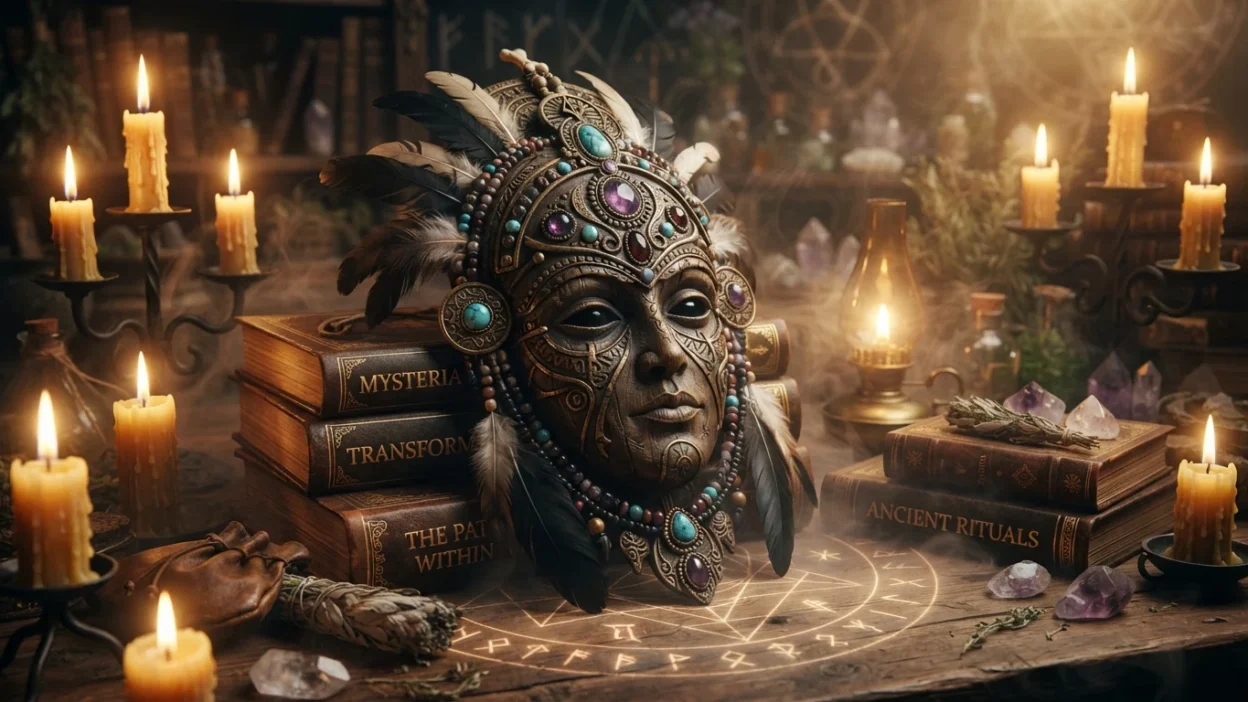
Mask symbolism has fascinated humanity for thousands of years, representing identity, mystery, transformation, and protection. While masks are often used to conceal a person’s face, their symbolic meaning extends far beyond disguise.
Across cultures, religions, literature, dreams, and modern society, masks reveal powerful ideas about the roles people play, the emotions they hide, and the journey toward discovering one’s true self.
If worn during ceremonies, theatrical performances, or celebrations, masks remind us that appearance and reality are not always the same.
Mask Symbolism Meaning (Clear Definition)
Mask symbolism refers to the symbolic meanings connected to masks as objects that both hide and reveal aspects of identity. A mask often represents transformation, secrecy, protection, self expression, social roles, and the balance between one’s public image and inner truth.
Rather than simply concealing the face, masks symbolize the many identities people adopt throughout life and the courage required to remove emotional barriers.
Quick Symbolism Table
| Symbol | Meaning |
| Identity | Different roles and personalities |
| Transformation | Personal change and growth |
| Mystery | Hidden truths and secrets |
| Protection | Emotional or spiritual defense |
| Self Expression | Creativity and individuality |
| Deception | Concealing intentions or emotions |
| Freedom | Becoming someone beyond ordinary identity |
What Does Mask Symbolism Represent?
Mask symbolism represents both concealment and revelation. While a mask can hide someone’s appearance, it may also reveal deeper emotions, beliefs, or hidden aspects of personality.
Common symbolic meanings include:
- Identity and personal roles
- Hidden emotions
- Protection from emotional harm
- Transformation and renewal
- Mystery and secrecy
- Self discovery
- Freedom of expression
The mask teaches that people often wear invisible emotional masks in everyday life while searching for authenticity and inner peace.
Secondary Symbolic Associations
Related symbolic themes include:
- Hidden identity
- Transformation symbolism
- Self expression
- Spiritual protection
- Personal growth
- Mystery symbolism
- Duality of human nature
Spiritual Meaning of Mask Symbolism
Spiritually, mask symbolism often represents the journey from illusion to authenticity. Many spiritual traditions teach that people wear metaphorical masks created by fear, pride, or social expectations.
Removing the mask symbolizes awakening to one’s true nature and living with honesty and compassion.
Spiritual meanings include:
- Discovering the authentic self
- Releasing fear and false identity
- Spiritual transformation
- Emotional healing
- Protection during sacred rituals
- Balancing the inner and outer self
In meditation and spiritual growth, the symbolic removal of a mask reflects freedom from limiting beliefs and ego.
Biblical / Religious Meaning of Mask Symbolism
The Bible does not focus directly on physical masks, but it strongly emphasizes sincerity and warns against hypocrisy. Symbolically, a mask may represent pretending to be something one is not.
Biblical teachings encourage believers to live truthfully, with genuine faith rather than outward appearances.
In other religious traditions:
- African spiritual ceremonies use sacred masks to honor ancestors and spiritual beings.
- Indigenous cultures often wear ceremonial masks to connect with nature and the spirit world.
- Buddhism teaches letting go of false identities to achieve enlightenment.
- Hindu rituals sometimes use masks during sacred performances representing divine figures.
Across many religions, masks symbolize transformation, spiritual connection, and the search for truth.
Mask Symbolism in History and Culture
Masks have played important roles throughout human history.
Ancient Civilizations
Ancient Egyptians, Greeks, Romans, and many Indigenous cultures used masks during religious ceremonies, festivals, and funerals. They symbolized divine power, protection, and communication with the spiritual world.
African Traditions
Many African cultures create beautifully carved masks representing ancestors, animals, wisdom, fertility, and community values. These masks are often central to ceremonies and storytelling.
Japanese Culture
Traditional Japanese Noh theater uses masks to express emotions, spirits, heroes, and mythical characters, allowing performers to portray complex personalities.
Venetian Carnival
The famous Venetian masks symbolize freedom, equality, mystery, and celebration by allowing wearers to temporarily set aside social status and identity.
Mask Symbolism in Literature and Art
Writers and artists frequently use mask symbolism to explore identity, truth, and human psychology.
In literature, masks often symbolize:
- Hidden intentions
- Double identities
- Emotional concealment
- Social expectations
- Personal transformation
Artists use masks to challenge viewers to question appearances and discover deeper meanings beneath the surface.
Today, mask symbolism appears in:
- Theater
- Paintings
- Sculptures
- Poetry
- Films
- Fashion
- Photography
- Performance art
Its timeless symbolism continues to inspire creativity across cultures.
Dream Meaning of Mask Symbolism
Dreaming about a mask usually reflects identity, emotions, or relationships rather than predicting future events.
Common dream interpretations include:
- Hiding your true feelings
- Feeling misunderstood
- Personal transformation
- Discovering hidden truths
- Fear of being judged
- Emotional protection
Common Dream Scenarios
Wearing a mask
May suggest you’re hiding part of your personality or adapting to social expectations.
Removing a mask
Often symbolizes honesty, self acceptance, or revealing your authentic self.
Someone else wearing a mask
May indicate uncertainty about another person’s intentions or hidden motives.
Broken mask
Can represent emotional healing, vulnerability, and freedom from deception.
Dream meanings vary depending on personal experiences and emotions.
Modern Meaning of Mask Symbolism
Today, mask symbolism remains highly relevant in everyday life.
Modern interpretations include:
- Personal identity
- Social roles
- Emotional boundaries
- Privacy
- Creativity
- Individuality
- Transformation
- Psychological growth
Masks are also widely used in entertainment, fashion, festivals, and social commentary, representing both freedom of expression and the complexity of human identity.
In today’s world, the symbolic mask reminds us to balance authenticity with healthy emotional boundaries.
Common Symbolic Meanings of Mask Symbolism
- Hidden identity
- Personal transformation
- Mystery and secrecy
- Emotional protection
- Self expression
- Inner truth
- Social roles
- Spiritual awakening
- Courage to be authentic
- Freedom from false appearances
##### What does mask symbolism mean spiritually?
Spiritually, mask symbolism represents removing false identities, embracing authenticity, and experiencing personal transformation through self-awareness and inner growth.
##### What does a mask symbolize in dreams?
A mask in dreams often symbolizes hidden emotions, concealed identities, self discovery, or uncertainty about yourself or someone close to you.
##### Is mask symbolism positive or negative?
Mask symbolism can be both. It may represent healthy protection and creativity or symbolize deception, emotional barriers, and hiding one’s true self.
##### Why are masks important in different cultures?
Many cultures use masks during ceremonies, performances, and rituals to represent ancestors, spirits, transformation, protection, and community traditions.
##### What does removing a mask symbolize?
Removing a mask often symbolizes honesty, vulnerability, emotional healing, and accepting your true identity without fear or pretense.
Conclusion
Mask symbolism reminds us that identity is both complex and ever changing. Across history, spirituality, dreams, and art, masks represent transformation, protection, mystery, and the search for authenticity. Ultimately, they encourage us to look beyond appearances and embrace the courage to reveal our true selves.
Henry Jack is the Administrator of SymbolTrue, ensuring the website runs smoothly while overseeing content quality, user experience, and daily operations. He is passionate about helping readers explore symbols, meanings, and cultural insights.