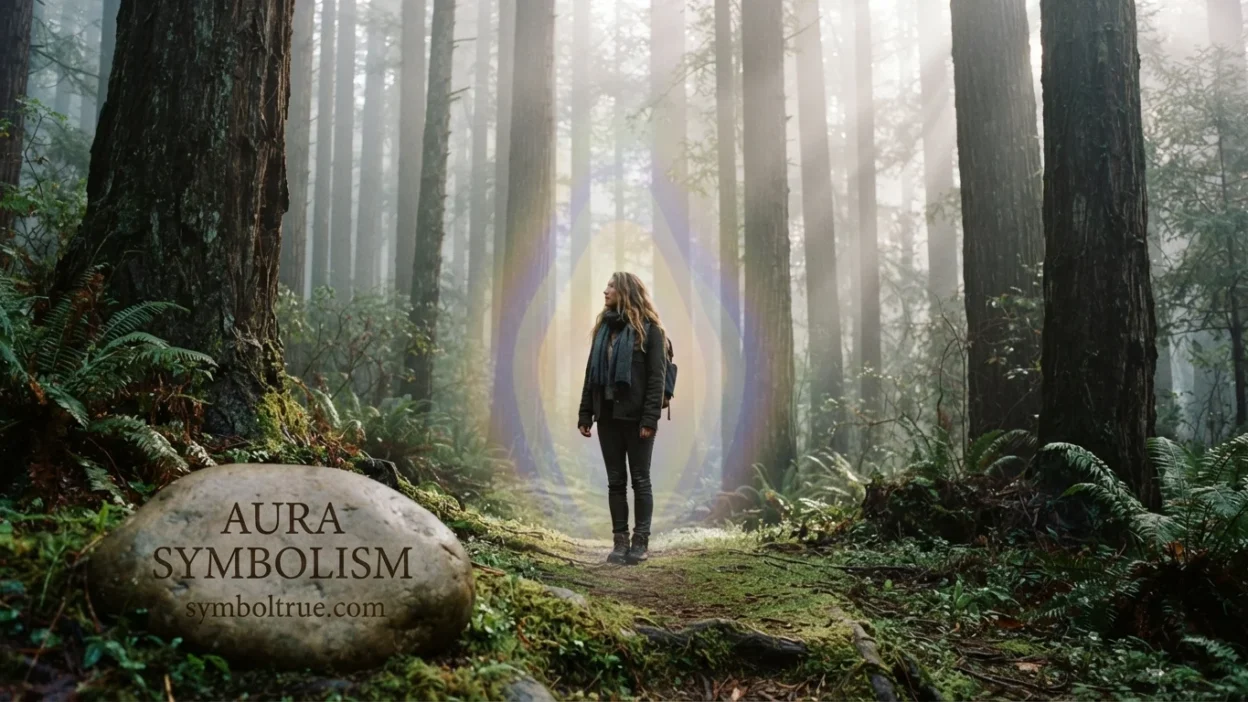
Aura symbolism explores the meanings people traditionally associate with an aura, often described as a subtle field surrounding a person. Across spiritual traditions, artwork, wellness practices, and popular culture, auras are commonly linked with emotions, personality, spirituality, and personal energy.
Many people find aura colors meaningful because they offer a symbolic way to describe feelings and personal qualities. However, scientific research has not established that colored energy fields can reliably reveal a person’s personality, health, or spiritual condition. For this reason, aura meanings are best understood as spiritual, cultural, or personal interpretations.
Aura Symbolism Meaning (Clear Definition)
Aura symbolism refers to the meanings traditionally associated with an aura or perceived energy field surrounding a person.
In spiritual and metaphysical traditions, an aura is sometimes described as a subtle field extending around the body. Practitioners may interpret its perceived color, brightness, shape, or movement as signs of emotional or spiritual qualities.
Aura colors can carry different traditional meanings, including:
- Blue: Calmness, communication, and emotional sensitivity
- Green: Growth, compassion, and renewal
- Yellow: Optimism, creativity, and confidence
- Red: Passion, strength, and vitality
- Purple: Spirituality, imagination, and intuition
- White: Purity, peace, and spiritual awareness
- Orange: Creativity, enthusiasm, and social energy
However, these associations vary considerably between traditions. Therefore, they should be viewed as symbolic interpretations rather than universal facts.
What Does Aura Symbolism Represent?
Aura symbolism can represent several broad ideas depending on the tradition and the person’s interpretation. In many modern spiritual practices, it provides a visual language for describing qualities that may otherwise be difficult to express.
Emotional Energy
Some spiritual systems use aura imagery to represent a person’s emotional state. For example, a bright or warm color may be interpreted as positive energy, while a darker shade might suggest emotional difficulty.
These interpretations can vary from one tradition to another. As a result, the same color may carry different meanings depending on the context.
Personality
Aura colors are sometimes connected with personality characteristics in modern metaphysical practices. For instance, blue may traditionally represent someone who is thoughtful or communicative.
Similarly, yellow may be associated with confidence, optimism, or creativity. These descriptions are symbolic rather than scientifically proven personality assessments.
Spiritual Awareness
Aura symbolism is also frequently connected with spiritual development. Certain colors or patterns may be interpreted as signs of meditation, intuition, inner transformation, or spiritual awareness.
For people who follow these traditions, aura imagery can provide a way to reflect on their spiritual experiences.
Personal Identity
An aura can also work as a metaphor for the impression someone creates. In everyday conversation, people often describe another person’s “energy” or “presence” without referring to a literal visible field.
In this sense, aura symbolism can describe how a person’s personality or presence feels to others.
Spiritual Meaning of Aura Symbolism
Spiritually, aura symbolism is often associated with the belief that people have an energetic or spiritual presence beyond their physical appearance.
Common spiritual interpretations connect the aura with:
- Inner balance
- Emotional awareness
- Intuition
- Spiritual growth
- Personal transformation
- Connection with others
- Inner peace
- Self-discovery
For example, a bright aura may traditionally be viewed as a symbol of positive energy or spiritual awareness. In contrast, a darker aura may be interpreted as emotional tension or uncertainty.
These meanings depend on the particular spiritual system. Therefore, they should be treated as beliefs rather than established scientific facts.
Even so, aura symbolism can provide a useful language for personal reflection. People may use it to think about their emotions, intentions, relationships, and personal growth.
Biblical / Religious Meaning of Aura Symbolism
The Bible does not present a standardized system of colored human auras in the modern metaphysical sense.
Nevertheless, religious traditions often use imagery involving light, radiance, holiness, glory, and spiritual presence. Because of this connection, some modern readers associate aura-like imagery with divine light or spiritual illumination.
However, these associations should not be treated as direct biblical definitions of an aura. Biblical references to light and radiance occur within specific theological contexts.
Other religious traditions also contain concepts involving halos, luminous bodies, subtle energy, or spiritual radiance. Although these ideas may share similar imagery, they are not necessarily identical to modern aura-color systems.
Aura Symbolism in History and Culture
Ideas involving luminous or radiant figures have appeared in various religious, artistic, and philosophical traditions throughout history.
One familiar example is the halo, which artists have used to represent holiness or sacred status. Similar forms of spiritual radiance also appear in the visual traditions of other religions.
Historically, these visual elements served symbolic purposes. They could communicate holiness, enlightenment, authority, or spiritual importance rather than represent a scientifically measured energy field.
Over time, modern aura practices developed through a mixture of spiritual, occult, New Age, and alternative-wellness ideas. Consequently, the concept of an aura has acquired different meanings across communities and periods.
Aura Symbolism in Literature and Art
Aura symbolism works particularly well in literature and visual art because it can represent qualities that are difficult to show directly.
For example, an artist may surround a character with glowing colors to suggest:
- Mystery
- Spirituality
- Emotional intensity
- Supernatural qualities
- Transformation
- Purity
- Danger
- Otherworldliness
Likewise, writers may describe someone’s aura as warm, powerful, dark, or radiant to communicate their presence.
In fiction, an aura does not necessarily represent a literal energy field. Instead, it can function as a creative device that gives readers a stronger sense of a character’s personality or emotional influence.
Aura Symbolism in Dreams
Aura-related dreams can have highly personal meanings. Therefore, the emotions and circumstances surrounding the dream are important when considering a possible interpretation.
For example, seeing a bright aura around yourself might symbolize confidence, hope, self-awareness, or personal growth. Meanwhile, a dark or fading aura could represent uncertainty, emotional tension, or a perceived change in your life.
Seeing a colorful aura around another person may also reflect how you perceive that person’s personality or influence.
There is no scientifically established dream dictionary that assigns one fixed meaning to every aura dream. Instead, personal experiences, emotions, relationships, and cultural beliefs can all influence dream symbolism.
Positive Symbolism of Aura
Aura imagery often has positive associations in spiritual and popular interpretations. These meanings can vary, but several themes appear frequently.
Peace and Calm
Soft or cool colors are sometimes interpreted as symbols of tranquility and emotional balance. As a result, blue or light-colored aura imagery may create a sense of peace.
Growth and Renewal
Green aura symbolism is often connected with nature, growth, compassion, healing, and renewal. For this reason, green may appear in symbolic artwork related to personal development.
Creativity
Yellow and orange are sometimes associated with imagination, enthusiasm, communication, and creative expression. In art, these colors can also create a lively and energetic atmosphere.
Spiritual Awareness
Purple, violet, and white may be interpreted in some traditions as symbols of spirituality, intuition, wisdom, or higher awareness.
However, these associations depend on the belief system in which they are used.
Personal Transformation
Changes in an imagined aura can symbolize personal development and emotional transformation. In this context, shifting colors may represent changing experiences, beliefs, or perspectives.
Negative or Hidden Symbolism of Aura
Aura symbolism can also represent uncertainty, emotional conflict, or hidden concerns.
Depending on the interpretation, darker colors may symbolize:
- Fear
- Confusion
- Emotional tension
- Isolation
- Hidden concerns
- Personal struggles
- Uncertainty
However, darker colors do not automatically have negative meanings. In art and storytelling, for instance, dark aura imagery may simply create mystery, depth, or dramatic atmosphere.
Similarly, the meaning of a particular color can change according to personal experience and cultural context.
Common Interpretations of Aura Symbolism
Different aura traditions assign different meanings to colors. The table below presents common modern symbolic associations while recognizing that interpretations can vary.
| Aura Color | Common Symbolic Associations |
|---|---|
| Red | Passion, strength, energy, determination |
| Orange | Creativity, enthusiasm, sociability |
| Yellow | Optimism, confidence, curiosity |
| Green | Growth, compassion, balance, renewal |
| Blue | Calmness, communication, sensitivity |
| Indigo | Intuition, reflection, inner awareness |
| Purple | Spirituality, imagination, transformation |
| Pink | Love, kindness, affection |
| White | Peace, purity, spiritual awareness |
| Black | Mystery, protection, uncertainty, or transformation |
These meanings represent cultural and spiritual interpretations. They should not be treated as scientifically verified characteristics.
Why Does Aura Symbolism Matter Today?
Aura symbolism remains popular because it provides a simple visual language for discussing emotions, personality, spirituality, and personal identity.
Today, aura concepts appear in wellness communities, meditation practices, artwork, books, social media, and modern spiritual discussions. As a result, the idea continues to influence contemporary culture.
Even when someone does not believe that auras are literal energy fields, the symbolism can still work as a metaphor. For example, thinking about colors and personal “energy” may encourage reflection on mood, relationships, self-expression, and personal goals.
In addition, aura symbolism can inspire creative expression. Artists, writers, and designers can use glowing colors and radiant imagery to communicate emotions or create a particular atmosphere.
At the same time, aura interpretations should not replace professional medical, psychological, or scientific assessment when someone has a serious health or emotional concern.
Frequently Asked Questions About Aura Symbolism
What does aura symbolism mean?
Aura symbolism refers to the meanings traditionally associated with an imagined or perceived energy field surrounding a person. These interpretations often involve colors, emotions, personality, and spirituality.
What is the most common aura color meaning?
There is no universally accepted aura-color system. However, blue is commonly associated with calmness and communication, while green is often linked with growth and compassion.
What does a blue aura symbolize?
In many modern spiritual interpretations, a blue aura symbolizes calmness, communication, sensitivity, honesty, or emotional awareness.
What does a green aura symbolize?
Green aura symbolism is commonly connected with growth, compassion, balance, nature, renewal, and emotional harmony.
What does a purple aura symbolize?
Purple is often associated with spirituality, imagination, intuition, transformation, and inner awareness in modern metaphysical traditions.
Can aura colors predict personality?
Aura-color systems are sometimes used to describe personality symbolically. However, there is no established scientific evidence that aura colors can reliably predict personality traits.
Are auras scientifically proven?
There is no established scientific evidence that people have visible colored energy fields that can reliably diagnose personality, health, or spiritual conditions.
Why do people believe in aura symbolism?
People may find aura symbolism meaningful because it connects colors, emotions, spirituality, and self-reflection. In addition, cultural traditions and personal experiences can influence these beliefs.
Conclusion
Aura symbolism brings together spirituality, cultural traditions, artistic expression, and personal interpretation. Different colors may symbolize qualities such as peace, creativity, passion, growth, intuition, or spiritual awareness.
However, these meanings vary between traditions and are not scientifically established measurements of personality or health. Ultimately, aura symbolism can be understood as a spiritual belief, cultural concept, artistic metaphor, or personal reflection tool.
By considering both traditional interpretations and modern perspectives, readers can explore aura symbolism with curiosity while recognizing the difference between symbolic belief and established evidence.

Henry Jack is the Administrator of SymbolTrue, ensuring the website runs smoothly while overseeing content quality, user experience, and daily operations. He is passionate about helping readers explore symbols, meanings, and cultural insights.