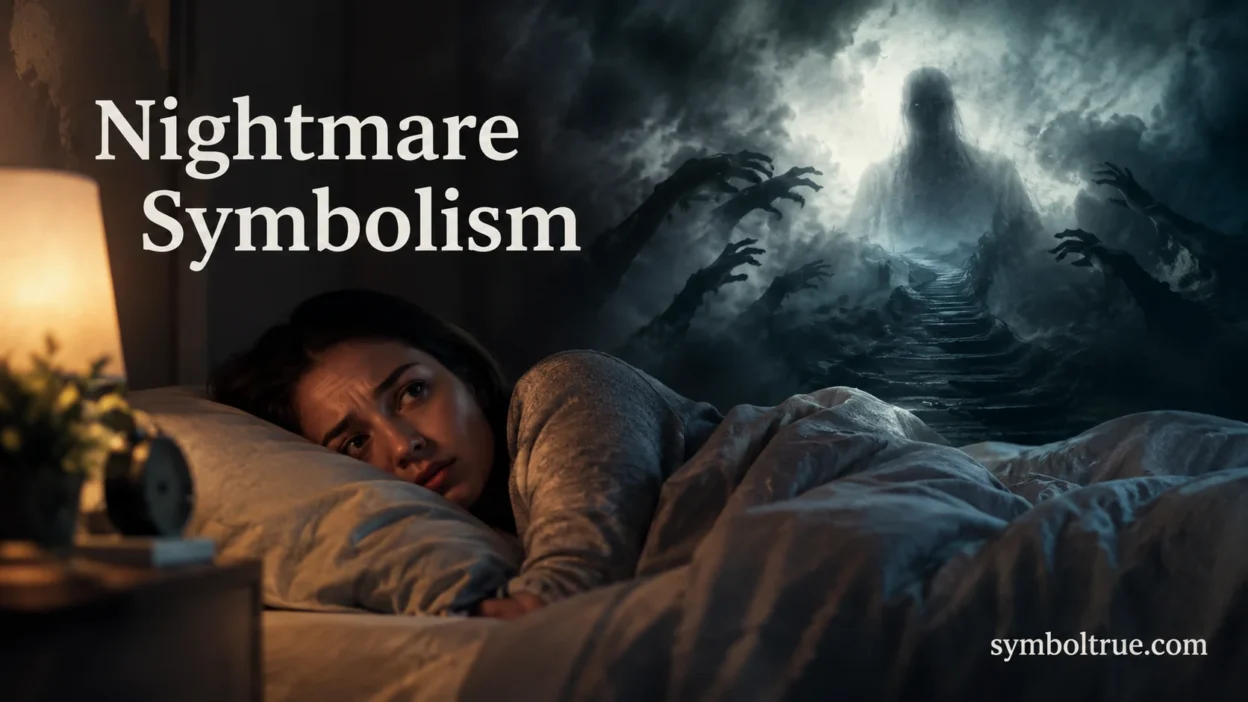
Nightmare symbolism explores the deeper meanings people may associate with frightening or disturbing dreams. A nightmare can involve fear, danger, loss, confusion, darkness, or helplessness. While some traditions interpret these dreams spiritually, modern psychology often connects nightmares with emotions, stress, memories, and everyday experiences.
The meaning of a nightmare is rarely universal. Personal experiences, cultural beliefs, emotions, and the details of the dream can all influence its interpretation. Therefore, nightmare symbolism is best approached as a way to explore possible meanings rather than as a fixed prediction of future events.
Nightmare Symbolism Meaning
Nightmare symbolism refers to the symbolic meanings people associate with frightening or distressing dreams.
A nightmare may contain people, animals, places, objects, or situations that represent something emotionally significant to the dreamer. For instance, being chased might symbolize a desire to avoid a difficult situation, while falling could reflect feelings of uncertainty or loss of control.
Dream interpretation traditions have existed across many cultures. However, there is no single symbolic dictionary that provides one guaranteed meaning for every nightmare.
Instead, interpretation often depends on the dreamer’s emotions and personal circumstances.
What Does Nightmare Symbolism Represent?
Nightmare symbolism can represent several emotional and psychological themes. The exact meaning depends on the dream and the individual experiencing it.
Fear and Anxiety
Fear is one of the most obvious themes found in nightmares. A frightening dream may reflect worries that are already present in waking life.
For example, someone dealing with uncertainty at work might dream about being trapped, chased, or unable to escape.
The dream does not necessarily predict danger. Instead, it may provide symbolic imagery for an existing emotional concern.
Loss of Control
Some nightmares involve falling, being unable to move, losing something important, or being trapped.
Such experiences can symbolize a perceived lack of control. They may appear during periods when someone feels overwhelmed by responsibilities or uncertain circumstances.
Emotional Conflict
Nightmares can also symbolize unresolved emotional tension.
A difficult relationship, personal disagreement, regret, or internal conflict may appear in symbolic form during sleep. The dream imagery can sometimes make an emotional issue feel more vivid.
Change and Uncertainty
Major life changes can create unfamiliar or unsettling dream scenarios.
Moving, starting a new job, ending a relationship, or entering an uncertain period may influence dream content. A nightmare may symbolically express discomfort with the unknown.
Hidden Concerns
Some interpretations view nightmares as expressions of concerns that a person has not consciously addressed.
A frightening symbol may therefore encourage self-reflection. However, this interpretation should remain personal rather than being treated as a proven explanation for every nightmare.
Spiritual Meaning of Nightmare Symbolism
In spiritual traditions, nightmares have been interpreted in different ways. Some belief systems view disturbing dreams as warnings, spiritual struggles, emotional messages, or opportunities for reflection.
Common spiritual interpretations may connect nightmares with:
- Inner fear
- Spiritual uncertainty
- Personal transformation
- Emotional cleansing
- Unresolved concerns
- A need for protection
- Self-reflection
- Major life transitions
Some people believe that frightening dreams can encourage greater awareness of personal thoughts and emotions.
For example, a nightmare involving darkness might be interpreted symbolically as uncertainty or a period of personal searching. A dream about overcoming a threatening figure could represent courage or inner strength.
These meanings belong to spiritual and cultural traditions rather than established scientific evidence. The same nightmare may therefore carry different interpretations for different people.
Biblical / Religious Meaning of Nightmare Symbolism (if applicable)
The Bible contains several important dreams and visions, but it does not provide a standardized system for interpreting modern nightmares.
Biblical stories sometimes present dreams as meaningful experiences involving warnings, revelations, guidance, or symbolic messages. Examples include the dreams associated with Joseph in Genesis and the dreams described in the Book of Daniel.
At the same time, not every frightening dream should be interpreted as a divine message. Religious interpretations depend on theological tradition, scripture, and personal belief.
Other religious and cultural traditions have also developed their own approaches to disturbing dreams. Some regard them as spiritual experiences, while others emphasize prayer, reflection, or protection.
Therefore, nightmare symbolism in a religious context should be understood according to the specific tradition rather than assigned one universal meaning.
Nightmare Symbolism in History and Culture
Dream interpretation has a long history across human cultures.
Ancient societies often treated dreams as significant experiences. In some historical traditions, dreams were connected with divine communication, omens, healing, or guidance.
Over time, interpretations changed as religious, philosophical, and psychological ideas developed.
Different cultures also created distinct beliefs about frightening dreams. Some traditions viewed nightmares as supernatural experiences, while others understood them through spiritual or symbolic frameworks.
The modern understanding of nightmares includes psychological and neurological perspectives as well. Today, nightmares are commonly discussed in relation to sleep, stress, emotional experiences, trauma, and other factors.
These historical changes show that nightmare symbolism is shaped by the beliefs and knowledge of each period.
Nightmare Symbolism in Literature and Art
Nightmares have played an important role in literature, painting, film, and other forms of creative expression.
Artists and writers often use nightmare imagery to explore themes that are difficult to communicate directly.
Common artistic themes include:
- Fear
- Isolation
- Death
- Mystery
- Guilt
- Transformation
- Conflict
- The unknown
- Loss of control
A dark landscape may represent uncertainty, while a threatening creature might symbolize fear or danger.
Literature can also use nightmares to reveal a character’s internal struggles. Instead of describing emotions directly, an author may place those emotions into a frightening dream sequence.
Because of this flexibility, nightmare symbolism remains a powerful creative device.
Nightmare Symbolism in Dreams
Nightmares are themselves dreams, so interpreting their symbolism requires attention to the specific details involved.
Being Chased
A chase may symbolize avoidance, pressure, fear, or a situation that feels difficult to confront.
The identity of the pursuer can also influence the interpretation. A stranger, animal, or familiar person may represent different personal associations.
Falling
Falling dreams are often associated with uncertainty, instability, or a perceived loss of control in popular dream interpretation.
However, the dreamer’s emotions matter. Falling may feel terrifying for one person but freeing or exciting for another.
Being Trapped
A trapped or confined setting can symbolize frustration, limitation, pressure, or emotional restriction.
Such imagery may appear when someone feels unable to change a difficult situation.
Losing Someone
Dreams about losing a loved one can be deeply emotional. Symbolically, they may reflect fear of separation, change, attachment, or unresolved feelings.
They should not automatically be interpreted as predictions of an actual loss.
Monsters or Threatening Figures
Monsters and threatening figures can represent fear, uncertainty, conflict, or something unfamiliar.
In some cases, the creature may simply reflect frightening imagery encountered through entertainment, media, or imagination.
Darkness
Darkness can symbolize uncertainty, mystery, fear, or the unknown.
However, darkness does not always have a negative meaning. In artistic and spiritual contexts, it can also represent introspection, transition, or the hidden parts of personal experience.
Positive Symbolism of Nightmare Symbolism
Although nightmares are frightening, their symbolism can sometimes be connected with personal awareness and growth.
Self-Awareness
A disturbing dream may encourage someone to pay attention to emotions they have been overlooking.
For instance, recurring fear in dreams might encourage reflection on stress or unresolved concerns.
Emotional Release
Some interpretations view intense dreams as a way of processing difficult emotions.
The dream itself may feel unpleasant, but reflecting on it can help a person recognize what has been affecting them.
Personal Strength
Overcoming a threatening figure or escaping danger in a dream may symbolize resilience and courage.
Such imagery can represent the feeling of confronting difficulties rather than avoiding them.
Transformation
Nightmares sometimes contain dramatic changes, endings, or frightening transitions.
Symbolically, these experiences can represent the end of one phase and the beginning of another.
Negative or Hidden Symbolism of Nightmare Symbolism
Nightmares can also symbolize difficult emotional experiences.
Common interpretations include:
- Fear
- Anxiety
- Stress
- Emotional conflict
- Uncertainty
- Guilt
- Helplessness
- Isolation
- Suppressed concerns
Recurring nightmares may feel particularly significant because the same themes or situations appear repeatedly.
However, repetition does not automatically indicate one specific hidden message. Sleep patterns, stress, medications, traumatic experiences, and other factors can influence nightmares.
For this reason, symbolic interpretation should be considered alongside the dreamer’s real-life circumstances.
Common Interpretations of Nightmare Symbolism
The following table summarizes common symbolic interpretations associated with nightmare themes:
| Nightmare Theme | Common Symbolic Interpretation |
|---|---|
| Being chased | Avoidance, pressure, fear, or unresolved concerns |
| Falling | Uncertainty, instability, or loss of control |
| Being trapped | Restriction, frustration, or helplessness |
| Darkness | Mystery, uncertainty, fear, or the unknown |
| Monsters | Threat, anxiety, conflict, or unfamiliar situations |
| Death | Change, endings, transformation, or fear of loss |
| Losing someone | Separation, attachment, change, or emotional concern |
| Natural disasters | Overwhelm, instability, or major life disruption |
| Being unable to speak | Frustration, suppressed expression, or helplessness |
| Escaping danger | Resilience, problem-solving, or desire for freedom |
These are general symbolic associations rather than universal rules. Personal experiences can change the meaning of any dream.
Why Does Nightmare Symbolism Matter Today?
Nightmare symbolism remains relevant because dreams are often closely connected with people’s emotional experiences and personal stories.
Modern discussions of nightmares frequently consider stress, sleep quality, emotional experiences, and psychological factors. At the same time, spiritual and cultural interpretations continue to influence how people understand disturbing dreams.
For many people, examining a nightmare can provide an opportunity for self-reflection.
A useful approach is to ask:
- What emotion did the dream create?
- What was happening in my life recently?
- Which person, object, or situation stood out?
- Does the dream resemble a current concern?
- Has the same theme appeared before?
These questions can help connect dream imagery with personal experiences without assuming that one interpretation must be correct.
If nightmares become frequent, severely disrupt sleep, or cause significant distress, discussing them with a qualified healthcare professional may be more appropriate than relying only on symbolic interpretation.
Frequently Asked Questions About Nightmare Symbolism
What does nightmare symbolism mean?
Nightmare symbolism refers to the possible meanings associated with frightening dream images, emotions, situations, and experiences.
What does a nightmare symbolize spiritually?
Depending on the spiritual tradition, a nightmare may symbolize fear, inner conflict, transformation, spiritual uncertainty, or a need for reflection. These interpretations vary between belief systems.
Are nightmares signs of something bad?
A nightmare does not necessarily mean that something bad will happen. Dreams can be influenced by stress, emotions, memories, sleep patterns, and personal experiences.
What does being chased in a nightmare symbolize?
Being chased is commonly interpreted as a symbol of avoidance, pressure, fear, or difficulty confronting a situation. Personal circumstances can change the interpretation.
What does falling in a nightmare symbolize?
Falling is often associated with uncertainty, instability, or loss of control in popular dream interpretation. The emotions experienced during the dream can provide additional context.
What does darkness symbolize in a nightmare?
Darkness may represent uncertainty, fear, mystery, the unknown, or personal introspection. Its meaning depends on the context of the dream.
Can nightmares predict the future?
There is no established scientific basis for treating ordinary nightmares as reliable predictions of future events. Some spiritual traditions assign prophetic significance to dreams, but such beliefs vary.
Why do people have recurring nightmares?
Recurring nightmares can be associated with repeated emotional themes, stress, disturbing experiences, sleep problems, or other factors. A recurring dream does not have one universal explanation.
Should I worry about frequent nightmares?
Occasional nightmares are common. However, frequent nightmares that repeatedly disturb sleep or cause significant distress may be worth discussing with a qualified healthcare professional.
Conclusion
Nightmare symbolism can represent fear, uncertainty, emotional conflict, personal transformation, loss of control, and unresolved concerns. Spiritual and cultural traditions may give nightmares additional meanings, while modern perspectives often examine their connection with emotions and sleep experiences.
The most useful interpretation depends on the dream’s details, the emotions involved, and the dreamer’s personal circumstances. Rather than treating a nightmare as a guaranteed warning or prediction, it can be viewed as an opportunity for reflection and greater self-awareness.

Henry Jack is the Administrator of SymbolTrue, ensuring the website runs smoothly while overseeing content quality, user experience, and daily operations. He is passionate about helping readers explore symbols, meanings, and cultural insights.