Zodiac symbolism gives people a fascinating way to explore traditional ideas about personality, nature, cycles, and the connection between humans and the sky. The twelve zodiac signs use animals, objects, mythical figures, elements, and celestial associations to express different symbolic qualities.
People have studied zodiac traditions for centuries. Today, many people explore them through astrology, spirituality, art, fashion, literature, and personal reflection. However, interpretations vary across cultures and traditions, and astrology does not provide scientifically established evidence for predicting personality or future events.
Zodiac Symbolism Meaning (Clear Definition)
Zodiac symbolism refers to the traditional meanings connected with the twelve zodiac signs.
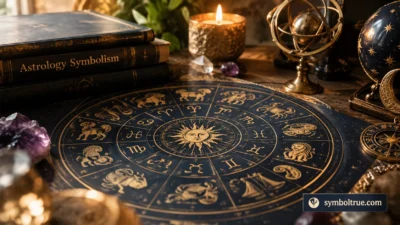
In Western astrology, the twelve signs include Aries, Taurus, Gemini, Cancer, Leo, Virgo, Libra, Scorpio, Sagittarius, Capricorn, Aquarius, and Pisces.
Each sign carries a collection of traditional symbols and associations. These associations often include an animal or figure, an element, a ruling planet, and particular personality themes.
Here are some common traditional associations:
- Aries: The ram represents courage, initiative, energy, and new beginnings.
- Taurus: The bull represents persistence, stability, patience, and determination.
- Gemini: The twins suggest communication, curiosity, flexibility, and duality.
- Cancer: The crab represents protection, home, care, and emotional sensitivity.
- Leo: The lion symbolizes confidence, creativity, warmth, and leadership.
- Virgo: The maiden connects with analysis, organization, practicality, and attention to detail.
- Libra: The scales represent balance, harmony, relationships, and fairness.
- Scorpio: The scorpion suggests intensity, transformation, mystery, and emotional depth.
- Sagittarius: The archer represents exploration, learning, freedom, and adventure.
- Capricorn: The sea-goat symbolizes ambition, discipline, patience, and endurance.
- Aquarius: The water-bearer represents originality, ideas, independence, and collective thinking.
- Pisces: The fish suggest imagination, compassion, sensitivity, and spirituality.
These meanings come from astrological traditions rather than scientific personality research.
What Does Zodiac Symbolism Represent?
Zodiac symbolism can represent many aspects of human experience. People often use it to explore identity, relationships, personal qualities, change, and aspirations.
Animals and Mythical Figures
Animals play an important role in zodiac imagery. The ram, bull, crab, lion, scorpion, and fish all provide memorable visual symbols.
Each creature brings its own traditional associations. The lion, for example, can suggest courage and confidence, while the fish may suggest fluidity and imagination.
Some signs also use human or mythical figures. The archer and sea-goat add mythological themes to the zodiac system.
The Four Elements
Western astrology groups the twelve signs into four traditional elements:
- Fire: Aries, Leo, Sagittarius
- Earth: Taurus, Virgo, Capricorn
- Air: Gemini, Libra, Aquarius
- Water: Cancer, Scorpio, Pisces
Astrological traditions commonly connect fire with energy and expression. Earth often represents stability and practicality. Air relates to thought and communication, while water commonly represents emotion, intuition, and sensitivity.
These meanings belong to traditional symbolism rather than scientific classifications.
Cycles and Change
The zodiac also represents cycles. Its twelve signs create an ordered sequence that connects with the traditional movement of the Sun through the zodiac.
This cyclical structure can symbolize beginnings, development, maturity, completion, and renewal.
Spiritual Meaning of Zodiac Symbolism
Many spiritual and esoteric traditions use zodiac symbolism as a language for self-reflection and cosmic connection.
Some people examine their zodiac sign to reflect on their character, relationships, goals, and personal challenges. Others see the zodiac as part of a broader spiritual system that connects human life with celestial patterns.
Different spiritual traditions interpret these symbols in different ways. Some people consider astrology spiritually meaningful, while others reject astrological practices.
For this reason, zodiac symbolism works best as a traditional or interpretive framework rather than a universal spiritual fact.
Biblical / Religious Meaning of Zodiac Symbolism
Religious traditions hold different views about celestial signs and astrology.
The Bible mentions stars, heavenly bodies, seasons, and signs in the heavens. However, those references do not automatically support the modern Western zodiac or modern astrological practices.
Many Christian traditions distinguish between observing the heavens and using celestial signs for divination. Other religious and cultural traditions approach astrology and celestial symbolism differently.
Therefore, no single biblical or religious interpretation can explain zodiac symbolism for every tradition. Readers should consider the historical and religious context of each interpretation.
Zodiac Symbolism in History and Culture
Zodiac traditions have a long history.
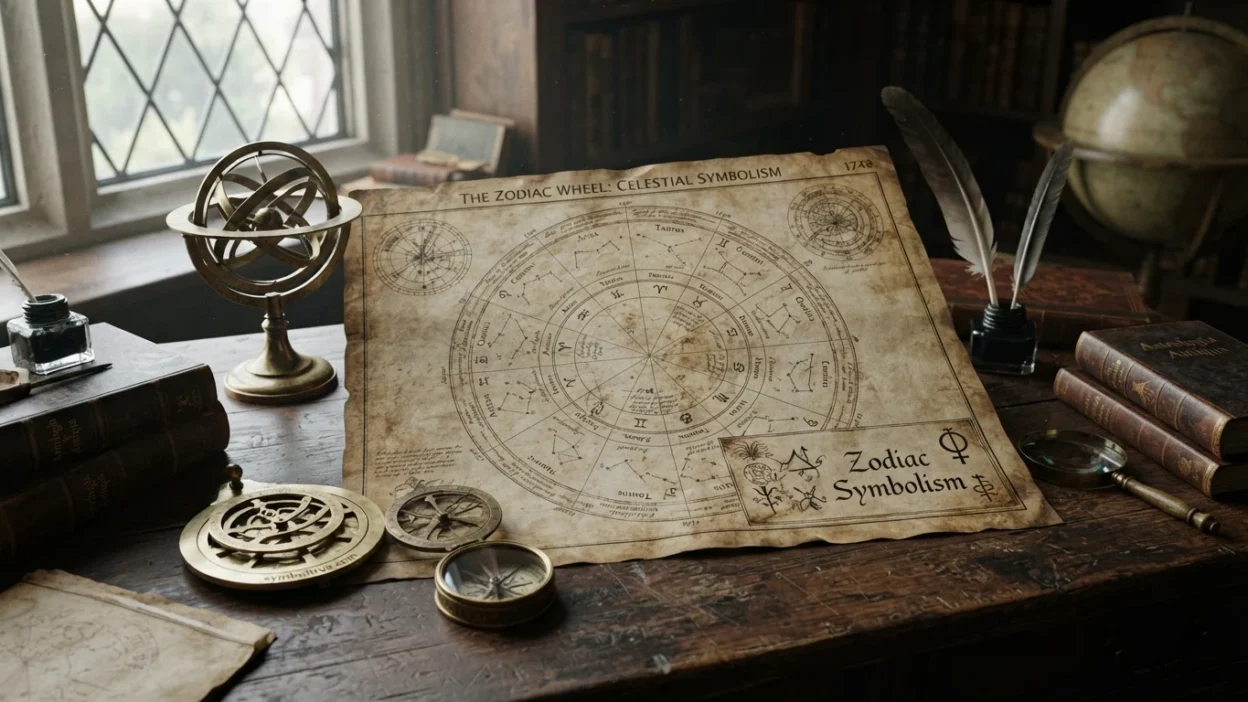
Ancient Mesopotamian cultures developed sophisticated systems for observing celestial movements. Later Greek and Hellenistic traditions helped shape many ideas that influenced Western astrology.
Over time, zodiac imagery appeared in calendars, manuscripts, astronomical texts, architecture, decorative art, and cultural traditions.
Different civilizations also developed their own zodiac systems.
The Chinese zodiac provides an important example. It follows a twelve-year animal cycle and uses a different structure from the Western twelve-sign zodiac.
This distinction matters because people sometimes use the term “zodiac” for several different cultural systems.
Zodiac Symbolism in Literature and Art
Artists and writers have used zodiac imagery for centuries.
Medieval manuscripts often placed zodiac signs alongside calendars and astronomical illustrations. Artists also used zodiac figures to explore themes such as time, cosmic order, destiny, and seasonal change.
Literature can use zodiac imagery to explore identity and fate. A writer might use a scorpion to suggest mystery or transformation, for example, while scales might suggest balance or justice.
Modern artists continue to use zodiac symbols in paintings, tattoos, jewelry, graphic design, and photography.
Their simple shapes and recognizable imagery make them useful symbols for identity, spirituality, mystery, and self-expression.
Zodiac Symbolism in Dreams
Zodiac symbols can appear in dreams for many personal reasons.
A dream about a particular sign may remind you of a person, memory, belief, relationship, or personality trait. Your own experiences often influence the meaning more strongly than a universal dream dictionary.
For example, a lion may make you think about confidence or leadership. Scales may remind you of fairness or an important decision.
When a zodiac symbol appears in a dream, consider these questions:
- What symbol did you see?
- What emotions did you experience?
- Does the symbol remind you of someone?
- What happened around the symbol?
- What personal meaning does that sign have for you?
These questions can help you develop a more personal interpretation.
Positive Symbolism of Zodiac Signs
Zodiac traditions often highlight qualities that people consider positive or desirable.
Common examples include:
- Aries: courage and initiative
- Taurus: patience and persistence
- Gemini: curiosity and communication
- Cancer: care and protection
- Leo: confidence and creativity
- Virgo: organization and practicality
- Libra: balance and cooperation
- Scorpio: resilience and transformation
- Sagittarius: exploration and learning
- Capricorn: discipline and determination
- Aquarius: originality and independent thinking
- Pisces: imagination and compassion
These qualities represent traditional astrological interpretations. They do not provide scientifically proven descriptions of every person born under a particular sign.
Negative or Hidden Symbolism of Zodiac Signs
Zodiac symbolism can also explore challenging qualities.
Traditional interpretations often show how a positive quality can develop an unhealthy side when it becomes excessive.
For example, courage can turn into impulsiveness. Persistence can become stubbornness. Confidence can become pride, while sensitivity can lead to emotional vulnerability.
Common challenging themes include:
- Impulsiveness
- Stubbornness
- Jealousy
- Fear of change
- Isolation
- Excessive control
- Emotional overwhelm
- Difficulty communicating
- Excessive pride
- Resistance to compromise
These interpretations describe symbolic themes rather than fixed characteristics of individuals.
Common Interpretations of Zodiac Symbolism
People interpret zodiac symbolism in several ways.
Identity and Self-Expression
Many people use zodiac signs as symbols of identity. They may wear zodiac jewelry, display zodiac artwork, or use their sign in social media profiles.
For some people, the symbolism simply provides a fun way to express personal interests.
Relationships
Astrological traditions often compare zodiac signs when discussing relationships and compatibility.
Practitioners may consider elements, planetary associations, qualities, and complete birth charts. However, these systems represent astrological traditions rather than scientifically established methods for measuring relationship compatibility.
Personal Growth
People can also use zodiac archetypes as prompts for self-reflection.
Someone might consider a traditional strength associated with their sign and think about how that quality appears in daily life. They might also explore a challenging trait as a starting point for personal growth.
Connection With the Cosmos
Zodiac symbolism reflects humanity’s long-standing fascination with the night sky.
People throughout history have looked upward and searched for patterns. Zodiac traditions provide one cultural expression of that desire to connect human life with the larger universe.
Why Does Zodiac Symbolism Matter Today?
Zodiac symbolism remains popular in modern culture.
You can find zodiac imagery in jewelry, tattoos, clothing, artwork, social media, books, entertainment, and home décor.
Its visual simplicity helps explain some of its popularity. A ram, lion, scorpion, or pair of fish can communicate a collection of traditional ideas through one recognizable image.
Zodiac symbolism also gives people a vocabulary for discussing identity and personality. Even people who do not believe in astrology may enjoy zodiac symbols as cultural or artistic expressions.
At the same time, readers should distinguish cultural symbolism from scientific evidence. Astrology has historical and cultural importance, but science does not establish zodiac signs as reliable predictors of personality or future events.
Frequently Asked Questions About Zodiac Symbolism
What is zodiac symbolism?
Zodiac symbolism refers to the traditional meanings and associations connected with the twelve zodiac signs. These meanings include animals, elements, myths, celestial associations, and personality themes.
What are the 12 zodiac symbols?
The twelve Western zodiac symbols are the ram, bull, twins, crab, lion, maiden, scales, scorpion, archer, sea-goat, water-bearer, and fish.
What does zodiac symbolism mean spiritually?
Some spiritual traditions use zodiac symbolism for self-reflection, archetypal exploration, and ideas about cosmic connection. Different traditions hold different beliefs.
Does the Bible support zodiac symbolism?
The Bible discusses stars and heavenly signs, but those references do not automatically endorse modern astrology. Christian traditions hold different views about astrology and celestial symbolism.
What is the difference between zodiac symbolism and astrology?
Zodiac symbolism focuses on the meanings connected with zodiac signs. Astrology uses zodiac signs and celestial positions within a broader interpretive system.
Can zodiac symbols predict the future?
Traditional astrology makes various predictive claims, but scientific research does not establish zodiac signs as reliable tools for predicting future events.
Why do zodiac signs use animals?
Animals provide memorable symbols for qualities and stories within traditional zodiac systems. Their meanings developed through historical mythology and cultural traditions.
Can zodiac symbolism have negative meanings?
Yes. Traditional interpretations often include both strengths and challenges. For example, confidence can have a positive meaning, while excessive confidence can suggest pride.
Are all zodiac systems the same?
No. Western astrology and systems such as the Chinese zodiac have different histories, structures, symbols, and cultural meanings.
Conclusion
Zodiac symbolism combines celestial imagery, animals, mythology, elements, cultural traditions, and ideas about human identity. Each zodiac sign carries a collection of traditional meanings that people have explored through astrology, spirituality, art, literature, and popular culture.
Whether you view zodiac signs as cultural symbols, spiritual archetypes, artistic motifs, or tools for personal reflection, they offer an interesting window into humanity’s long-standing fascination with the stars and the search for meaning.

Henry Jack is the Administrator of SymbolTrue, ensuring the website runs smoothly while overseeing content quality, user experience, and daily operations. He is passionate about helping readers explore symbols, meanings, and cultural insights.