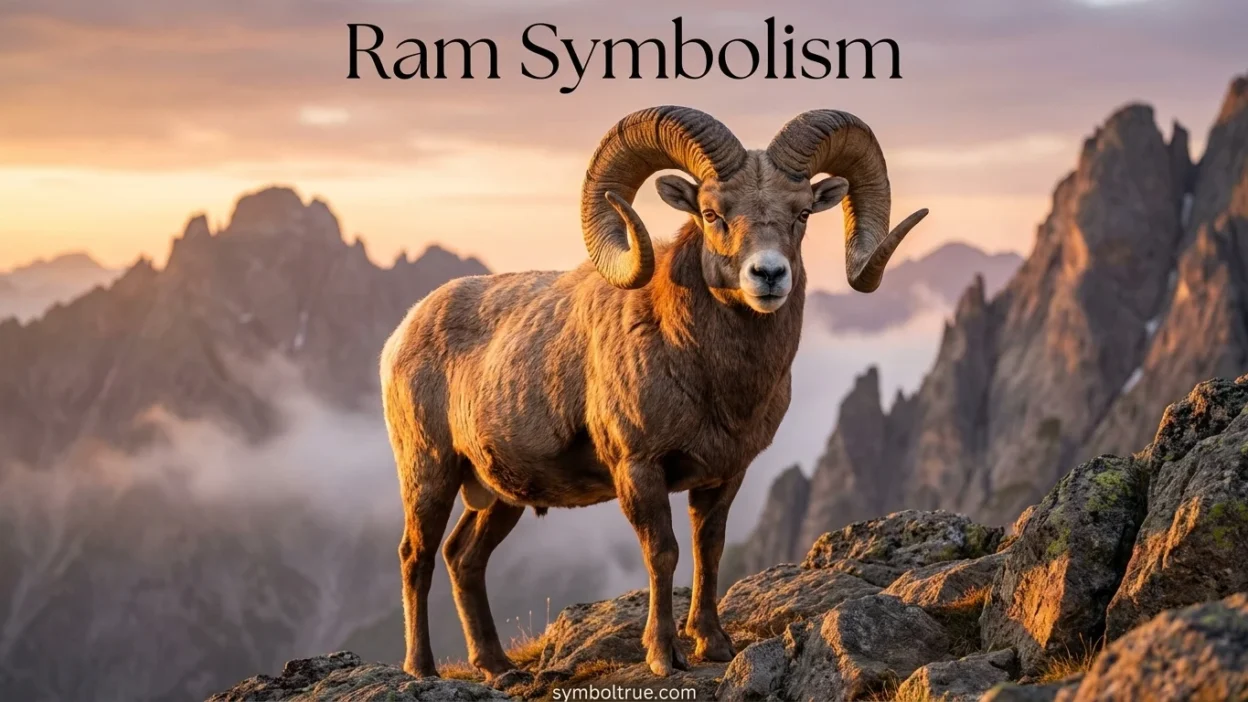
Ram symbolism is often connected with strength, courage, determination, leadership, protection, and new beginnings. Across different cultures and belief systems, the ram has been viewed as a powerful animal because of its bold nature, curved horns, and willingness to face challenges directly.
Seeing a ram, dreaming about one, or feeling drawn to its image can carry different meanings depending on the situation. In many interpretations, the ram encourages you to stand firmly in your beliefs, take action, and move forward with confidence.
Ram Symbolism Meaning (Clear Definition)
The basic meaning of ram symbolism is strength, courage, leadership, determination, and assertiveness.
The ram is an animal that does not easily back away from a challenge. Its horns are also a natural symbol of power, defense, and confidence. Because of these qualities, the ram often represents the ability to overcome obstacles and protect what matters.
In simple terms, ram symbolism can mean:
- Strength — having the power to handle difficult situations.
- Courage — facing fear instead of running away.
- Leadership — taking responsibility and guiding others.
- Determination — continuing even when the path is difficult.
- Protection — defending yourself, your family, or your values.
- Confidence — trusting your abilities and decisions.
- New beginnings — taking the first step toward something important.
The exact interpretation depends on the culture, personal beliefs, and circumstances surrounding the ram.
What Does Ram Symbolism Represent?
Ram symbolism represents a strong and active approach to life. Unlike animals that are commonly associated with patience or quiet observation, the ram is often linked with direct action.
Strength and Power
A ram’s physical strength makes it a natural symbol of power. Its horns add another layer of meaning because they can represent defense, authority, and the ability to stand one’s ground.
Courage and Boldness
The ram does not symbolize fearlessness because fear never exists. Instead, it can represent the courage to move forward despite uncertainty.
Leadership
Ram symbolism can point toward leadership and personal authority. It may encourage someone to stop waiting for permission and take responsibility for their own direction.
Determination
The ram’s strong and persistent nature makes it a symbol of determination. Its presence can remind you that meaningful progress often requires patience, effort, and persistence.
Protection
Because rams use their horns for defense, they can symbolize protection and boundaries. This meaning may be especially relevant when you need to protect your time, relationships, beliefs, or personal space.
| Ram Symbolism | Meaning |
|---|---|
| Horns | Power, protection, authority |
| Strength | Inner and physical power |
| Courage | Facing challenges bravely |
| Leadership | Taking charge and accepting responsibility |
| Determination | Persistence and endurance |
| Confidence | Trusting yourself |
| New beginnings | Taking action and starting again |
Spiritual Meaning of Ram Symbolism
The spiritual meaning of ram symbolism often relates to inner strength, courage, sacrifice, leadership, and spiritual progress.
A ram may appear as a symbolic reminder that you have more strength than you realize. It can encourage you to stop doubting yourself and face an important situation with confidence.
The ram’s horns can also represent spiritual power and protection. In symbolic interpretations, horns often suggest strength that comes from within rather than from outside approval.
Another spiritual message is action. The ram can encourage you to turn your intentions into movement. If you have been delaying an important decision, ram symbolism may serve as a reminder to take the first meaningful step.
For some people, the ram may also symbolize sacrifice. This idea comes from religious and historical traditions in which rams were used in offerings. Spiritually, this can represent giving up something old to make room for something new.
Biblical / Religious Meaning of Ram Symbolism
The ram has an important place in biblical symbolism and appears in several significant religious stories.
One of the best-known examples occurs in the story of Abraham and Isaac. In Genesis, a ram becomes the sacrificial animal provided in place of Isaac. Because of this story, the ram can be associated with sacrifice, provision, obedience, faith, and divine intervention.
The ram also appears in the Book of Daniel. In Daniel’s vision, a ram with two horns represents the kings of Media and Persia. The horns emphasize ideas of political strength, authority, and power.
In broader religious symbolism, the ram may therefore represent:
- Sacrifice and devotion
- Faith and obedience
- Divine provision
- Strength and authority
- Protection
- Spiritual testing and transformation
Interpretations can vary between religious traditions, so the meaning of a ram is best understood in the context of the specific passage or belief system.
Ram Symbolism in History and Culture
Ram symbolism has existed for thousands of years. Ancient societies often noticed the animal’s strength, horns, reproductive power, and confident behavior and gave these qualities symbolic meaning.
In ancient Egypt, the ram was associated with important divine figures, including Khnum, a deity traditionally represented with a ram’s head. The ram could therefore be connected with creation, fertility, and life.
In ancient Greek tradition, the ram was also important. The story of the Golden Fleece features a magical golden ram whose fleece becomes a central object in the adventures of Jason and the Argonauts.
The ram has also appeared in various ancient religious practices as a sacrificial animal. This helped create symbolic associations with offering, devotion, renewal, and spiritual exchange.
Across cultures, the ram repeatedly became connected with masculine power, fertility, authority, protection, and courage.
Ram Symbolism in Literature and Art
Rams have been used in literature and art to express powerful human qualities.
Artists may use a ram’s horns to suggest authority, strength, or aggression. A calm ram can represent controlled power, while a charging ram may symbolize determination, conflict, or unstoppable energy.
In literature, the ram can function as a metaphor for a character who refuses to surrender. It may represent someone who challenges authority, protects others, or moves forward despite resistance.
The Golden Fleece is one of the clearest examples of ram imagery becoming part of a major literary and mythological story. The ram in this tradition represents adventure, transformation, and a difficult journey toward a valuable goal.
Dream Meaning of Ram Symbolism
Dreaming about a ram can have several possible interpretations. The meaning depends heavily on what the ram was doing and how you felt during the dream.
A peaceful ram may symbolize confidence, stability, or controlled strength.
A charging ram may represent conflict, anger, pressure, or a situation that you are determined to confront.
A ram attacking you could reflect a confrontation in your waking life or a feeling that someone is challenging your boundaries.
A white ram may symbolize purity, spiritual guidance, peace, or a fresh beginning.
A black ram may represent mystery, hidden emotions, personal fears, or the unknown.
A ram with large horns can symbolize strong authority, protection, ambition, or a powerful challenge.
A dead ram may suggest the end of a difficult period, the loss of confidence, or a major personal transformation.
Dream symbolism is personal rather than fixed. Your emotions and real-life circumstances are often more important than any single traditional interpretation.
Modern Meaning of Ram Symbolism
Today, ram symbolism can be understood in a personal and practical way.
The ram often represents the mindset of someone who is willing to take responsibility, face challenges, and move toward a goal instead of constantly waiting for the perfect moment.
It can be especially meaningful when you are beginning a new project, changing direction, defending an important boundary, or trying to become more confident.
Modern ram symbolism can remind you:
- Be brave when facing uncertainty.
- Stand up for what matters to you.
- Take responsibility for your choices.
- Use strength without becoming unnecessarily aggressive.
- Keep moving when obstacles appear.
- Know when persistence is helpful and when flexibility is wiser.
The deeper lesson is not simply to be strong. It is to learn how to use strength with purpose and self-control.
What Does a Ram Mean Spiritually?
Spiritually, a ram can represent strength, courage, protection, leadership, sacrifice, and the willingness to move forward through challenges. It may symbolize a period when you need to trust your inner power.
What Does Seeing a Ram Symbolize?
Seeing a ram may symbolize confidence, determination, protection, or a need to take action. Its meaning can change depending on the circumstances and your personal connection with the animal.
What Does a Ram Symbolize in the Bible?
In the Bible, the ram is strongly connected with sacrifice, faith, provision, and obedience. The ram provided in the story of Abraham and Isaac is one of the most important examples of this symbolism.
What Does a Ram Represent in Dreams?
A ram in a dream can represent courage, conflict, ambition, determination, or personal strength. A charging or attacking ram may point toward confrontation, while a peaceful ram can suggest confidence and stability.
Is Ram Symbolism Positive or Negative?
Ram symbolism can be positive or negative depending on the context. Strength and courage are positive qualities, while stubbornness, aggression, and excessive pride can represent the shadow side of ram energy.
Conclusion
Ram symbolism is ultimately about strength with purpose. The ram can represent courage, leadership, determination, protection, sacrifice, and the confidence to face difficult moments.
Its message is simple but powerful: stand firmly when you need to, protect what matters, and have the courage to take the next step. True strength is not only about pushing forward it is also about knowing why you are moving forward.

Abigail Alice is a passionate writer at SymbolTrue, exploring the history, meanings, and cultural significance of symbols worldwide. She creates clear, engaging, and well-researched content that helps readers uncover the fascinating stories behind everyday and ancient symbols.