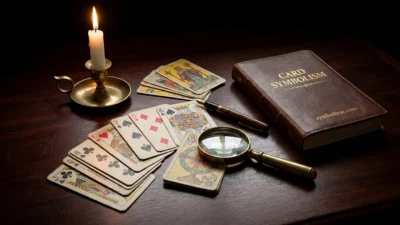
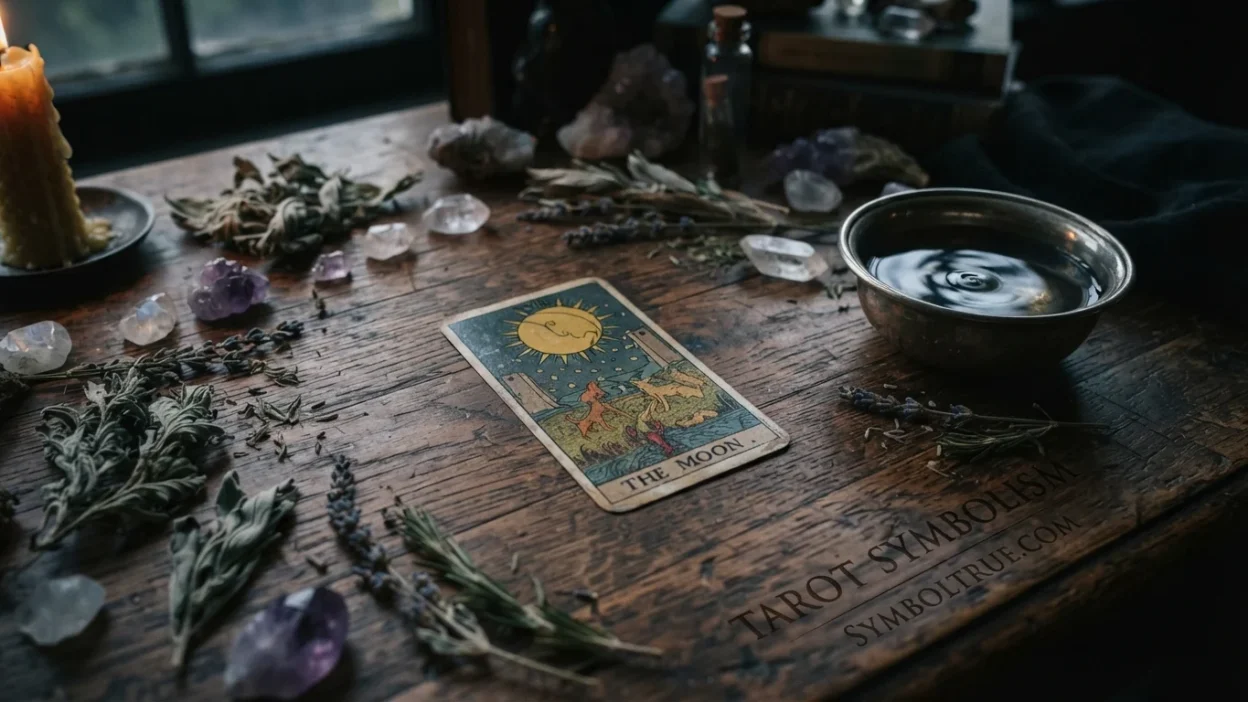
Tarot symbolism brings together images, archetypes, numbers, colors, characters, and recurring themes that readers have interpreted in different ways for centuries. From the mysterious imagery of the Major Arcana to the everyday situations represented by the Minor Arcana, tarot cards offer a rich symbolic language.
Some people approach tarot as a spiritual practice, while others view it as a tool for reflection, storytelling, creativity, or exploring personal questions. Understanding the symbolism behind the cards can make tarot imagery easier to interpret without treating any single meaning as universally fixed.
Tarot Symbolism Meaning (Clear Definition)
Tarot symbolism refers to the visual signs, characters, objects, numbers, colors, settings, and themes found on tarot cards and the meanings readers traditionally associate with them.
A single card can carry several layers of meaning. For example, The Sun often appears with bright light, a child, sunflowers, and a clear landscape. Readers may connect these elements with vitality, clarity, optimism, growth, or openness.
Likewise, The Hermit commonly features a solitary figure carrying a lantern. This imagery can represent reflection, solitude, wisdom, or a search for inner understanding.
Tarot meanings can vary according to the deck, tradition, surrounding cards, and reader’s interpretation.
What Does Tarot Symbolism Represent?
Tarot symbolism commonly explores major themes of human experience, including:
- Growth and transformation
- Choice and personal responsibility
- Love and relationships
- Challenges and uncertainty
- Knowledge and self-reflection
- Ambition and achievement
- Loss and change
- Hope and renewal
- Balance and conflict
- Beginnings and endings
The Major Arcana generally focuses on broad life themes and archetypal experiences. The Minor Arcana often deals with more immediate situations, emotions, actions, relationships, and practical concerns.
The Four Tarot Suits
Traditional tarot decks commonly divide the Minor Arcana into four suits:
Wands: Often associated with energy, creativity, ambition, motivation, and action.
Cups: Commonly connected with emotions, relationships, intuition, affection, and inner experiences.
Swords: Often symbolize thought, communication, decisions, conflict, truth, and mental challenges.
Pentacles: Commonly relate to material matters, work, resources, stability, health, and practical life.
These associations are traditional interpretive frameworks rather than universal rules.
Spiritual Meaning of Tarot Symbolism
For people who use tarot spiritually, the cards may serve as prompts for contemplation, meditation, or personal reflection.
Tarot imagery often presents themes such as transformation, self-discovery, balance, uncertainty, and renewal. A person may use these themes to think more deeply about their choices or current circumstances.
Some spiritual practitioners connect tarot with intuition or archetypal symbolism. Others understand the cards through psychological, artistic, or cultural frameworks.
It is useful to distinguish personal spiritual belief from documented historical evidence. There is no single universally accepted spiritual meaning for every tarot image.
Biblical / Religious Meaning of Tarot Symbolism
Tarot does not have a direct biblical symbolic system. The cards emerged in a European historical context rather than from the Bible.
Religious attitudes toward tarot vary considerably. Some Christian traditions have historically associated divination practices with biblical warnings against seeking supernatural knowledge through certain methods. Other people use tarot imagery without considering it a religious practice, instead treating it as art, storytelling, or personal reflection.
Therefore, a tarot card should not automatically be given a biblical meaning simply because it contains familiar symbols such as angels, judgment, light, or religious imagery.
Tarot Symbolism in History and Culture
Tarot cards have documented roots in fifteenth-century Europe, where early decks were created primarily as playing cards. Over time, different communities developed new systems for interpreting the cards.
The association between tarot and divination became more prominent centuries after the earliest European tarot decks appeared. Occult writers and later tarot traditions contributed many symbolic interpretations that remain influential today.
Modern tarot therefore reflects several historical layers, including European card traditions, occult interpretations, artistic movements, and contemporary spiritual practices.
Different cultures and tarot communities may assign different meanings to the same card.
Tarot Symbolism in Literature and Art
Tarot has influenced visual culture, literature, popular entertainment, and modern artistic expression.
Artists have frequently adapted tarot’s dramatic imagery, including mysterious figures, celestial bodies, towers, animals, landscapes, and symbolic objects. Writers may also use tarot-like archetypes to explore themes such as fate, transformation, mystery, temptation, sacrifice, and self-discovery.
The recognizable structure of tarot makes it particularly useful for storytelling because each card can suggest a character, conflict, setting, or stage of development.
Tarot Symbolism in Dreams
People sometimes notice tarot cards or tarot-like imagery in dreams. Dream interpretation, however, does not have one scientifically established symbolic dictionary.
If tarot appears in a dream, the meaning may depend on the dreamer’s personal associations.
For example:
- The Fool might remind someone of a new beginning or uncertainty.
- The Tower might evoke sudden change or disruption.
- The Star might suggest hope or inspiration.
- The Hermit might connect with solitude or reflection.
- The Lovers might bring thoughts about relationships or important choices.
These are interpretive possibilities rather than fixed predictions.
Positive Symbolism of Tarot
Many tarot cards contain imagery that readers traditionally interpret positively.
Common positive themes include:
- Hope
- Courage
- Creativity
- Wisdom
- Emotional connection
- Personal growth
- Renewal
- Confidence
- Opportunity
- Balance
For example, The Star is frequently associated with hope and renewal, while The Sun is often connected with clarity, vitality, and positive energy.
However, a positive interpretation does not guarantee a particular future event.
Negative or Hidden Symbolism of Tarot
Tarot also contains imagery associated with difficult experiences. Cards such as Death, The Tower, The Devil, and Ten of Swords can appear intense or unsettling.
Their symbolism does not necessarily mean literal death, disaster, or supernatural danger.
For instance, Death is often interpreted symbolically as transformation, transition, or the ending of one phase. The Tower may represent sudden disruption or the breakdown of an established structure.
The surrounding cards and the interpretive tradition can influence how such imagery is understood.
Common Interpretations of Tarot Symbolism
Tarot interpretation often combines several symbolic elements instead of relying on the card name alone.
Colors
Colors can contribute emotional or symbolic associations. Red may suggest energy or passion, while blue may evoke calmness, depth, or spirituality. These meanings vary between decks and traditions.
Numbers
Numbers frequently contribute another interpretive layer. Beginnings, development, completion, balance, and cycles may all appear through numerical patterns.
Animals
Animals can represent qualities such as instinct, freedom, loyalty, strength, transformation, or protection depending on the card and tradition.
Landscapes
Mountains, rivers, gardens, deserts, oceans, and roads can create symbolic settings. A difficult landscape may suggest challenge, while an open road may evoke movement or possibility.
Objects
Keys, swords, cups, staffs, crowns, books, lanterns, and other objects can add meaning to a card’s central theme.
Characters
Figures may represent archetypal roles such as the teacher, ruler, seeker, caregiver, warrior, traveler, or mysterious guide.
Why Does Tarot Symbolism Matter Today?
Tarot symbolism remains popular because its visual language provides a flexible way to explore human experiences.
Some people use tarot for spiritual reflection. Others appreciate its artistic imagery, historical development, storytelling potential, or psychological associations.
The cards can encourage people to examine questions from different perspectives. Their symbolic structure can also provide inspiration for writers, artists, designers, and creators.
At the same time, tarot interpretations should not replace professional medical, legal, financial, or other expert advice when important real-world decisions are involved.
Frequently Asked Questions About Tarot Symbolism
What is tarot symbolism?
Tarot symbolism is the collection of images, numbers, colors, characters, objects, and themes traditionally associated with tarot cards.
What do tarot cards symbolize?
Tarot cards can symbolize experiences such as change, relationships, decisions, creativity, challenges, personal growth, uncertainty, and renewal.
What is the spiritual meaning of tarot?
For people who practice tarot spiritually, the cards may support reflection, meditation, intuition, and personal exploration. Spiritual interpretations differ between traditions.
Does every tarot card have one fixed meaning?
No. Meanings can vary according to the deck, historical tradition, reading context, surrounding cards, and personal interpretation.
Does Death in tarot mean literal death?
Not necessarily. In many tarot traditions, the Death card is interpreted symbolically as transformation, endings, transition, or the beginning of a new phase.
What do the four tarot suits represent?
Traditionally, Wands are associated with action and creativity, Cups with emotions and relationships, Swords with thought and conflict, and Pentacles with material and practical matters.
Can tarot symbolism appear in dreams?
Yes, tarot imagery can appear in dreams, but dream meanings depend heavily on personal experiences and associations rather than a universally established symbolic system.
Is tarot a religious practice?
Tarot can be incorporated into some spiritual practices, but not everyone who uses tarot considers it religious. Some people approach it as art, storytelling, reflection, or cultural symbolism.
Conclusion
Tarot symbolism creates a rich visual language built around themes such as transformation, choice, emotion, action, knowledge, uncertainty, and renewal. Its meanings developed through different historical and cultural traditions, so individual cards can carry multiple interpretations.
Whether viewed as spiritual imagery, a creative storytelling system, or a tool for personal reflection, tarot remains a fascinating symbolic tradition. Understanding its history and visual elements can help readers approach the cards with greater context, curiosity, and clarity.
Henry Jack is the Administrator of SymbolTrue, ensuring the website runs smoothly while overseeing content quality, user experience, and daily operations. He is passionate about helping readers explore symbols, meanings, and cultural insights.