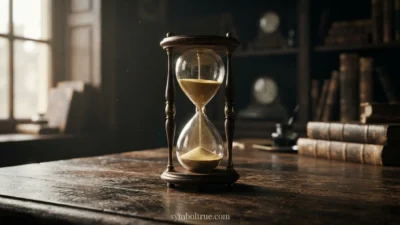

Clock symbolism is closely connected with time, change, mortality, opportunity, and the journey of life. Because a clock constantly moves forward, it can remind us that every moment is valuable and that nothing in life remains exactly the same forever.
Across history, clocks have represented both the practical measurement of time and deeper ideas about human existence. A clock may symbolize patience, urgency, aging, destiny, discipline, or the desire to make the most of the present moment.
Whether you notice a clock in a dream, artwork, tattoo, story, or everyday life, its meaning often depends on the situation surrounding it.
Clock Symbolism Meaning (Clear Definition)
At its simplest, clock symbolism represents the passage of time and the limited nature of human life. A clock can remind us that time moves continuously and cannot be stopped or recovered.
The most common symbolic meanings of a clock include:
- Time and the passage of life
- Mortality and human existence
- Change and transformation
- Patience and waiting
- Deadlines and urgency
- Discipline and responsibility
- Memories of the past
- Hope for the future
- Missed opportunities
- The importance of living in the present
A working clock often suggests movement, progress, or the natural flow of life. A stopped clock can suggest a frozen moment, an ending, a lost opportunity, or a desire to return to the past.
In this way, clock symbolism is rarely about time alone. It often reflects how people feel about time.
What Does Clock Symbolism Represent?
A clock can represent several ideas at the same time. Its meaning may change depending on its condition, position, design, or context.
Time and Life
The most obvious meaning of a clock is time. Every movement of its hands reminds us that life is progressing.
For many people, this makes a clock a symbol of life’s journey. Childhood, adulthood, aging, and the later stages of life can all be understood through the movement of time.
Change and Transformation
Time naturally brings change. A person grows older, relationships develop, circumstances shift, and new opportunities appear.
Because of this, a clock can symbolize personal transformation and the natural cycles of life.
Mortality
A clock can also be a reminder that human life is temporary.
The ticking sound of a clock can feel especially powerful because it continues regardless of what happens around it. This can symbolize the limited time each person has and encourage greater appreciation for life.
Patience
Not every goal can be achieved immediately. Sometimes a clock represents the need to wait for the right moment.
In this sense, clock symbolism can carry a positive message: some things require patience, preparation, and trust in the natural timing of events.
Urgency
A clock can also represent pressure.
An approaching deadline, a rapidly moving second hand, or a clock showing a late hour may symbolize the feeling that time is running out. This interpretation is common in stories, dreams, and visual art.
Discipline and Responsibility
Clocks organize daily life. They tell people when to work, study, sleep, travel, meet others, or complete responsibilities.
For this reason, a clock may symbolize structure, punctuality, commitment, and self-discipline.
Spiritual Meaning of Clock Symbolism
Spiritually, clock symbolism often points toward awareness, divine timing, personal growth, and the temporary nature of earthly life.
A clock can encourage a person to pay attention to how they use their time. Instead of focusing only on the past or worrying constantly about the future, the symbolism can encourage greater awareness of the present.
Divine Timing
In spiritual traditions, people often speak about the right time for something to happen. A clock can therefore symbolize the idea that life unfolds according to a larger rhythm that may not always match personal expectations.
Seeing a clock may be interpreted as a reminder to remain patient when something has not happened yet.
Life Cycles
Time moves in cycles: day follows night, seasons change, and generations come and go.
A clock can symbolize these repeating patterns and the idea that endings can sometimes lead to beginnings.
Spiritual Awakening
A clock may also represent an awakening to the value of time.
It can encourage someone to reconsider their priorities and ask important questions: Am I using my time wisely? What truly matters to me? What have I been postponing?
Letting Go of the Past
When clock symbolism appears alongside old memories or historical objects, it may represent the need to accept that the past cannot be changed.
The clock continues moving forward, suggesting that healing and growth often require moving forward as well.
Biblical / Religious Meaning of Clock Symbolism
The modern clock itself is not a major biblical symbol, but time is an important theme in religious thought.
Biblical teachings frequently discuss seasons, waiting, mortality, wisdom, and the proper use of one’s days. Because of this, a clock can serve as a modern visual representation of these ideas.
Time as a Gift
A clock may symbolize the idea that life is a gift and that each day should be used wisely.
Rather than treating time as unlimited, religious interpretations often encourage gratitude and purposeful living.
Waiting and Patience
A clock can also represent waiting for the right moment.
In a religious context, this may suggest patience, faith, and trust rather than trying to control every outcome.
Mortality and Eternity
The movement of a clock can highlight the difference between temporary human life and the idea of eternity.
A ticking clock may therefore remind people that earthly time is limited while spiritual beliefs may focus on something beyond ordinary human time.
Wisdom
Clock symbolism can also represent the wisdom that comes from recognizing life’s limits.
Knowing that time is finite can encourage people to value relationships, forgiveness, kindness, and meaningful actions.
Clock Symbolism in History and Culture
Throughout history, humans have created different methods of measuring time, from sundials and water clocks to mechanical clocks and modern digital devices.
As clocks became more common, they gained cultural meaning beyond simply telling the hour.
Ancient Timekeeping
Early timekeeping devices connected human life with natural patterns such as sunlight, shadows, seasons, and the movement of celestial bodies.
These devices often reflected humanity’s desire to understand and organize the passage of time.
Mechanical Clocks
The development of mechanical clocks changed how societies organized daily life.
Clocks became associated with schedules, work, public life, and social order. Their presence helped create a stronger sense of punctuality and measured time.
Grandfather Clocks
Grandfather clocks are often associated with family history, tradition, aging, and the passing of generations.
A large clock standing in a family home can symbolize memories preserved across decades.
Broken or Stopped Clocks
In cultural symbolism, a broken or stopped clock can suggest interruption, loss, death, or a moment that remains emotionally frozen.
The interpretation depends heavily on the surrounding story or setting.
Clock Symbolism in Literature and Art
Clocks have been powerful symbols in literature and art because they provide a simple visual way to explore complicated ideas about existence.
Mortality in Art
Artists often use clocks to remind viewers that life is temporary.
An old clock surrounded by fading objects can create a strong feeling of aging and mortality.
Memory and the Past
A clock may also represent memories that remain emotionally important even though time has moved forward.
An antique clock in a painting can suggest nostalgia, family history, or a longing for another period of life.
Surrealism and Impossible Time
Surrealist art has frequently used clocks in unusual ways, such as distorted or melting forms.
These images can challenge the ordinary idea that time is fixed, suggesting instead that our emotional experience of time can change.
Clocks in Stories
In literature, a clock can create suspense. A character may be racing against time, waiting for an important event, or discovering that an opportunity is disappearing.
The clock then becomes more than an object—it becomes part of the emotional structure of the story.
Dream Meaning of Clock Symbolism
Dreams about clocks can have many possible interpretations because dreams are highly personal. A clock in a dream may reflect concerns about time, deadlines, aging, change, or an important life decision.
Here are some common interpretations:
| Clock in a DreamPossible Symbolic Meaning | |
|---|---|
| Seeing a normal clock | Awareness of time or responsibilities |
| A stopped clock | Feeling stuck or unable to move forward |
| A broken clock | Disruption, uncertainty, or lost direction |
| A fast-moving clock | Anxiety about time passing |
| A clock running backward | Desire to revisit the past |
| Missing a clock or deadline | Fear of missing an opportunity |
| An old clock | Memories, tradition, or the past |
| A beautiful clock | Appreciation for life and meaningful moments |
| Hearing a ticking clock | Pressure, anticipation, or awareness of mortality |
Dreaming of a Stopped Clock
A stopped clock may symbolize a situation that feels emotionally frozen.
It could represent difficulty moving on from an old relationship, memory, decision, or period of life.
Dreaming of a Fast Clock
A clock moving unusually fast may reflect anxiety that life is passing too quickly.
It can also symbolize pressure to achieve something before a perceived deadline.
Dreaming of a Clock Showing a Specific Time
A specific time may be meaningful because of personal memories or circumstances.
Rather than assuming one universal interpretation, consider what that particular time means to you.
Modern Meaning of Clock Symbolism
In modern life, clocks remain powerful symbols even though smartphones and computers have reduced the need for traditional clocks.
Today, clock symbolism is often connected with productivity, balance, deadlines, technology, aging, and the pressure of modern life.
Productivity
Modern culture often measures success through schedules and productivity.
A clock can therefore symbolize ambition, organization, and the desire to accomplish more.
Work-Life Balance
At the same time, a clock can remind us that constantly chasing deadlines may prevent us from enjoying life.
Its symbolism can encourage a healthier balance between achievement and rest.
Social Pressure
People sometimes feel that they are behind in life because they compare their progress with others.
A clock can represent this invisible pressure to reach certain milestones by a certain age.
Living in the Present
Perhaps the most positive modern interpretation is a reminder to appreciate the present.
The past cannot be changed, and the future cannot be completely controlled. The present is the moment in which choices can actually be made.
Clock Symbolism in Tattoos
Clock tattoos are popular because they can carry deeply personal meanings.
A clock tattoo may symbolize:
- The value of time
- A significant date or moment
- Remembering someone
- A major life change
- Mortality
- Personal growth
- A new beginning
- A reminder not to waste time
The design can change the meaning. A clock combined with flowers may suggest the beauty and temporary nature of life, while a clock with wings may symbolize freedom from time or the passing of life.
A broken clock may represent a difficult period, while a clock with a meaningful date may preserve an important memory.
Clock Symbolism and Different Clock Designs
Different types of clocks can create different symbolic impressions.
Pocket Watch
A pocket watch often represents nostalgia, history, family traditions, and the past.
Hourglass
Although technically different from a clock, an hourglass strongly represents limited time and mortality because its sand gradually runs out.
Sundial
A sundial can symbolize nature, ancient wisdom, and humanity’s relationship with the movement of the sun.
Digital Clock
A digital clock can represent modern life, precision, technology, and the fast pace of contemporary society.
Broken Clock
A broken clock may symbolize disruption, loss, stagnation, or a desire to escape the normal passage of time.
Clock Symbolism and the Meaning of Time
At its deepest level, clock symbolism asks a simple but important question: What do we do with the time we have?
A clock cannot tell us whether a moment is meaningful. It can only tell us that the moment is passing.
That is why the symbolism of a clock can feel both serious and inspiring. It reminds us that time is limited, but it also reminds us that every moment offers a possibility.
The meaning may be about starting again, forgiving someone, pursuing a goal, appreciating family, or simply noticing the present instead of constantly waiting for the next stage of life.
FAQs:
What does a clock symbolize?
A clock commonly symbolizes time, change, mortality, patience, urgency, discipline, and the journey of life. Its exact meaning depends on its context.
What is the spiritual meaning of a clock?
Spiritually, a clock can represent divine timing, personal growth, awareness, and the temporary nature of earthly life. It may encourage patience and meaningful use of time.
What does a stopped clock symbolize?
A stopped clock can symbolize feeling stuck, an ending, a frozen memory, or an inability to move forward. In some contexts, it may also represent loss.
What does a clock symbolize in dreams?
A clock in a dream may reflect concerns about time, deadlines, aging, change, or missed opportunities. The condition of the clock and the emotions felt during the dream can change its interpretation.
What does a clock tattoo symbolize?
A clock tattoo can represent the value of time, mortality, a significant memory, personal transformation, or a reminder to live meaningfully. Additional tattoo elements often add more specific meanings.
Conclusion
Clock symbolism is ultimately a reminder that time moves forward, life changes, and every moment has value. From spiritual beliefs and ancient cultures to dreams, tattoos, literature, and modern life, the clock continues to represent the relationship between time and human experience.
Its message can be simple yet powerful: we cannot stop time, but we can choose how we use the moments we are given.

Abigail Alice is a passionate writer at SymbolTrue, exploring the history, meanings, and cultural significance of symbols worldwide. She creates clear, engaging, and well-researched content that helps readers uncover the fascinating stories behind everyday and ancient symbols.