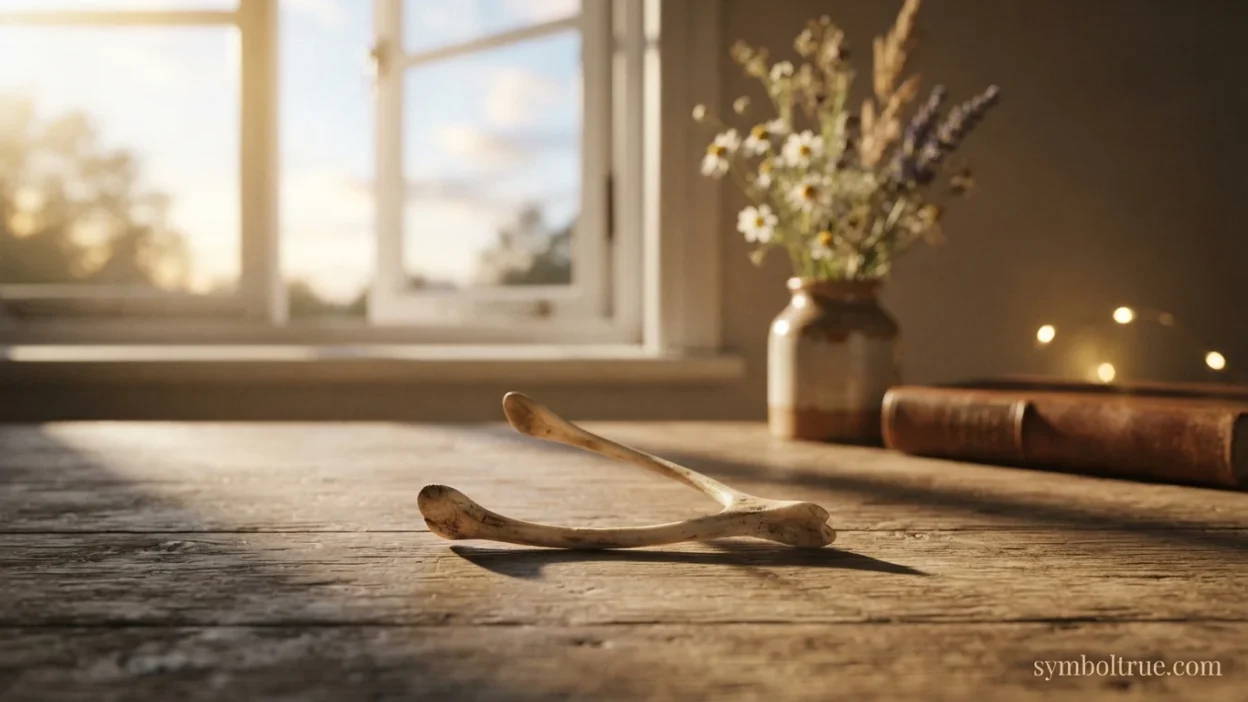
Wishbone symbolism is closely connected with luck, wishes, hope, choice, and the belief that good things can happen. The familiar fork-shaped bone, often saved after a meal and pulled by two people, has become a simple but powerful symbol of dreams and possibility.
For centuries, the wishbone has represented more than a small tradition. It reminds people to make a wish, hold onto hope, and believe that the future may bring something better. Its meaning can also change depending on whether it appears in dreams, jewelry, artwork, celebrations, or everyday life.
Wishbone Symbolism Meaning (Clear Definition)
The basic meaning of wishbone symbolism is the connection between a wish and the hope that it will come true.
A wishbone commonly symbolizes:
- Good luck and favorable outcomes
- Hope for the future
- Wishes and dreams
- Choice and decision-making
- Faith in possibility
- Optimism and positive expectations
- Shared hopes between people
The tradition of pulling a wishbone adds another important idea: competition and choice. Two people hold opposite ends of the bone and pull until it breaks. The person holding the larger piece is traditionally believed to have their wish granted.
Because of this tradition, the wishbone can represent the moment when a person takes a chance on what they want.
What Does Wishbone Symbolism Represent?
Wishbone symbolism represents the human desire to believe that something wonderful may happen.
Unlike symbols that have one fixed meaning, the wishbone carries several related ideas.
| Symbolic Meaning | What It Represents |
|---|---|
| Luck | Hope for a favorable outcome |
| Wishes | Personal dreams and desires |
| Hope | Belief that the future can improve |
| Choice | Making a decision between possibilities |
| Faith | Trusting that something unseen may work out |
| Partnership | Sharing a wish or tradition with another person |
| Opportunity | Taking a chance on a possible future |
Luck
The wishbone is perhaps best known as a good luck symbol. Winning the larger piece is traditionally seen as a sign that luck is on your side.
Wishes
The most direct meaning of a wishbone is the desire for a wish to come true. It can represent a private dream that someone carries in their heart.
Hope
A wish is closely connected to hope. When people make a wish, they imagine a better possibility, even when they cannot know what the future holds.
Choice
The wishbone also has a connection to choice. Two people pull in opposite directions, creating a symbolic picture of competing possibilities.
Relationships
Because the wishbone tradition normally involves two people, it can represent friendship, family, connection, and shared experiences.
Spiritual Meaning of Wishbone Symbolism
Spiritually, wishbone symbolism can represent faith, hope, intention, and trust in the unknown.
A wishbone encourages a person to recognize what they truly desire. Making a wish can become a small moment of reflection: What do I want? What am I hoping for? What future am I imagining?
The wishbone may therefore symbolize the importance of keeping hope alive while remaining open to unexpected possibilities.
It can also represent spiritual intention. A person may make a wish not simply because they expect magic to happen, but because expressing a desire helps them understand their own goals.
In this sense, the wishbone can remind us that hope is not passive. A wish can identify a destination, while personal action helps create the path toward it.
Biblical / Religious Meaning of Wishbone Symbolism
The wishbone does not have a specific biblical symbolism or a direct religious meaning in the Bible.
Its modern association with wishes and luck comes primarily from cultural tradition rather than biblical teaching. However, some people may interpret its themes through broader religious ideas such as hope, faith, gratitude, prayer, and trust.
From a Christian perspective, for example, the act of wishing should not be confused with a biblical promise that a desired outcome will automatically happen. Prayer, faith, and trust in God have their own religious meanings that are distinct from the wishbone tradition.
More generally, the wishbone can serve as a personal reminder of hope without necessarily being a religious symbol.
Wishbone Symbolism in History and Culture
The wishbone tradition has a long cultural history, with roots commonly associated with ancient practices involving the furcula, the fork-shaped bone found in birds.
The Etruscans of ancient Italy are often connected with early wish-related traditions involving bird bones. Birds were considered important in divination, and their movements and bodies could be associated with attempts to understand future events.
The Romans later adopted and adapted some of these traditions. Over time, the practice of keeping or handling bird bones became connected with luck and wishes.
The custom eventually developed into the familiar tradition of two people pulling a turkey or chicken wishbone.
In modern Western culture, the tradition became especially associated with family meals and holidays. It is often performed after Thanksgiving or another large meal involving poultry.
This history gives the wishbone a fascinating mixture of ancient belief, family tradition, luck, and entertainment.
Wishbone Symbolism in Literature and Art
Wishbone symbolism can work well in literature and art because it naturally represents desire and uncertainty.
A character holding a wishbone may be hoping for something they cannot control. The broken bone can symbolize either fulfillment or disappointment, depending on the story.
Writers can also use the wishbone as a metaphor for difficult choices. Two people pulling in opposite directions creates an image of competing desires, relationships, or goals.
In visual art, a wishbone may appear alongside stars, hearts, hands, flowers, or other hopeful imagery. Its simple shape makes it especially suitable for jewelry, illustrations, tattoos, greeting cards, and decorative designs.
The symbol can communicate a large emotional idea through a very small object: sometimes hope begins with a simple wish.
Dream Meaning of Wishbone Symbolism
Dreaming about a wishbone can suggest hope, desire, opportunity, or an important decision.
The exact meaning depends on what happens in the dream.
- Pulling a wishbone: You may be facing a choice or hoping for a particular outcome.
- Winning the wishbone: You may feel optimistic about achieving something you strongly desire.
- Losing the wishbone: You may fear disappointment or feel uncertain about your chances.
- Finding a wishbone: A new opportunity or hopeful possibility may be entering your life.
- Breaking a wishbone: Something may be reaching a turning point.
- Giving someone a wishbone: You may want to share hope, encouragement, or good fortune with that person.
- Keeping a wishbone: You may be holding onto a personal dream or long-term hope.
Dream symbolism is personal, so a wishbone does not have one universal interpretation. Your feelings during the dream are often just as important as the object itself.
Modern Meaning of Wishbone Symbolism
Today, wishbone symbolism is often less about literal luck and more about hope, positivity, personal goals, and meaningful traditions.
Wishbone necklaces, charms, tattoos, illustrations, and decorations are commonly used to express the idea of making a wish and believing in possibilities.
For some people, wearing a wishbone means staying hopeful during a difficult period. For others, it represents a dream they are working toward.
The symbol can also carry a message of resilience: even when the future is uncertain, it is worth continuing to hope.
Socially, the wishbone remains a symbol of connection because the traditional activity requires two people. It can represent a shared memory, family tradition, friendship, or playful competition.
Wishbone Symbolism in Jewelry
A wishbone necklace or bracelet may symbolize luck, hope, or a personal wish.
Giving someone wishbone jewelry can also communicate encouragement. It can quietly say, “Keep believing in what you hope for.”
Wishbone Symbolism in Tattoos
A wishbone tattoo can represent a personal dream, good fortune, optimism, or an important turning point.
Because the meaning is flexible, people often connect the design with a specific wish or life goal.
Wishbone Symbolism in Everyday Life
The wishbone continues to appear during family meals and celebrations. Its tradition brings together food, laughter, competition, and hope.
That combination helps explain why such a small object has remained meaningful for generations.
Common Wishbone Symbolism Interpretations
When you encounter a wishbone, its meaning may be understood in several ways:
- You are holding onto hope.
- You have an important wish or dream.
- A decision may be approaching.
- You are hoping for good luck.
- You are entering a period of possibility.
- You want to remember a meaningful tradition.
- You believe something positive can happen.
The most meaningful interpretation often depends on the situation in which the wishbone appears.
What Does a Broken Wishbone Symbolize?
A broken wishbone can symbolize fulfilled wishes, change, choice, or the end of uncertainty.
In the traditional game, breaking the wishbone determines who receives the larger piece and is believed to get their wish.
Symbolically, the break can also represent a turning point. Something that was previously whole has changed, creating two separate outcomes.
For this reason, a broken wishbone can carry both positive and reflective meanings. It may suggest that a decision has been made and a new stage is beginning.
Wishbone Symbolism and Personal Growth
The wishbone can offer a simple lesson about personal growth.
A wish identifies what you want, but wanting something is only the beginning. Turning hope into reality often requires patience, effort, courage, and action.
The symbol therefore works on two levels. It represents the dream itself, while also reminding us that the future contains possibilities we cannot completely control.
Sometimes the most valuable part of making a wish is discovering what the wish reveals about you.
FAQs:
What does a wishbone symbolize?
A wishbone commonly symbolizes luck, wishes, hope, choice, and positive possibilities. It is especially associated with the belief that a personal wish may come true.
What does a wishbone symbolize spiritually?
Spiritually, a wishbone can represent hope, intention, faith, and trust in the future. It may remind someone to stay optimistic while working toward a meaningful goal.
Is a wishbone a symbol of good luck?
Yes. The wishbone is widely recognized as a good luck symbol, especially through the traditional practice of pulling it with another person.
What does a wishbone tattoo mean?
A wishbone tattoo can symbolize a personal dream, good fortune, hope, optimism, or a desire to remember an important goal or life experience.
What does dreaming about a wishbone mean?
Dreaming about a wishbone may represent a wish, opportunity, decision, or hope for a particular outcome. The meaning depends on the details and emotions within the dream.
Conclusion
Wishbone symbolism is ultimately about hope, wishes, luck, choice, and possibility. From ancient traditions to modern jewelry and family celebrations, the wishbone has remained a small but meaningful reminder that people naturally look toward a better future.
If you see it as a lucky charm, a symbol of personal dreams, or simply a cherished tradition, the wishbone carries a timeless message: hope gives us something to believe in, while our choices help shape what comes next.

Ryan Thomas is a passionate writer at SymbolTrue, dedicated to exploring the meanings, history, and cultural significance of symbols worldwide. He creates engaging, well-researched content that helps readers discover the stories and symbolism behind everyday signs, icons, and traditions.