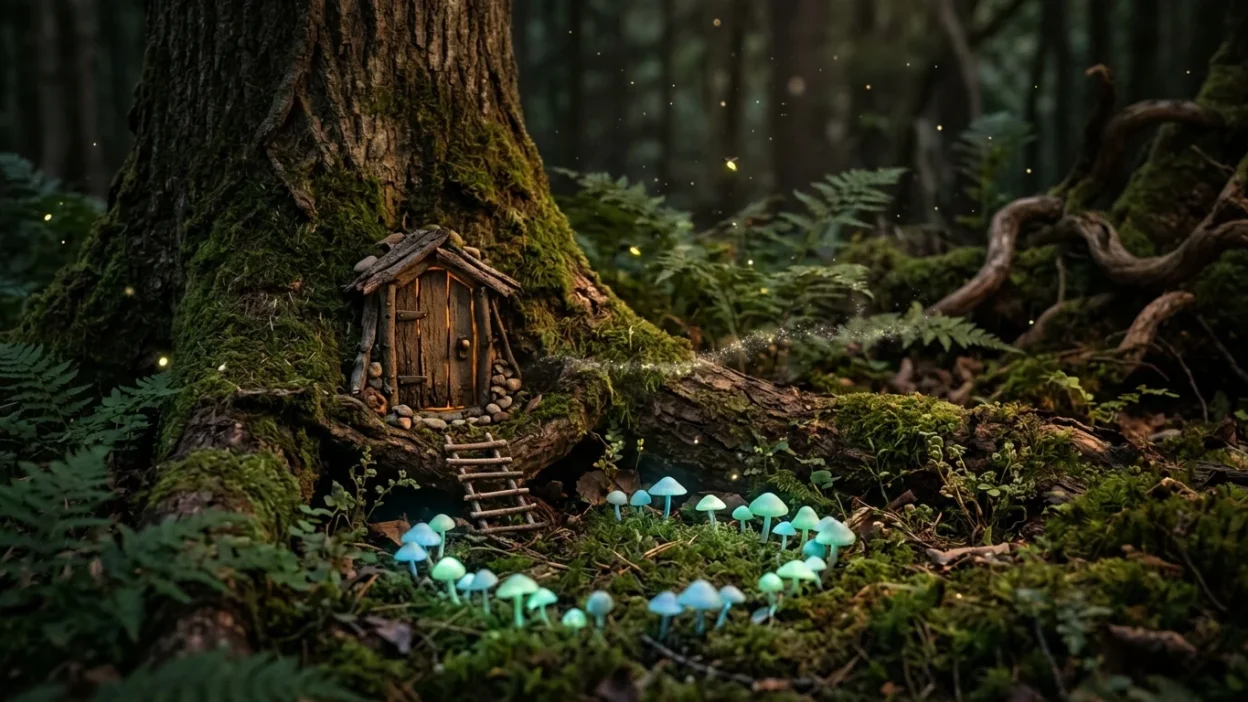
Fairies have fascinated people for centuries, appearing in folklore, stories, art, literature, and modern popular culture. Fairy symbolism often connects these magical figures with mystery, nature, transformation, imagination, protection, and the unseen world.
However, fairies do not have one universal meaning. Their symbolism changes across cultures, historical periods, stories, and personal beliefs. In some traditions, supernatural beings resembling fairies were treated with respect or caution, while later literature often portrayed fairies as tiny, beautiful, winged creatures.
Understanding fairy symbolism therefore requires looking at both traditional folklore and modern interpretations.
Fairy Symbolism Meaning (Clear Definition)
Fairy symbolism refers to the ideas and qualities commonly associated with fairies in folklore, literature, art, spirituality, and popular culture.
Fairies are often used as symbols of:
- Magic and mystery
- Nature and the natural world
- Imagination and creativity
- Transformation
- Freedom
- Beauty and enchantment
- Protection
- Hidden knowledge
- Childlike wonder
- The unknown
The meaning can change depending on the context. A fairy appearing in a children’s story may represent imagination and kindness, while a fairy in older folklore may be mysterious, unpredictable, or even dangerous.
What Does Fairy Symbolism Represent?
Fairy symbolism can represent the feeling that ordinary life contains something mysterious or unseen.
Magic and Wonder
Fairies are strongly connected with magic. They can symbolize the possibility of seeing beyond everyday reality and remaining open to wonder.
Nature
Many fairy traditions connect supernatural beings with forests, hills, springs, flowers, and other natural places. Because of this, fairies can symbolize a close relationship with nature.
Transformation
Fairy tales frequently involve changes in identity, circumstances, appearance, or destiny. As a result, fairies may symbolize personal growth and transformation.
Freedom
Fairies are often portrayed as beings outside ordinary human rules. This can make them symbols of independence, freedom, and unconventional living.
Mystery
A fairy can represent something that is beautiful but difficult to understand. This makes fairy symbolism closely connected with secrets, intuition, and the unknown.
Spiritual Meaning of Fairy Symbolism
In modern spiritual and symbolic interpretations, fairies are sometimes associated with nature, intuition, creativity, protection, and personal transformation.
These interpretations should be understood as belief-based or symbolic, rather than established facts about supernatural beings.
A person who feels drawn to fairy imagery may interpret it as a reminder to reconnect with nature, notice small details, or approach life with greater curiosity.
Fairy symbolism can also represent the idea of looking beyond appearances. Something that seems ordinary may carry personal meaning when viewed through imagination and reflection.
For some people, fairy imagery provides a symbolic connection to natural places such as gardens, forests, flowers, rivers, and mountains.
Biblical / Religious Meaning of Fairy Symbolism
The Bible does not establish fairies as a specific spiritual category, and there is no standard biblical interpretation of fairy symbolism.
It is therefore important not to present modern fairy meanings as biblical teachings.
Christian traditions do discuss angels, demons, spirits, and other supernatural beings, but these should not automatically be equated with fairies from European folklore.
Some modern Christian writers may use fairy stories symbolically to discuss temptation, wonder, morality, or imagination. Such interpretations are literary or theological reflections rather than direct biblical definitions.
The safest approach is to distinguish biblical teachings from later folklore and modern spiritual symbolism.
Fairy Symbolism in History and Culture
The word “fairy” is strongly associated with European folklore, especially traditions from Britain and Ireland, although beliefs about supernatural beings exist in many cultures around the world.
In older European traditions, fairy-like beings were not always imagined as tiny creatures with wings. Folklore contains many different descriptions, personalities, and categories of supernatural beings.
Some stories portray them as helpful, while others emphasize their unpredictable nature. Certain traditions also describe encounters with these beings as something requiring caution and respect.
Over time, literature and popular culture changed the familiar image of the fairy.
The Victorian period played an important role in popularizing delicate, miniature, winged fairy imagery, particularly through illustrations and literary works. Later children’s literature, fantasy stories, films, and television further shaped the modern fairy image.
This history shows why there is no single timeless definition of a fairy.
Fairy Symbolism in Literature and Art
Fairies have played an important role in literature and visual art.
One famous example is William Shakespeare’s A Midsummer Night’s Dream, where fairies are connected with magic, romance, confusion, nature, and transformation.
Later fantasy literature often developed fairies into more detailed supernatural societies with their own rules, personalities, and relationships with humans.
In visual art, fairies are frequently shown with:
- Flowers
- Forests
- Moonlight
- Butterflies
- Wings
- Sparkles
- Trees
- Water
- Magical landscapes
These visual elements reinforce themes of beauty, nature, mystery, and imagination.
Modern fantasy art often presents fairies as elegant and benevolent figures, although darker artistic traditions may portray them as mysterious, mischievous, or threatening.
Fairy Symbolism in Dreams
Dreams involving fairies can have different personal meanings. Dream interpretation is not an exact science, so the most useful interpretation usually depends on the dreamer’s emotions and circumstances.
A fairy in a dream might symbolize:
A Friendly Fairy
A friendly fairy may represent hope, imagination, encouragement, or a desire for something positive to happen.
A Fairy in a Forest
This setting may suggest exploration, mystery, nature, or discovering something about yourself.
A Fairy Giving You Something
This could symbolically represent receiving an opportunity, insight, inspiration, or unexpected help.
A Frightening Fairy
A frightening fairy may represent uncertainty or something that appears attractive but feels unsafe or unpredictable.
Becoming a Fairy
This may symbolize a desire for freedom, transformation, creativity, or escape from ordinary expectations.
Rather than treating one dream interpretation as universally correct, consider what the fairy meant to you personally.
Positive Symbolism of Fairies
Fairies are often associated with positive qualities, especially in modern storytelling.
Imagination
Fairies encourage people to think creatively and imagine possibilities beyond ordinary experience.
Hope
A magical helper appearing at an important moment can symbolize hope during difficult circumstances.
Creativity
Fairy imagery is strongly connected with storytelling, art, fantasy, music, design, and creative thinking.
Beauty
Flowers, wings, forests, and magical light often make fairies symbols of delicate or enchanting beauty.
Protection
In some stories, supernatural beings protect particular places, people, or natural environments. This contributes to the protective side of fairy symbolism.
Wonder
Perhaps the most recognizable positive meaning is the ability to experience wonder and appreciate small moments.
Negative or Hidden Symbolism of Fairy Symbolism
Fairy symbolism is not always positive.
Traditional folklore can portray fairy beings as unpredictable, deceptive, dangerous, or difficult for humans to understand.
This darker symbolism can represent:
- Deception
- Temptation
- Illusion
- Uncertainty
- Hidden danger
- Unpredictability
- Fear of the unknown
- Escaping reality
A beautiful fairy can therefore have a deeper symbolic message: something attractive is not necessarily simple or safe.
This contrast is one reason fairy folklore remains interesting. Fairies can represent both wonder and uncertainty.
Common Interpretations of Fairy Symbolism
Here are some common symbolic interpretations:
| Fairy Symbolism | Possible Meaning |
| Fairy wings | Freedom, imagination, spiritual aspiration |
| Fairy garden | Nature, peace, creativity |
| Fairy forest | Mystery, exploration, hidden knowledge |
| Fairy dust | Magic, possibility, transformation |
| Fairy lights | Hope, wonder, guidance |
| Fairy queen | Authority, feminine power, mystery |
| Fairy child | Innocence, imagination, curiosity |
| Friendly fairy | Help, hope, kindness |
| Dark fairy | Hidden fears, mystery, temptation |
| Fairy appearing in a dream | Personal transformation or wonder |
These meanings are symbolic interpretations rather than universal rules.
Why Does Fairy Symbolism Matter Today?
Fairy symbolism remains popular because it speaks to something many people experience: the desire to find meaning, beauty, and wonder in everyday life.
Modern fairy imagery appears in books, films, tattoos, jewelry, home decoration, fantasy games, illustrations, gardens, and social media.
Fairies can also represent a healthy appreciation for imagination. In a world dominated by technology and fast-paced routines, fairy imagery can remind people to slow down and notice nature, creativity, and small details.
For others, fairies simply represent fantasy and storytelling. There does not need to be a spiritual belief behind the symbolism for the imagery to have emotional meaning.
FAQs;
What is the main meaning of fairy symbolism?
Fairy symbolism commonly represents magic, mystery, imagination, nature, transformation, freedom, and wonder. The exact meaning depends on cultural and personal context.
What do fairies symbolize spiritually?
In modern spiritual interpretations, fairies may symbolize nature, intuition, creativity, transformation, protection, and connection with the unseen. These are spiritual interpretations rather than universally established facts.
Are fairies mentioned in the Bible?
Fairies are not presented as a specific category of beings in the Bible. Biblical teachings about angels or spirits should not automatically be treated as descriptions of fairies.
What does seeing a fairy symbolize?
Symbolically, seeing a fairy may represent wonder, creativity, change, mystery, or a desire to reconnect with nature. Personal circumstances are important when interpreting such an experience.
What does a fairy mean in a dream?
A fairy in a dream may symbolize imagination, hope, transformation, mystery, or something that feels magical or uncertain. The dreamer’s emotions provide important context.
Are fairies good or bad symbols?
Fairies can represent both positive and negative ideas. Modern stories often portray them positively, while traditional folklore sometimes presents them as unpredictable or dangerous.
What do fairy wings symbolize?
Fairy wings commonly symbolize freedom, imagination, transformation, movement, and the ability to rise beyond ordinary limitations.
What does a fairy symbolize in literature?
In literature, fairies can represent magic, nature, desire, transformation, temptation, mystery, or the boundary between ordinary and supernatural worlds.
Conclusion
Fairy symbolism brings together ideas of magic, nature, imagination, mystery, transformation, freedom, and wonder. Its meaning has changed across folklore, literature, art, and modern culture.
Fairies can represent something beautiful and hopeful, but they can also symbolize uncertainty, illusion, temptation, or the unknown. Their meaning depends heavily on the story, culture, historical period, and personal interpretation.
Ultimately, fairy symbolism continues to appeal to people because it encourages us to look beyond the ordinary and remain open to creativity, mystery, and the possibility of seeing the world differently.

Abigail Alice is a passionate writer at SymbolTrue, exploring the history, meanings, and cultural significance of symbols worldwide. She creates clear, engaging, and well-researched content that helps readers uncover the fascinating stories behind everyday and ancient symbols.