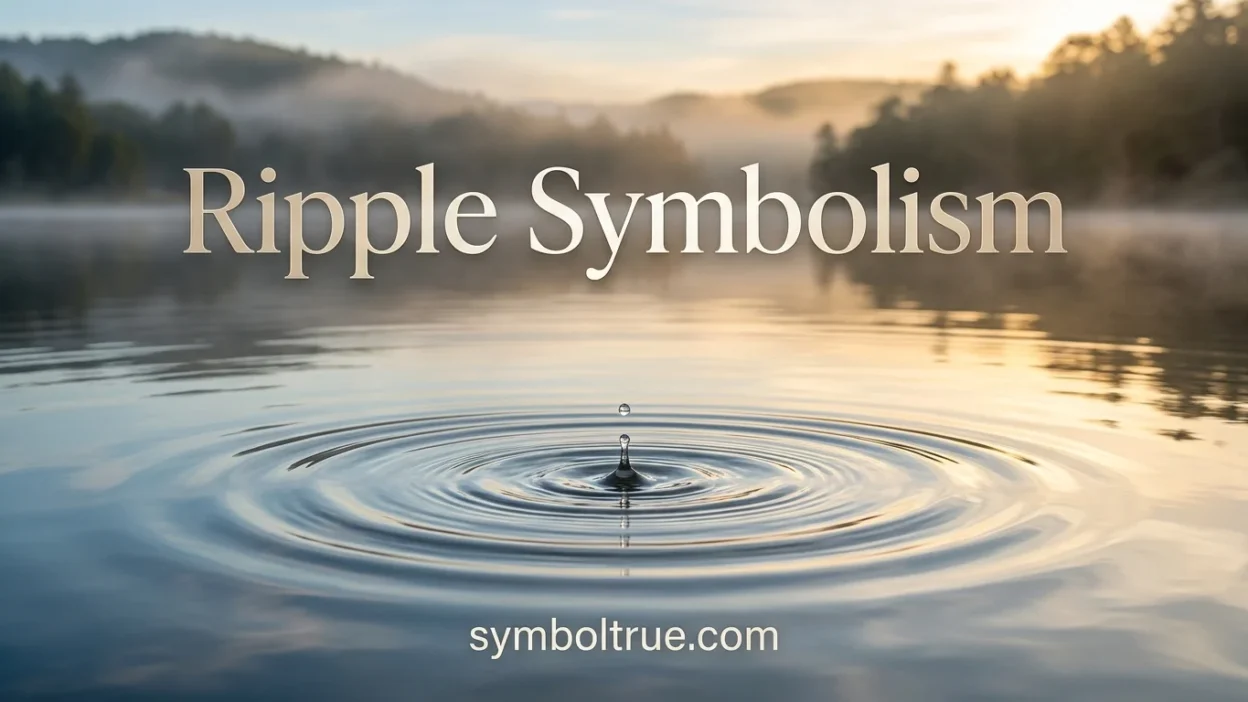
Ripple symbolism explores how small actions, thoughts, and experiences can create effects that spread far beyond their original source. A ripple begins with a single disturbance in still water, producing expanding circles that gradually reach outward. This simple natural phenomenon offers a powerful way to understand human influence, emotional change, personal growth, and the connections between people.
In symbolic interpretations, ripples often represent cause and effect, transformation, interconnectedness, and the lasting influence of seemingly minor decisions. A kind word can encourage someone, a difficult experience can change a person’s perspective, and a small act of courage can inspire others to take action.
Although ripple symbolism does not have one universal meaning, it provides a meaningful way to reflect on how life develops through a series of connected events. Its interpretation depends on the context, the appearance of the water, and the feelings associated with the experience.
Ripple Symbolism Meaning (Clear Definition)
Ripple symbolism refers to the symbolic meanings associated with waves or circular patterns that spread across the surface of water after an object, movement, or disturbance creates them.
At its simplest, a ripple represents the idea that one event can influence many others. The original action may be small, but its consequences can travel outward and affect people, relationships, environments, and future decisions.
For example, :
Imagine dropping a small stone into a quiet pond. The stone creates a single point of impact, but the resulting circles continue spreading across the water. Symbolically, this can represent how one decision may influence an entire journey.
Common meanings associated with ripple symbolism include:
- Cause and effect: Every action can produce consequences.
- Interconnectedness: People and events can influence one another.
- Personal growth: Small changes can lead to meaningful development.
- Emotional movement: Feelings and experiences can spread or evolve.
- Transformation: A single moment can begin a larger change.
- Influence: Even quiet actions can make a difference.
- Impermanence: Like ripples on water, many experiences eventually fade.
These meanings are interpretations rather than fixed rules. A ripple can represent peace in one situation and disruption in another.
What Does Ripple Symbolism Represent?
Ripples can represent several aspects of human experience because their movement resembles the way emotions, ideas, and consequences spread through life.
1. The Power of Small Actions
One of the most recognizable meanings of ripple symbolism is that small actions can produce significant results.
A brief conversation might restore someone’s confidence. A simple favor could encourage another person to help someone else. A small decision to learn a new skill might eventually influence an entire career.
The ripple becomes a reminder that meaningful change does not always begin with dramatic events.
2. Cause and Effect
Ripples also represent the relationship between actions and consequences. The first movement creates additional movements, illustrating how an event can lead to a chain of developments.
This symbolism encourages people to consider the possible effects of their decisions. It also reminds us that consequences are not always immediate or predictable.
3. Human Connection
Water ripples spread outward from their starting point, making them a useful metaphor for relationships and shared experiences.
A person’s attitude can influence a family, workplace, or community. Likewise, the actions of others can affect personal beliefs, habits, and emotional well-being.
Ripple symbolism therefore suggests that individual lives are connected through countless visible and invisible influences.
4. Change and Transformation
Ripples interrupt the stillness of water. This movement can represent the beginning of a new phase, a shift in perspective, or an experience that changes someone’s direction.
For someone starting a new job, recovering from a difficult period, or exploring a new belief, ripples may symbolize the gradual spread of change throughout everyday life.
5. Peace and Disturbance
The meaning of a ripple depends partly on its setting.
Gentle ripples on a calm lake may suggest peace, reflection, and emotional balance. Strong, irregular ripples might represent uncertainty, conflict, or unexpected disruption.
Neither interpretation is universal. The surrounding circumstances determine which meaning feels most relevant.
Spiritual Meaning of Ripple Symbolism
Spiritually, ripple symbolism is often interpreted as a reminder of interconnectedness, inner awareness, and the influence of personal choices.
These interpretations appear in contemporary spiritual reflection, personal development, and symbolic discussions of nature. They should not be treated as universal religious teachings or scientifically established spiritual laws.
1. Interconnectedness of Life
Ripples can represent the idea that no person exists entirely apart from others.
Our words, choices, and behavior influence the people around us, sometimes in ways we never witness. A compassionate action may continue affecting others long after the original moment has passed.
From a spiritual perspective, this can encourage greater awareness of how we participate in the wider human community.
2. Inner Peace and Awareness
A gentle ripple across still water can symbolize a mind becoming more aware of its thoughts and emotions.
Rather than suggesting that peace requires a completely undisturbed life, this interpretation emphasizes learning to respond thoughtfully when difficulties arise.
For example, :
A person practicing meditation might imagine ripples spreading across a lake as a way to observe thoughts without immediately reacting to them.
3. The Energy of Intention
In some modern spiritual interpretations, ripples represent the influence of intentions and actions.
A person’s intention to act honestly, practice kindness, or develop patience may gradually influence daily habits and relationships. The ripple serves as a metaphor for how those intentions become visible through behavior.
This does not establish that thoughts emit a supernatural force or guarantee particular outcomes. It offers a symbolic way to think about the relationship between intention and action.
4. Personal Awakening
A single experience can prompt someone to question old assumptions and begin looking at life differently.
A conversation, loss, achievement, or quiet moment of reflection may become the starting point for a longer period of personal development.
In this sense, ripple symbolism can represent spiritual awakening as a gradual process rather than one dramatic event.
5. Letting Go
Ripples eventually weaken and disappear as their energy dissipates. This natural process can symbolize acceptance, release, and the changing nature of emotions.
A person might use the image of fading ripples to reflect on letting go of resentment, accepting an ending, or allowing a difficult feeling to pass without allowing it to define the future.
Biblical / Religious Meaning of Ripple Symbolism
The Bible does not establish a single, specific doctrine called ripple symbolism. However, the image of rippling water can be used to reflect on themes that appear in biblical teachings, including the consequences of actions, the influence of words, and the spread of goodness.
These connections are interpretive rather than claims that the Bible explicitly assigns a universal meaning to ripples.
1. The Influence of Words and Actions
In Galatians 6:7, the biblical principle of sowing and reaping connects actions with their consequences.
Readers may associate this principle with ripple symbolism because an initial choice can produce effects that extend beyond the original moment.
For example, :
Honesty may strengthen trust, while repeated dishonesty can damage relationships. The ripple offers a visual metaphor for these developing consequences.
2. Kindness That Spreads
Matthew 5:16 encourages believers to let their light shine through good works.
A ripple can serve as a modern visual analogy for this idea: one person’s kindness may inspire others to act with generosity and compassion.
This is a symbolic comparison, not a direct biblical interpretation of water ripples.
3. Water as a Religious Symbol
Water appears throughout biblical literature in different contexts, including cleansing, life, renewal, danger, and spiritual significance.
For instance, John 4:14 uses the image of living water in a discussion of spiritual life. The specific meaning comes from the passage and its context, rather than from ripples themselves.
It is therefore important to distinguish established biblical imagery from contemporary symbolic associations.
4. Ripple Symbolism in Other Religious Traditions
Water also holds significance in various religious and philosophical traditions. Depending on the context, it may be associated with purification, renewal, wisdom, or the changing nature of existence.
However, these traditions do not all share one interpretation of ripples. Their teachings differ, and specific meanings should be understood within their own historical and religious contexts.
Ripple Symbolism in History and Culture
Water has played an important role in human life throughout history. It provides drinking water, supports agriculture, enables travel, and shapes the landscapes where communities develop.
Because water is so closely connected to survival and change, it has also acquired many symbolic associations in cultural expression.
1. Water as a Symbol of Life
In many cultures, water is associated with life, fertility, cleansing, and renewal.
Ripples can extend these associations by suggesting movement, continuity, and the ongoing development of life. However, the precise interpretation varies across societies and historical periods.
2. Ripples and Philosophical Reflection
The movement of water offers a familiar example of change and impermanence.
In some philosophical and contemplative contexts, images of flowing water encourage reflection on the changing nature of experiences. Ripples can illustrate how conditions shift continuously rather than remaining fixed.
Such associations should not be mistaken for a single teaching shared by every Eastern philosophy or spiritual tradition.
3. The Ripple Effect in Modern Culture
The expression ripple effect is widely used today to describe how an initial event produces further consequences.
The concept appears in discussions of economics, education, social behavior, environmental change, and community development.
For example, a local environmental cleanup may encourage neighboring communities to organize similar projects. The original effort creates a wider pattern of participation.
This modern expression is closely related to ripple symbolism because both emphasize the spread of influence.
4. Cultural Differences in Interpretation
A ripple does not carry an identical meaning everywhere.
One person may see a peaceful lake as a symbol of emotional balance, while another may associate moving water with uncertainty or danger. Personal experience, artistic traditions, religious beliefs, and the surrounding environment can all influence interpretation.
Understanding these differences helps avoid treating a personal or contemporary reading as a universal cultural fact.
Ripple Symbolism in Literature and Art
Artists and writers frequently use water imagery to express ideas that are difficult to communicate directly. Ripples are especially useful because they combine movement, repetition, and gradual change.
1. Ripples as Metaphors for Consequences
In a story, a character might make a seemingly insignificant decision that eventually changes several lives.
A writer can compare this sequence to a stone entering water. The first action becomes the center of a widening pattern of consequences.
This technique helps readers visualize how individual choices can shape a larger narrative.
2. Ripples as Emotional Imagery
Ripples can represent emotions that are beginning to surface or gradually settling down.
Small circles on water may suggest a memory returning to consciousness. Expanding waves might represent anxiety spreading through someone’s thoughts, while fading ripples could suggest relief after a period of distress.
The interpretation depends on how the image is presented within the work.
3. Ripples in Visual Art
<text>Artists may use ripple patterns to create a sense of movement, depth, reflection, or calm.</text>
<text>For example, concentric circles on a lake can draw the viewer’s attention toward a central point. Reflections disturbed by water can create a contrast between what appears stable and what continues to change.</text>
<text>In abstract art, repeated circular patterns may suggest connection, repetition, or the expansion of an idea. These meanings depend on the artist’s intentions and the viewer’s interpretation.</text>
4. Ripples in Photography and Design
<text>Ripple imagery is often suitable for designs about mindfulness, personal growth, environmental awareness, and emotional well-being.</text>
<text>A minimalist image of a stone creating circles in clear water may communicate the idea that small actions matter. A more dramatic image of turbulent water may suggest disruption or the difficulty of managing change.</text>
<text>Because ripple patterns are visually simple and recognizable, they can communicate symbolic ideas without requiring extensive text.</text>
Ripple Symbolism in Dreams
Dreams involving ripples may be interpreted as reflections of emotions, memories, or personal circumstances. However, dream symbolism is subjective, and there is no reliable universal dictionary that determines exactly what every water dream means.
The details of the dream and the dreamer’s personal associations are more useful than assuming one fixed explanation.
1. Ripples on Calm Water
Gentle ripples on a peaceful lake may suggest reflection, emotional awareness, or a small change taking place in the dreamer’s life.
If the dream feels comfortable, the water might represent a period of adjustment that feels manageable.
2. Large or Expanding Ripples
Large ripples may symbolize a situation that seems to be affecting more areas of life than expected.
For example, a minor disagreement at work might be occupying the dreamer’s thoughts and influencing relationships elsewhere.
This is one possible interpretation, not evidence that the dream predicts future events.
3. Dark or Disturbed Water
Dark water or irregular ripples may reflect uncertainty, tension, or a feeling of losing control.
However, dark water does not automatically indicate something negative. Its meaning may depend on whether the dreamer feels afraid, curious, calm, or relieved.
4. Ripples That Gradually Disappear
Fading ripples may represent the desire for closure or the gradual easing of an emotional concern.
Someone processing a difficult experience might associate the image with accepting what happened and moving forward.
5. Creating Ripples by Touching Water
If you create ripples in a dream, you might reflect on how your choices influence your surroundings.
Consider whether you felt powerful, playful, anxious, or peaceful. Those feelings can help you connect the image to your waking experiences.
Rather than treating the dream as a prediction, use it as an opportunity to explore what has been occupying your attention.
Positive Symbolism of Ripples
Ripple symbolism often carries positive meanings because it illustrates how small beginnings can lead to wider benefits.
Growth and Progress
Ripples can represent gradual progress. A new habit, small achievement, or daily effort may produce improvements over time.
The symbolism encourages patience with processes that do not create immediate results.
Kindness and Compassion
A compassionate action can influence more people than the person performing it initially realizes.
For example, helping a colleague may encourage that colleague to support someone else. The ripple becomes a metaphor for generosity spreading through a community.
Hope and New Beginnings
The first ripple interrupts stillness and introduces movement. Symbolically, it can represent the beginning of a new chapter after a period of uncertainty or inactivity.
Connection and Belonging
Ripples can remind us that our lives are connected through relationships, shared experiences, and collective efforts.
This meaning can be especially relevant when reflecting on family, friendship, teamwork, or community involvement.
Resilience and Adaptability
Ripples change as they move across the water. This can symbolize the ability to adjust to new circumstances while continuing forward.
The message is not that every disruption is beneficial, but that change can create opportunities to learn and adapt.
Negative or Hidden Symbolism of Ripples
Although ripples often suggest growth and connection, they can also represent consequences that are difficult to control.
Unintended Consequences
A decision may affect others in ways the original person never anticipated.
A careless comment, for example, might damage someone’s confidence or create tension between friends. The ripple symbolizes the importance of considering how actions may be received.
Emotional Disturbance
Ripples disturb a previously smooth surface. In some contexts, they may represent anxiety, conflict, grief, or thoughts that interrupt a person’s sense of peace.
This interpretation can be useful when exploring how an unresolved concern influences everyday life.
The Spread of Negativity
Negative behavior can also create a ripple effect.
A stressed manager might speak harshly to an employee, who then becomes impatient with a family member. The original frustration can influence several interactions.
Recognizing this pattern can encourage people to interrupt harmful cycles rather than pass them onward.
Loss of Control
Once a ripple begins spreading, its movement is not always easy to predict. Symbolically, this may represent situations in which a person cannot control every outcome.
It can serve as a reminder to focus on responsible choices while accepting that other people and external circumstances also shape results.
The Impermanence of Influence
Ripples eventually fade. While this may symbolize peace and release, it can also suggest that some efforts receive little recognition or that certain moments cannot be preserved.
This interpretation invites reflection on the value of doing meaningful things even when their effects are temporary or unseen.
Common Interpretations of Ripple Symbolism
The following table summarizes common ways ripples may be understood in different contexts.
| Context | Possible symbolic meaning |
| Calm water | Peace, reflection, emotional balance |
| Expanding circles | Growth, influence, wider consequences |
| A single ripple | A small beginning or important decision |
| Overlapping ripples | Interconnected events or relationships |
| Strong ripples | Disruption, emotional intensity, change |
| Fading ripples | Acceptance, release, impermanence |
| Ripples caused by a stone | Cause and effect, an initiating action |
| Ripples spreading toward a shore | Influence reaching new people or situations |
| Ripples in a dream | Personal reflection, emotional processing |
| Ripples in artwork | Movement, transformation, continuity |
These are possible interpretations rather than fixed definitions. The same image can mean different things depending on the circumstances.
Why Does Ripple Symbolism Matter Today?
Ripple symbolism remains relevant because modern life is full of interconnected decisions and consequences.
People communicate instantly, share information across large networks, and influence one another through personal relationships, professional activities, and online communities.
A single post can start a useful conversation, spread misinformation, or encourage people to support a cause. A small workplace improvement can inspire similar changes elsewhere. An individual decision to reduce waste may influence family habits or community practices.
The ripple provides a simple way to think about these connections without assuming that every action will produce a predictable outcome.
1. Personal Development
Personal growth often begins with small, repeated actions rather than sudden transformation.
Reading a few pages daily, practicing patience, or setting aside time for reflection can gradually influence larger habits and decisions.
2. Relationships
The way people speak and listen affects the quality of their relationships.
A sincere apology may begin repairing trust, while repeated acts of consideration can strengthen a friendship. Ripple symbolism highlights the cumulative influence of everyday behavior.
3. Social Responsibility
Communities often develop through the combined efforts of individuals.
Volunteering, sharing useful knowledge, supporting local initiatives, and treating others fairly can contribute to broader improvements. These effects are not guaranteed, but small contributions can become part of larger collective efforts.
4. Environmental Awareness
Ripples can also remind us that natural systems are connected.
Changes in one part of an ecosystem may affect other organisms, habitats, and environmental conditions. The water image offers a useful metaphor for these relationships, although real ecological effects depend on specific scientific factors.
5. Mindfulness and Reflection
The image of a ripple encourages people to pause and consider the effects of their behavior.
Before reacting in anger or making an important decision, it can be helpful to ask: What might happen next, and who could be affected?
This question turns ripple symbolism into a practical tool for thoughtful living.
FAQs:
1. What does ripple symbolism mean?
Ripple symbolism represents how a small action, event, or experience can create effects that spread outward. Common interpretations include cause and effect, personal growth, interconnectedness, transformation, and influence.
2. What is the spiritual meaning of ripples?
Spiritually, ripples may symbolize the interconnectedness of life, emotional awareness, personal transformation, and the influence of intentions. These meanings are interpretive and are not universal spiritual laws.
3. What does a ripple symbolize in life?
In everyday life, a ripple can represent how small choices shape larger outcomes. A kind gesture, a new habit, or a thoughtful decision may influence people and circumstances beyond its immediate setting.
4. Are ripples a symbol of change?
Yes, ripples are commonly used as a metaphor for change because they interrupt stillness and spread outward. They may represent a new beginning, a shift in perspective, or the gradual development of a situation.
5. What does a ripple symbolize in dreams?
Ripples in dreams may reflect emotional changes, personal concerns, or the perceived consequences of an event. The dream’s setting and the dreamer’s feelings are important, and no single interpretation applies to everyone.
6. What does a ripple symbolize in the Bible?
The Bible does not assign one specific meaning to ripples. However, readers may use them as a metaphor for biblical themes such as sowing and reaping in Galatians 6:7 or the influence of good works in Matthew 5:16.
7. Are ripples a symbol of positive energy?
In some contemporary spiritual interpretations, ripples represent the spread of positive intentions, kindness, or constructive influence. This is a symbolic expression rather than scientific proof of a supernatural energy.
8. What is the difference between ripple symbolism and the ripple effect?
Ripple symbolism refers to the meanings people associate with ripples, such as transformation, connection, and emotional change. The ripple effect describes how an initial event can produce additional consequences. The two ideas overlap, but one is primarily symbolic while the other describes a pattern of influence.
9. Do ripples symbolize peace or disturbance?
They can symbolize either. Gentle ripples may suggest calm reflection, while strong or irregular ripples may represent conflict or uncertainty. Their meaning depends on the context and the feelings associated with the image.
10. What is the main lesson of ripple symbolism?
The central lesson is that small actions can matter. Although people cannot predict or control every consequence, they can make thoughtful choices and recognize that their behavior may influence others in lasting ways.
Conclusion
Ripple symbolism offers a meaningful way to understand how small actions, emotions, and experiences can influence the world around us. Ripples may represent personal growth, spiritual reflection, human connection, change, and the consequences of our decisions.
Their meaning depends on context: gentle circles may suggest peace, while turbulent water may reflect disruption or uncertainty. Across everyday life, art, dreams, and contemporary spiritual reflection, ripples remind us that even a small beginning can become part of a much larger story.
Ultimately, ripple symbolism encourages thoughtful action, awareness of our relationships, and an appreciation for the many ways our choices can affect others.

Abigail Alice is a passionate writer at SymbolTrue, exploring the history, meanings, and cultural significance of symbols worldwide. She creates clear, engaging, and well-researched content that helps readers uncover the fascinating stories behind everyday and ancient symbols.