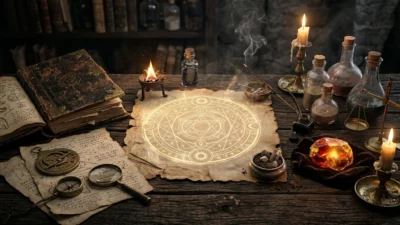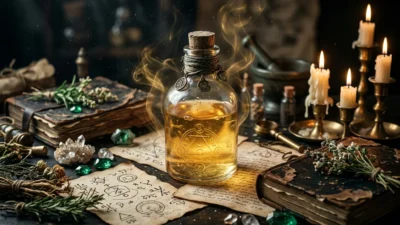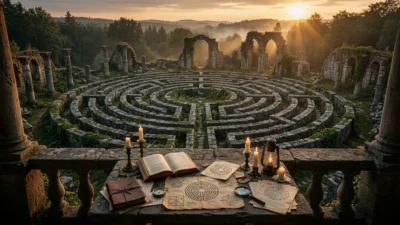
Spells have appeared in human cultures for thousands of years, often connected with protection, healing, love, luck, transformation, and personal intention.
Spell symbolism explores what spells represent beyond the words, objects, gestures, or rituals used to create them.
A spell can symbolize a desire to influence circumstances, protect something valuable, overcome uncertainty, or mark an important personal change. However, the meaning of a spell depends greatly on its cultural and religious context. A practice considered sacred in one tradition may be viewed very differently in another.
Understanding spell symbolism therefore requires looking at history, folklore, religion, literature, dreams, and modern personal interpretations rather than assuming that every spell has one universal meaning.
Spell Symbolism Meaning (Clear Definition)
Spell symbolism refers to the meanings and ideas associated with spells, magical rituals, charms, incantations, and related practices.
Symbolically, a spell can represent:
- Intention
- Transformation
- Protection
- Healing
- Love and attraction
- Luck and opportunity
- Personal power
- Mystery and the unknown
- Hope during uncertainty
- A desire for control
Historically, spells were often part of broader systems of folk practice, religion, medicine, or magic. Ancient written sources contain instructions for rituals, protective formulas, and magical practices, but these should be understood within the beliefs of their particular societies.
In a symbolic sense, the spell is often less about supernatural certainty and more about the human desire to give meaning and direction to an uncertain world.
What Does Spell Symbolism Represent?
Spell symbolism commonly represents the power of intention.
When someone performs a spell in a story, tradition, or symbolic setting, the act can represent a focused wish for something to change. The spell becomes a bridge between the person’s current situation and the outcome they hope to achieve.
Transformation
One of the strongest symbolic associations of spells is transformation. A spell may represent the wish to move from one stage of life to another.
For example, a transformation spell in folklore may symbolize:
- Leaving an old identity behind
- Beginning a new chapter
- Overcoming a limitation
- Discovering hidden abilities
- Adapting to change
Protection
Protective spells and charms often symbolize safety and the desire to guard people, homes, relationships, or possessions.
Even when viewed symbolically rather than literally, protection represents the human need to feel secure.
Love and Connection
Love spells frequently symbolize longing, attraction, emotional connection, and the desire to be loved.
However, different cultures have treated love magic differently, and historical practices should not automatically be interpreted as evidence that supernatural attraction is possible.
Mystery and Hidden Knowledge
Spells can also represent knowledge that appears mysterious or inaccessible.
This is especially common in literature and fantasy, where magical knowledge symbolizes secrets, wisdom, temptation, or power.
Spiritual Meaning of Spell Symbolism
The spiritual meaning of spells varies significantly between religious and cultural traditions.
In some traditions, ritual words and actions may be connected with prayer, healing, protection, sacred objects, ancestors, or spiritual forces. In others, magical practices may be rejected or considered incompatible with religious teachings.
From a broad symbolic perspective, spellwork can represent faith in intention, connection with the unseen, and the search for meaning.
A spell may spiritually symbolize a person’s desire to:
- Seek protection
- Find guidance
- Release emotional burdens
- Invite positive change
- Express gratitude
- Connect with nature
- Mark a personal transition
These interpretations are symbolic rather than universal spiritual facts. The meaning should always be considered within the tradition in which the practice appears.
Biblical / Religious Meaning of Spell Symbolism
The Bible and other religious traditions contain references to divination, sorcery, enchantment, charms, and related practices. These references generally need to be interpreted within their historical and theological contexts.
In many Christian interpretations, practices associated with sorcery or attempting to control supernatural forces are discouraged or condemned. That does not mean that the Bible provides a universal symbolic definition of every modern idea called a spell.
Other religious and cultural traditions have their own approaches to ritual, magic, healing, protection, and spiritual practice.
Therefore, it is important not to claim that all religions view spells in the same way. Religious interpretations can differ considerably.
Spell Symbolism in History and Culture
The history of spells is closely connected with humanity’s attempts to understand health, nature, fate, danger, and the unknown.
Written magical texts have survived from several ancient civilizations. Ritual formulas, protective objects, and magical instructions have also appeared in different historical societies.
In European folklore, charms and magical formulas were sometimes associated with healing, protection, agriculture, love, childbirth, or household concerns. In other parts of the world, ritual practices developed within completely different cultural and religious frameworks.
The word “spell” itself has also changed in meaning over time. Today, many people associate it with fantasy novels, witches, wizards, and supernatural entertainment. Historically, however, magical practices were often embedded in serious systems of belief and everyday life.
Spells in Folklore
Folklore frequently uses spells to explain extraordinary events or symbolize conflicts between ordinary life and the supernatural.
A spell might cause:
- Transformation
- Sleep
- Protection
- Enchantment
- Curses
- Healing
- Discovery
- Liberation
These themes continue to influence modern storytelling.
Spell Symbolism in Literature and Art
Spells have become powerful symbols in literature, theater, film, painting, and popular culture.
In fantasy literature, a spell can represent knowledge and power. The person who knows the spell often possesses information that ordinary characters do not.
A curse may symbolize guilt, injustice, fear, or consequences. A protective spell may represent love or sacrifice. A transformation spell may represent identity and personal growth.
Artists may also use magical imagery to explore themes such as:
- The unknown
- Human ambition
- Temptation
- Freedom
- Fear
- Personal identity
- The conflict between nature and control
Modern fantasy has therefore expanded the symbolic meaning of spells far beyond their historical uses.
Spell Symbolism in Dreams
Dreams involving spells can be interpreted in many different ways, and there is no scientifically established universal meaning for a particular dream symbol.
Symbolically, dreaming about a spell may reflect feelings about change, influence, control, fear, or personal power.
Casting a Spell
Dreaming that you are casting a spell might symbolize a strong desire to change a situation or influence an outcome.
It could reflect determination, frustration, creativity, or the wish to regain control.
Someone Casting a Spell on You
This dream may symbolically reflect feelings of being influenced, pressured, manipulated, or controlled by another person.
The interpretation depends heavily on the emotions experienced during the dream.
A Broken Spell
A broken spell may represent freedom, recovery, release, or the end of an unwanted situation.
A Protective Spell
This may symbolize emotional safety and the desire to protect yourself or someone you care about.
Dream symbolism is personal, so the dreamer’s circumstances and emotions are often more meaningful than a fixed dictionary definition.
Positive Symbolism of Spells
Spells can carry positive symbolic meanings when they appear as representations of hope, protection, healing, or transformation.
Common positive associations include:
Protection
A protective spell can symbolize security and emotional boundaries.
Healing
Healing spells may represent recovery, renewal, and the desire to overcome suffering.
Transformation
Transformation spells can symbolize personal growth and the courage to become something different.
Intention
The act of performing a spell can represent focus and commitment toward a particular goal.
Hope
For some people, magical symbolism represents hope when ordinary solutions seem limited.
Negative or Hidden Symbolism of Spells
Spells can also carry darker meanings.
A curse, for example, may symbolize anger, revenge, fear, or unresolved conflict. In literature, magical control can represent manipulation and abuse of power.
Negative symbolic associations can include:
- Control
- Obsession
- Fear
- Deception
- Revenge
- Manipulation
- Hidden intentions
- Abuse of power
- Uncertainty
The context matters greatly. A spell shown as protective in one story may be presented as dangerous in another.
Common Interpretations of Spell Symbolism
Here are some common symbolic interpretations:
| Spell Type | Common Symbolic Meaning |
| Protection spell | Safety, boundaries, security |
| Love spell | Attraction, longing, emotional connection |
| Healing spell | Recovery, renewal, hope |
| Transformation spell | Change, growth, new identity |
| Luck spell | Opportunity, optimism, uncertainty |
| Curse | Fear, revenge, consequences |
| Binding spell | Attachment, control, restriction |
| Revealing spell | Truth, discovery, hidden knowledge |
| Cleansing spell | Release, renewal, emotional clearing |
| Protective charm | Comfort, safety, reassurance |
These meanings are general symbolic interpretations rather than universal rules.
Why Does Spell Symbolism Matter Today?
Spell symbolism remains relevant because people continue to encounter magical imagery in books, movies, games, art, folklore, spiritual practices, and popular culture.
It can also provide a useful way to explore human emotions.
Someone interested in spells may actually be thinking about deeper themes such as:
- How to deal with uncertainty
- How to protect personal boundaries
- How to move through change
- How to express hope
- How to understand cultural traditions
- How people have historically explained unexplained events
Modern audiences often separate the symbolic meaning of a spell from claims about whether supernatural effects actually occur.
This distinction is important. A person can appreciate the symbolism, history, or cultural importance of magical practices without treating every supernatural claim as established fact.
FAQs:
What is the main meaning of spell symbolism?
Spell symbolism commonly represents intention, transformation, protection, mystery, personal power, and the desire to influence or understand circumstances.
What does a spell symbolize spiritually?
Spiritually, a spell may symbolize intention, protection, healing, transformation, or connection with unseen forces, depending on the tradition. There is no single spiritual interpretation shared by all cultures.
What does it mean to dream about casting a spell?
A dream about casting a spell may symbolically reflect a desire to change something, influence an outcome, gain control, or express personal power. The dreamer’s emotions and circumstances are important.
Are spells always associated with negative meanings?
No. In folklore and popular culture, spells can symbolize both positive and negative ideas. Protection, healing, love, transformation, fear, revenge, and control are all possible themes.
What does a protective spell symbolize?
A protective spell commonly symbolizes safety, boundaries, reassurance, and the desire to defend oneself or others from harm.
What does a curse symbolize?
A curse often symbolizes fear, anger, revenge, consequences, or a perceived threat. In stories, it can also represent unresolved conflict or punishment.
Does every culture interpret spells in the same way?
No. Magical and ritual practices have developed differently across societies. Their meanings depend on historical, religious, and cultural context.
Is spell symbolism the same as believing in magic?
Not necessarily. Someone can study or appreciate spell symbolism as folklore, literature, psychology, history, or art without believing that supernatural effects are real.
Conclusion
Spell symbolism reflects some of humanity’s deepest themes: the desire for protection, transformation, healing, love, knowledge, and control over uncertainty. Across folklore, religion, history, literature, art, and dreams, spells can represent both hope and fear.
Their meaning is never completely universal. Cultural traditions, religious beliefs, personal experiences, and storytelling contexts all influence how a spell is understood. Looking at those differences makes spell symbolism more meaningful and helps separate documented history from personal or spiritual interpretation.
Ultimately, the symbolism of a spell often points to something deeply human: the wish to change, protect, understand, or give meaning to the world around us.

Abigail Alice is a passionate writer at SymbolTrue, exploring the history, meanings, and cultural significance of symbols worldwide. She creates clear, engaging, and well-researched content that helps readers uncover the fascinating stories behind everyday and ancient symbols.