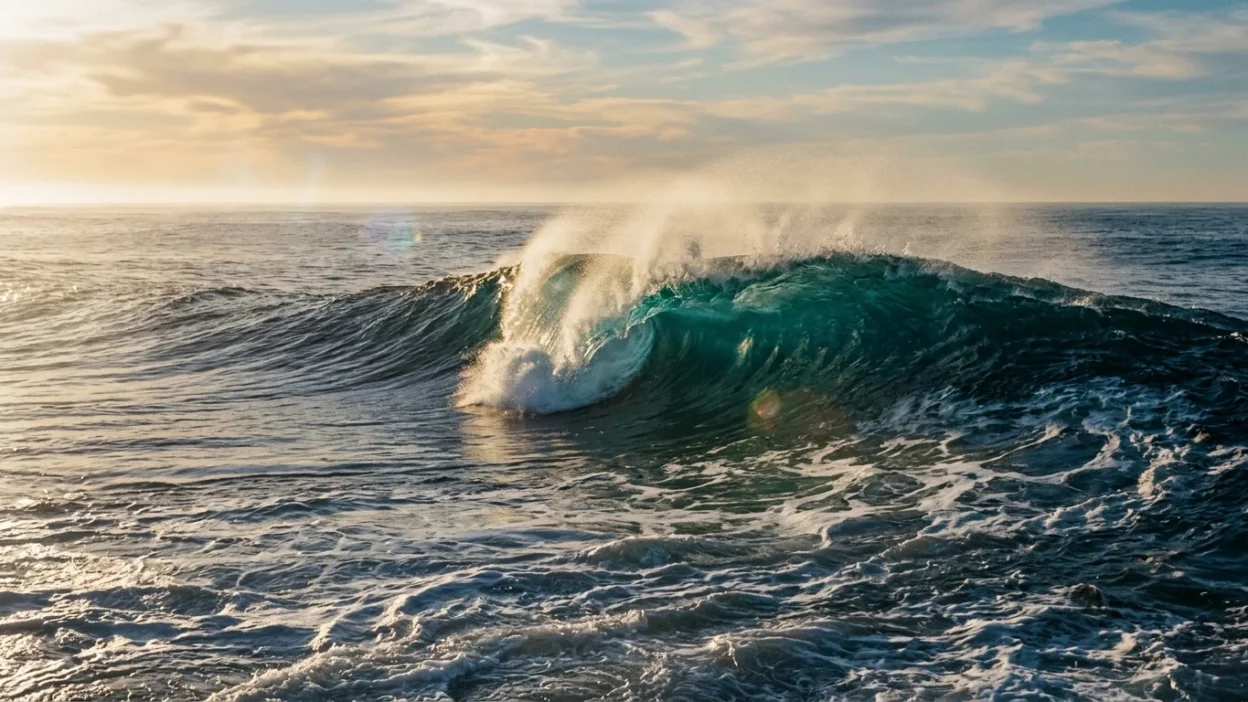
Wave symbolism is commonly associated with change, emotions, transformation, freedom, and the natural rhythm of life. Waves rise, move, and fall, making them powerful images of experiences that constantly shift. From ocean waves to artistic wave patterns, this symbol can represent both the strength of nature and the changing nature of human feelings.
Across different cultures, waves have appeared in myths, religious stories, traditional artwork, poetry, and modern design. Some people interpret them spiritually as signs of renewal, inner strength, or life’s continuous movement. Others see waves as reminders that challenges and peaceful moments come and go.The meaning of wave symbolism depends on its context. A calm ocean wave may suggest peace, while a powerful breaking wave can represent overwhelming emotions, unexpected change, or the courage needed to face difficulties.
Wave Symbolism Meaning (Clear Definition)
Wave symbolism refers to the meanings people associate with moving water, especially ocean waves. Common interpretations include change, emotional movement, renewal, freedom, strength, uncertainty, and the cycles of life.
A wave is a movement that travels through water, transferring energy as the water itself moves in a more complex pattern. This natural process has inspired symbolic meanings because waves are constantly changing while remaining part of a larger, continuous system.
Common meanings of wave symbolism include:
- Change: Life rarely remains exactly the same.
- Emotions: Waves can represent feelings that rise, intensify, and settle.
- Transformation: Difficult experiences may lead to new perspectives.
- Freedom: The open sea can evoke independence and possibility.
- Strength: Powerful waves demonstrate the force of nature.
- Renewal: Repeated waves can suggest fresh starts and new opportunities.
- Uncertainty: The sea can change quickly and become unpredictable.
- Peace: Gentle waves may create a sense of calm and relaxation.
- Resilience: Waves continue moving despite obstacles along the shore.
- Connection with nature: Waves remind people of the ocean’s scale and influence.
These meanings are interpretations rather than universal rules. A wave in a painting may symbolize emotional change, while a wave on a weather map has a scientific purpose.
What Does Wave Symbolism Represent?
Waves can represent several ideas because of their constant movement, changing intensity, and relationship with the natural world.
1. Change and the Flow of Life
One of the most common meanings of wave symbolism is change. Waves continually rise, travel, and break, reflecting the way circumstances can develop and shift.
This makes waves a useful metaphor for life’s different stages. A person may experience periods of excitement, uncertainty, disappointment, and renewal, much like the changing movement of the sea.
For example, someone starting a new career might use a wave as a personal symbol of accepting change rather than resisting it. The image can serve as a reminder that uncertainty is often part of moving forward.
2. Emotions and Inner Feelings
Waves are frequently used to represent emotions because feelings can build, intensify, and gradually settle.
A calm wave might suggest peace, contentment, or emotional balance. A large, crashing wave could represent anger, grief, fear, excitement, or another powerful feeling.
In literature and everyday language, people often describe emotions as waves. This comparison makes an abstract experience easier to picture.
However, a wave does not have one fixed emotional meaning. The surrounding image and the person’s own associations influence its interpretation.
3. Strength and Power
Ocean waves can be gentle, but they can also carry enormous energy. Their movement has shaped coastlines over long periods and can create dangerous conditions during storms.
Symbolically, powerful waves may represent determination, force, courage, or the ability to confront difficult circumstances.
A wave tattoo, for example, might express respect for nature or remind someone of a challenge they have overcome. It can also represent the recognition that strength sometimes involves adapting rather than trying to control everything.
4. Freedom and Independence
The ocean’s vastness often evokes freedom, exploration, and open possibilities. Waves moving across a wide horizon can suggest a desire to travel, discover new places, or move beyond familiar boundaries.
This association is common in travel imagery, coastal art, and personal designs inspired by the sea.
For someone who loves surfing, sailing, or spending time near the ocean, a wave may also represent a personal connection with an active and independent lifestyle.
5. Renewal and New Beginnings
Waves repeatedly approach the shore, break, and recede. This movement can inspire the idea of renewal: something ends, and another movement follows.
A wave may therefore symbolize starting again after a difficult period, developing a new perspective, or allowing the past to become part of one’s experience without controlling the future.
This does not mean every ending leads to a better outcome. Rather, the wave offers a visual reminder that life continues to change.
6. Uncertainty and the Unknown
The sea can be difficult to predict, particularly during changing weather or rough conditions. A wave may represent uncertainty, risk, or situations that are beyond an individual’s control.
In a story or painting, a towering wave might communicate a character’s fear of the unknown. In personal reflection, it could represent a major decision or an unfamiliar stage of life.
This interpretation highlights another side of wave symbolism: movement can be exciting, but it can also feel unsettling.
Spiritual Meaning of Wave Symbolism
In some spiritual interpretations, wave symbolism represents renewal, emotional awareness, the cycles of existence, and the connection between individual life and the wider natural world.
Because waves are always moving, they can serve as metaphors for experiences that change over time. Some people see them as reminders to accept uncertainty, remain adaptable, and recognize that difficult feelings may eventually become less intense.
These interpretations vary among individuals and traditions. A wave does not have one universal spiritual meaning, and its presence should not automatically be treated as a supernatural sign.
Waves as Symbols of Spiritual Growth
Some people interpret waves as symbols of spiritual growth because their movement suggests an ongoing journey rather than a fixed destination.
Personal understanding often develops through repeated experiences. Someone may revisit the same questions about purpose, relationships, or values at different stages of life and discover new answers.
A wave can represent this gradual process of learning and reflection. Its symbolism comes from the way people relate the movement of water to their own experiences.
Wave Symbolism and Emotional Healing
Waves can also represent the changing nature of emotions. Just as the sea moves between calm and rough conditions, people may experience periods of peace alongside moments of sadness, anxiety, or uncertainty.
In personal reflection, a wave might serve as a reminder that feelings can change and that experiencing a difficult emotion does not necessarily mean it will remain at the same intensity.
This is a metaphor, not a promise that every hardship will pass quickly. Emotional healing can take time and may require support from other people.
Waves and the Connection With Nature
For some people, the ocean creates a sense of perspective, humility, or connection with something larger than themselves.
Watching waves may encourage reflection on the relationship between human life and the natural world. A wave symbol can express that feeling in artwork, jewelry, meditation spaces, or personal writing.
This experience is personal rather than a universal spiritual rule. People may find similar meaning in mountains, forests, rivers, or other natural features.
The Wave as a Reminder to Adapt
A wave changes shape as it moves through different conditions. Symbolically, this can represent flexibility and the ability to respond to circumstances.
Instead of viewing adaptation as weakness, the wave can remind people that changing direction or adjusting expectations may be a practical response to life.
This interpretation is particularly relevant during transitions such as moving to a new place, changing jobs, or adjusting to a different stage of life.
Biblical and Religious Meaning of Wave Symbolism
Waves and the sea appear in biblical narratives and many other religious traditions. Their meanings depend on the specific passage, story, or cultural setting. Waves may be associated with danger, uncertainty, divine power, awe, or deliverance, but they do not carry the same meaning in every religious context.
What Do Waves Represent in the Bible?
In the Bible, the sea can appear as a setting for danger, a symbol of powerful natural forces, or part of a story about God’s authority and protection.
For example, the Gospel accounts of Jesus calming a storm describe frightened disciples facing rough water before the wind and waves become calm. In Christian interpretation, this episode is often understood as a demonstration of Jesus’ authority and a lesson about faith amid fear.
The precise meaning depends on the passage and the theological tradition interpreting it. It would be inaccurate to claim that every biblical wave represents one specific spiritual message.
Waves as Symbols of Trouble and Uncertainty
Biblical poetry sometimes uses images of restless or powerful waters to express distress, instability, or overwhelming circumstances.
Such imagery draws on the sea’s ability to become dangerous and difficult to control. Waves can therefore function as metaphors for turmoil or hardship in particular passages.
However, the sea and its waves are not always negative in biblical writing. Their meaning depends on the surrounding language and the purpose of the passage.
Waves in Other Religious and Cultural Traditions
Water has important roles in many religious practices and cultural traditions. It may be connected with cleansing, renewal, life, creation, or transition.
Waves may be included in art or rituals associated with the sea, but their exact meanings differ among communities. It is important not to combine separate traditions into one universal interpretation.
For an accurate understanding, consider the specific religion, region, historical period, and use of the wave image.
Wave Symbolism in History and Culture
Waves have been important in human life because they influence travel, fishing, trade, settlement, and coastal environments. Their practical importance has also made them powerful subjects in art and cultural expression.
Waves in Ancient Art
Water and wave patterns appear in decorative objects, pottery, murals, and other forms of art from different historical periods.
In some works, waves represent the sea as a setting for stories about travel, conflict, gods, or legendary creatures. In others, they function mainly as decorative patterns.
The original meaning of a particular wave motif may be uncertain. Researchers consider the object’s location, date, surrounding imagery, and cultural background before drawing conclusions.
Wave Symbolism in Japanese Culture
Ocean waves are prominent in Japanese art, including the well-known woodblock-print tradition. One internationally recognized example is Katsushika Hokusai’s The Great Wave off Kanagawa, created in the early nineteenth century as part of his series Thirty-six Views of Mount Fuji.
The image presents a towering wave above boats, with Mount Fuji visible in the distance. Its composition conveys the scale and force of the ocean while placing human activity within a powerful natural setting.
The artwork has inspired many modern interpretations involving nature, vulnerability, movement, and resilience. These are ways viewers may understand the image, rather than a single official meaning shared by all Japanese culture.
Waves in Polynesian and Oceanic Art
The ocean is central to the histories and lived experiences of many Pacific Island communities, where navigation, fishing, trade, and relationships with the sea have long been important.
Wave patterns appear in some Oceanic and Polynesian-inspired visual designs, but their meanings vary by community and artistic tradition. It is important not to treat all Pacific cultures as one group or assume that every wave motif has the same meaning.
When interpreting a traditional design, its specific cultural origin and the knowledge of the community associated with it matter.
Waves in Maritime History
For sailors and coastal communities, waves have represented both opportunity and danger. The sea has enabled travel, commerce, and exploration while also creating serious risks.
This dual role helps explain why waves can symbolize freedom and adventure in one context and uncertainty or hardship in another.
Wave imagery in maritime flags, ship decorations, and coastal memorials may reflect practical relationships with the sea as well as personal or cultural meanings.
Wave Symbolism in Literature and Art
Waves are versatile artistic symbols because they can suggest movement, emotion, conflict, renewal, and the passage of time.
Waves as Metaphors for Emotions
Writers often use waves to describe feelings that arrive with intensity and then gradually recede.
A character overwhelmed by grief might be described as being struck by a wave of sadness. Someone experiencing joy might feel carried forward by a wave of excitement.
These expressions work because readers can imagine the force and movement of water as a comparison for emotional experience.
Waves as Symbols of Conflict
A stormy sea or a towering wave can represent an obstacle that seems larger than the people facing it.
In a novel, film, or painting, a powerful wave may reflect a character’s fear, a difficult decision, or an approaching crisis. The image can create tension even before the conflict is explained directly.
The interpretation depends on the story and the way the wave is presented.
Waves and the Passage of Time
Repeated waves can symbolize the steady movement of time. Each wave is distinct, yet the larger rhythm continues.
An artist may use this idea to explore memory, aging, changing relationships, or the way generations experience similar challenges in different circumstances.
A wave can therefore represent both repetition and difference: familiar patterns return, but the situation is never exactly the same.
Waves in Modern Visual Design
Wave shapes are common in logos, website graphics, packaging, clothing, tattoos, and interior decoration.
A smooth, simple wave can create a relaxed or flowing appearance. A sharp, dramatic wave may suggest energy, movement, or power.
Designers sometimes use waves to communicate ideas associated with water, travel, health, or environmental awareness. In other cases, the shape is selected for visual appeal rather than a specific symbolic message.
Wave Symbolism in Dreams
Dreaming about waves may bring to mind emotions, change, uncertainty, or a situation that feels difficult to manage. However, there is no scientifically established universal meaning for wave dreams, and they should not be treated as reliable predictions of the future.
Your feelings during the dream and your current life circumstances may offer more useful clues than a fixed dream interpretation.
Dreaming of Calm Waves
Calm waves may remind you of peace, emotional steadiness, or a desire for a more relaxed environment.
If the dream felt pleasant, consider whether you have recently found stability or are looking for time away from everyday pressures.
This is a possible personal association, not a guarantee that a peaceful event is coming.
Dreaming of Big or Powerful Waves
Large waves may reflect feelings of being overwhelmed, facing a major change, or dealing with a situation that seems difficult to control.
You might think about whether responsibilities, relationships, or decisions have been demanding more attention than usual.
The dream does not prove that something bad will happen. It may simply reflect the way you are processing current concerns.
Dreaming of Being Swept Away by a Wave
Being carried away by a wave could bring to mind a feeling of losing control or being caught up in strong emotions.
Consider whether you have been struggling to manage a busy schedule, a difficult relationship, or a sudden change.
The interpretation depends on your experience in the dream. Some people may find the same image frightening, while others may experience it as exciting or freeing.
Dreaming of Waves Crashing on the Shore
Waves breaking on a shore may suggest a transition, the end of a phase, or the repeated arrival of new challenges.
You might reflect on whether something in your life is coming to a close or whether you are adjusting to a recurring situation.
Dream images are personal, so the meaning cannot be determined from the wave alone.
Positive Symbolism of Waves
Wave symbolism often has positive associations with renewal, freedom, strength, and the ability to adapt.
Common positive interpretations include:
- Renewal: Every wave can suggest another opportunity to begin.
- Resilience: Continuing through changing conditions.
- Freedom: The open ocean can evoke independence and exploration.
- Emotional awareness: Recognizing that feelings rise and settle.
- Transformation: Moving through change and developing new perspectives.
- Strength: Reflecting the energy and force of nature.
- Peace: Gentle waves can create a feeling of calm.
- Adaptability: Responding to changing circumstances.
- Connection with nature: Expressing appreciation for the sea and its environment.
- Adventure: Representing travel, discovery, and new experiences.
For example, someone might choose a wave tattoo to remember a difficult period they survived. Another person might use wave imagery to express a love of surfing or a strong connection with the coast.
These meanings are personal or cultural interpretations rather than guarantees of good luck or success.
Negative or Hidden Symbolism of Waves
Waves can also represent difficult experiences. Their meaning depends on the size, movement, setting, and emotional tone of the image.
Feeling Overwhelmed
A large wave may symbolize pressure, fear, or responsibilities that seem too difficult to manage.
In an illustration, it might show a person facing a problem that appears larger than their current resources. In personal reflection, it could encourage someone to consider which challenges need attention or support.
Uncertainty and Loss of Control
Because waves are affected by wind, weather, and other conditions, they can represent unpredictability.
A wave may be used to express the discomfort of not knowing what comes next. This does not make the symbol inherently negative; uncertainty can also accompany opportunity and discovery.
Emotional Turmoil
Rough waves are sometimes used as metaphors for intense emotions or internal conflict.
For example, a stormy sea in a film might reflect a character’s anger, fear, or grief. The connection is artistic and interpretive, not a universal rule.
Destruction and Danger
Powerful waves can damage coastlines, vessels, and buildings. In stories or artwork, they may represent destructive forces or the limits of human control.
This association reflects the real risks of rough seas, but not every wave symbolizes danger. Calm waves and dramatic waves can communicate very different ideas.
Misinterpreting Symbolic Claims
Some sources describe waves as definite predictions of spiritual events or future changes. Such claims should be treated cautiously unless a specific tradition and reliable evidence support them.
A wave can be meaningful as a personal symbol without proving that the universe is sending a message or that a particular event will occur.
Common Interpretations of Wave Symbolism
The meaning of a wave often depends on its appearance and context.
| Wave image or context | Possible symbolic interpretation |
| Calm ocean waves | Peace, relaxation, or emotional balance |
| Large crashing waves | Powerful emotions, change, or challenge |
| Waves moving toward shore | Transition, renewal, or repeated experiences |
| Waves receding from shore | Release, retreat, or letting go |
| Waves during a storm | Uncertainty, conflict, or emotional turmoil |
| A single stylized wave | Freedom, simplicity, movement, or connection with water |
| Waves in traditional artwork | A cultural or artistic meaning specific to the work |
| Waves in religious stories | A meaning shaped by the passage or tradition |
| Waves in a dream | Personal associations with emotions, change, or control |
| Waves in a tattoo | Individual meanings such as resilience, adventure, or remembrance |
| Waves in a logo | Movement, flexibility, water, or natural energy |
These interpretations are possibilities rather than definitive answers. A wave may be decorative, practical, artistic, religious, or personal depending on its purpose.
Why Does Wave Symbolism Matter Today?
Wave symbolism remains relevant because the image is easy to recognize and can communicate complex ideas through a simple form. It appears in personal expression, environmental messaging, design, and everyday language.
Personal Expression and Tattoos
Wave tattoos are often chosen by people who feel connected to the ocean or want a symbol of change, resilience, or freedom.
A small wave may represent a personal memory, a favorite place, or a meaningful experience. Another person may choose a more dramatic design to express strength or respect for nature.
If you are considering a wave tattoo, think about the personal story you want it to represent rather than relying on a single universal definition.
Branding and Graphic Design
Waves are widely used in branding because their flowing lines suggest motion and flexibility.
A business connected with water, travel, wellness, or environmental work may use wave imagery to communicate its identity. Other designers use wave patterns to make a layout feel softer or more dynamic.
The intended meaning depends on the overall design and the organization using it.
Environmental Awareness
Wave imagery can draw attention to the ocean, coastal ecosystems, marine life, and the effects of pollution.
A wave symbol in an environmental campaign may represent the importance of protecting marine environments. In this context, its message is shaped by the campaign’s purpose rather than by a universal spiritual tradition.
Emotional Awareness and Personal Reflection
Because waves are often compared with feelings, they can be useful symbols for reflecting on emotional experiences.
Someone might use a wave in a journal to represent a difficult day or to remind themselves that emotions can change. This metaphor may encourage patience and self-awareness without suggesting that every feeling disappears on its own.
Art, Fashion, and Everyday Design
Wave patterns appear in clothing, home decoration, jewelry, digital illustrations, and architecture.
Their curved movement can create a sense of flow and visual rhythm. Depending on the colors and style, waves may feel calm, energetic, elegant, or dramatic.
Their versatility helps explain why the symbol continues to appear in both traditional and contemporary settings.
FAQs:
1. What does a wave symbolize spiritually?
In some spiritual interpretations, a wave represents change, renewal, emotional awareness, and the cycles of life. Its meaning varies among individuals and traditions, so it does not have one universal spiritual definition.
2. What does a wave symbolize emotionally?
A wave often represents feelings that rise, intensify, and settle. Calm waves may suggest peace, while rough waves can be used to express fear, grief, excitement, or emotional turmoil.
3. What does a wave symbolize in the Bible?
The Bible uses the sea and waves in different contexts, including stories about storms, danger, and divine authority. Their meaning depends on the specific passage; waves do not have one fixed biblical interpretation.
4. What does a wave mean in a dream?
A wave dream may prompt reflection on emotions, change, uncertainty, or feeling overwhelmed. There is no scientifically established universal interpretation, so consider your feelings and current circumstances.
5. What does a wave tattoo symbolize?
A wave tattoo may represent freedom, resilience, transformation, a love of the ocean, or a meaningful personal memory. The design’s significance depends on the person wearing it and the story behind it.
6. Do waves symbolize new beginnings?
Waves can symbolize renewal because they repeat in a continuous movement. Some people interpret this pattern as a reminder that life offers opportunities to adapt and begin again, although this is a symbolic interpretation rather than a guarantee.
7. What does a big wave symbolize?
A big wave may represent strength, powerful emotions, a major challenge, or a significant change. Its meaning depends on whether the image feels threatening, exciting, inspiring, or peaceful.
8. Are waves a positive or negative symbol?
Waves can carry both positive and negative meanings. They may symbolize freedom, peace, and renewal, or represent uncertainty, emotional turmoil, and danger. Context determines the most appropriate interpretation.
Conclusion
Wave symbolism commonly represents change, emotions, transformation, freedom, resilience, and the rhythms of life. Calm waves can suggest peace and renewal, while powerful waves may express strength, uncertainty, or overwhelming experiences. Waves also have important roles in religious stories, cultural art, literature, and modern design.
There is no single meaning that applies to every wave. Its significance depends on the setting, cultural background, and personal associations involved. Whether a wave appears in a dream, a painting, a tattoo, or the natural world, it can serve as a reminder that life is constantly moving and that people often learn to adapt as conditions change.

Ryan Thomas is a passionate writer at SymbolTrue, dedicated to exploring the meanings, history, and cultural significance of symbols worldwide. He creates engaging, well-researched content that helps readers discover the stories and symbolism behind everyday signs, icons, and traditions.