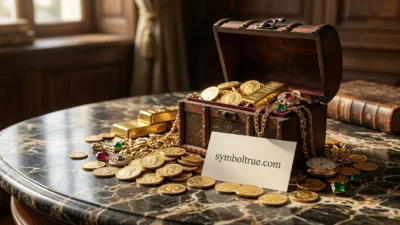

Coins are small objects with surprisingly deep symbolic meaning. Throughout history, people have connected coins with wealth, luck, opportunity, exchange, value, and prosperity. Because coins pass from one person to another, they can also represent movement, connection, generosity, and the circulation of resources.
The meaning of a coin can change depending on its age, material, condition, number, cultural setting, or the situation in which it appears. Finding a coin on the ground, receiving one as a gift, dreaming about coins, or seeing an old coin can each inspire different interpretations.
It is important to remember that spiritual symbolism is based largely on traditions, beliefs, and personal interpretation rather than universal fact. With that in mind, coin symbolism can offer an interesting way to think about abundance, personal value, choices, and life’s opportunities.
Coin Symbolism Meaning (Clear Definition)
Coin symbolism refers to the meanings and ideas people associate with coins beyond their practical financial purpose.
At the most basic level, a coin represents value and exchange. It has monetary worth, but symbolically it can represent much more. A coin may stand for prosperity, opportunity, reward, luck, effort, or the exchange of energy between people.
Because coins are made to circulate, they can also symbolize movement. Money enters one person’s hands and eventually moves to someone else. In symbolic interpretations, this movement can represent the idea that resources, opportunities, experiences, and generosity are not always meant to remain fixed.
An old coin may suggest history and memory, while a shiny new coin may represent a fresh beginning. A lost coin can symbolize something overlooked, while a gifted coin may represent generosity or appreciation.
What Does Coin Symbolism Represent?
Coins can represent several important ideas:
Wealth and Prosperity
The most obvious symbolic association is financial abundance. Coins are directly connected with money, making them natural symbols of material prosperity and economic security.
In spiritual interpretations, seeing a coin may sometimes be viewed as a reminder to recognize abundance rather than focusing only on scarcity.
Luck and Fortune
Coins are often associated with good fortune. Finding a coin unexpectedly can feel like a small lucky event, particularly when the person notices it at an important moment.
This interpretation is cultural rather than a guaranteed sign that something fortunate will happen.
Opportunity
A coin can represent an opportunity because money gives people the ability to make choices, purchase something useful, or pursue a goal.
Symbolically, a coin may therefore remind someone to recognize opportunities that might initially appear small.
Value
Coins also represent personal and emotional value. Since coins have measurable monetary worth, they can encourage reflection on what people consider valuable in life.
This can include time, relationships, knowledge, trust, effort, and personal achievements.
Balance and Exchange
A coin has two sides, making it a natural symbol of duality and balance. Heads and tails can metaphorically represent two perspectives, two choices, or two sides of a situation.
Spiritual Meaning of Coin Symbolism
In spiritual and symbolic traditions, coins are sometimes interpreted as signs of abundance, blessings, opportunity, protection, or encouragement.
There is no single universal spiritual meaning of a coin. Interpretations differ between cultures, religions, personal beliefs, and spiritual practices.
A coin appearing at a meaningful moment may encourage someone to think about abundance and gratitude. For some people, it can serve as a personal reminder to remain open to opportunities and appreciate what they already have.
Coins and Abundance
Coins can symbolize the flow of abundance. In this interpretation, abundance does not necessarily mean becoming wealthy. It may refer to having enough resources, supportive relationships, useful knowledge, meaningful experiences, or opportunities.
Coins and New Beginnings
A newly minted or newly discovered coin can symbolically represent a fresh chapter.
Someone beginning a new career, relationship, project, or personal journey might personally interpret a coin as a reminder to move forward with confidence.
Coins and Energy Exchange
Because money moves between people, coins can represent exchange. Spiritually, this can be interpreted more broadly as the exchange of time, kindness, effort, attention, or support.
Biblical / Religious Meaning of Coin Symbolism
Coins appear in several religious and historical texts, particularly in biblical contexts. However, their meanings should be understood within the specific story rather than treated as universal spiritual rules.
One well-known biblical example is the parable of the lost coin, found in Luke 15:8–10. A woman searches carefully for a lost coin and celebrates after finding it. Within the Christian tradition, the story is commonly understood in connection with repentance, spiritual restoration, and the value of what has been lost.
Coins also appear in other biblical passages involving taxes, commerce, giving, and material wealth.
The famous teaching associated with a coin bearing Caesar’s image is found in the Synoptic Gospels. It involves questions of taxation and the relationship between civic obligations and religious life.
These examples show that coins in biblical literature can relate to value, responsibility, possession, loss, restoration, and moral choices.
They do not establish that every coin encountered today has a specific biblical message.
Coin Symbolism in History and Culture
Coins have played important practical and symbolic roles across many civilizations.
Historically, coins were created as standardized forms of money. Their designs often displayed rulers, political symbols, religious imagery, animals, buildings, or important cultural figures.
This made coins more than simple objects of exchange. They could also communicate identity, authority, history, and political power.
Ancient coins are especially valuable to historians and archaeologists because their inscriptions and images can provide evidence about rulers, places, economies, and cultural beliefs.
Different cultures have also developed traditions involving coins.
For example, coins have been associated in various societies with good fortune, gifts, prosperity, weddings, celebrations, and new beginnings. In some traditions, giving money or coins during important occasions represents wishes for financial well-being.
The exact meaning varies considerably, so cultural symbolism should always be considered within its historical context.
Coin Symbolism in Literature and Art
Coins frequently appear in literature and art because they provide a simple visual representation of wealth, temptation, poverty, reward, and human choices.
A handful of coins might represent poverty or limited resources. A treasure chest filled with coins can symbolize wealth and desire. A single coin may represent something small but valuable.
Artists may also use coins to explore themes such as:
- Greed
- Social class
- Power
- Opportunity
- Trade
- Sacrifice
- Materialism
- Human value
- Economic inequality
In storytelling, coins can become especially powerful when their monetary value contrasts with their emotional importance.
For example, an inexpensive coin inherited from a loved one may have little financial value but enormous sentimental significance.
Coin Symbolism in Dreams
Dreams about coins can have many possible interpretations. Dream symbolism is subjective, so there is no scientifically established meaning for every coin dream.
The context of the dream matters greatly.
Finding Coins in a Dream
Finding coins may represent discovering an opportunity, recognizing personal value, or becoming aware of something previously overlooked.
Some people may interpret it as a symbol of luck or unexpected benefit.
Losing Coins in a Dream
Losing coins may reflect concerns about financial security, missed opportunities, personal value, or fear of losing something important.
It may also simply reflect everyday worries about money.
Receiving Coins
Receiving coins in a dream may symbolize appreciation, support, recognition, or a perceived reward.
The person giving the coins can also influence the dream’s personal meaning.
Collecting Coins
Collecting coins may represent saving resources, preserving memories, pursuing goals, or building something gradually.
It can also reflect a desire for greater security.
Old or Ancient Coins
Old coins may symbolize history, memories, inherited knowledge, or something from the past that continues to influence the present.
Positive Symbolism of Coins
Coins are commonly connected with several positive symbolic ideas.
Prosperity
Coins naturally suggest financial growth and material resources.
Good Fortune
Finding a coin can feel like an unexpected moment of luck.
Opportunity
A coin can symbolize the possibility of making a choice or moving toward something new.
Reward
Because money can be received for effort, coins may symbolize recognition or the results of hard work.
Generosity
Giving coins can represent sharing resources and helping others.
Stability
A collection of coins may symbolically suggest preparation, savings, and security built over time.
Negative or Hidden Symbolism of Coins
Coins do not always carry positive meanings. Their symbolism can also point toward difficult subjects.
Greed
Because coins represent money, they can symbolize excessive attachment to wealth or possessions.
Materialism
Coins may represent a tendency to measure success only through financial or material value.
Loss
A lost coin can symbolize something valuable that has been overlooked or taken for granted.
Temptation
In stories and religious teachings, money can sometimes represent temptation or difficult moral choices.
Unequal Value
A coin can also raise questions about whether something is being valued correctly. Something inexpensive financially may be priceless emotionally, while something expensive may have little personal meaning.
Common Interpretations of Coin Symbolism
The symbolic meaning of a coin often depends on its situation.
| Coin Situation | Common Symbolic Interpretation |
|---|---|
| Finding a coin | Luck, opportunity, unexpected value |
| Giving a coin | Generosity, sharing, support |
| Receiving a coin | Reward, appreciation, assistance |
| Losing a coin | Loss, missed opportunity, insecurity |
| Old coin | History, memory, heritage |
| New coin | Fresh beginning, possibility |
| Many coins | Abundance, resources, accumulation |
| One coin | Individual value, opportunity, choice |
| Broken or damaged coin | Loss of value, difficulty, imperfection |
| Coin with two visible sides | Balance, duality, different perspectives |
These are common symbolic associations rather than fixed meanings. Personal experience and cultural background can change the interpretation.
Why Does Coin Symbolism Matter Today?
Coins remain meaningful even though modern financial systems increasingly rely on cards, mobile payments, and digital transactions.
A physical coin can feel more tangible than digital money. It can be held, saved, passed between people, inherited, collected, or displayed.
Coins can also connect people with history. A coin from another country or another period can provide a small physical reminder of a different culture or time.
On a personal level, coin symbolism can encourage reflection on questions such as:
What do I value?
What opportunities am I overlooking?
Am I using my resources wisely?
What does prosperity mean to me?
Am I giving as well as receiving?
These questions make coin symbolism relevant beyond financial wealth.
FAQs:
What is the main meaning of coin symbolism?
The main symbolic meanings of coins include wealth, prosperity, luck, opportunity, value, exchange, and abundance. The specific meaning depends on context and cultural tradition.
What does finding a coin symbolize?
Finding a coin is commonly interpreted as a sign of luck, opportunity, unexpected value, or a reminder to appreciate small blessings. This is a symbolic interpretation rather than a proven prediction of future events.
What does a coin symbolize spiritually?
Spiritually, coins may represent abundance, blessings, opportunity, generosity, or the flow of resources. Different spiritual traditions may interpret coins differently.
What does a coin symbolize in the Bible?
Coins appear in several biblical stories involving value, taxation, possessions, giving, loss, and restoration. The parable of the lost coin is particularly associated with searching for and rejoicing over what was lost.
What does an old coin symbolize?
An old coin can symbolize history, memory, heritage, experience, or a connection with the past. Its meaning may become more personal if it belonged to a family member or comes from an important period.
What does a coin mean in a dream?
A coin in a dream can symbolize value, money, opportunity, security, loss, or personal concerns about resources. Dream interpretation depends heavily on what happened in the dream and how the dreamer felt.
Is finding a coin a sign of good luck?
Many people and cultures associate finding coins with good luck. However, this is a cultural or personal belief rather than something that can be scientifically established.
What do two sides of a coin symbolize?
The two sides of a coin can represent duality, balance, opposing perspectives, choices, or the idea that situations can have more than one side.
What does giving someone a coin symbolize?
Giving someone a coin can symbolize generosity, support, appreciation, prosperity, or sharing resources. In some cultures, coins are given during celebrations as wishes for good fortune.
Conclusion
Coin symbolism is closely connected with wealth, prosperity, luck, opportunity, value, exchange, and abundance. At the same time, coins can symbolize deeper ideas such as balance, generosity, personal priorities, loss, temptation, and the relationship between material and emotional value.
Historically, coins have recorded political, economic, and cultural stories, while religious traditions and folklore have given them additional symbolic meanings. In dreams and personal experiences, their interpretation depends strongly on context.
Ultimately, a coin can be more than money. It can serve as a small reminder that value is not always measured by price, opportunities may appear in unexpected forms, and what we choose to give, receive, save, or appreciate can shape how we understand prosperity in our lives.

Abigail Alice is a passionate writer at SymbolTrue, exploring the history, meanings, and cultural significance of symbols worldwide. She creates clear, engaging, and well-researched content that helps readers uncover the fascinating stories behind everyday and ancient symbols.