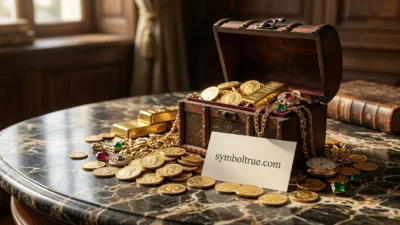

Money is more than something used to buy goods and services. Across different societies, it can represent security, freedom, success, power, opportunity, generosity, and personal value. Because money affects everyday life so strongly, it has also developed a rich symbolic meaning.
Money symbolism can change depending on the situation. A wallet full of cash may suggest security to one person, while another person may associate it with ambition, responsibility, or even anxiety. In dreams, religious traditions, literature, and art, money can carry meanings that go far beyond its financial value.
Understanding these interpretations can help explain why money appears so often in stories, dreams, traditions, and personal experiences.
Money Symbolism Meaning (Clear Definition)
Money symbolism refers to the meanings and ideas people associate with money beyond its practical financial function.
At its simplest, money can symbolize:
- Wealth and prosperity
- Security and stability
- Freedom and independence
- Power and influence
- Success and achievement
- Opportunity and possibility
- Generosity and giving
- Desire and ambition
- Social status
- Fear of loss or scarcity
These meanings are not universal rules. They depend heavily on culture, personal experience, economic circumstances, and context.
For someone who has experienced financial insecurity, money may symbolize safety. For someone focused on achievement, it may represent success. For another person, it may symbolize temptation, greed, or social pressure.
What Does Money Represent?
Money often represents the ability to exchange value and make choices. Symbolically, this practical function can develop into much broader meanings.
Wealth and Abundance
One of the most common meanings associated with money is abundance. A large amount of money may symbolize having enough resources to meet one’s needs and pursue desired goals.
This is why money frequently appears as a symbol of prosperity in celebrations, stories, and visual imagery.
Security and Stability
Money can represent protection against uncertainty.
Savings, income, and financial resources may provide a sense of stability. As a symbol, money can therefore stand for preparedness, safety, and the ability to handle unexpected situations.
Freedom and Independence
Money can also symbolize freedom because financial resources may create more choices.
People often connect money with the ability to travel, study, start a business, leave an unhealthy situation, or pursue personal goals.
However, financial freedom is not guaranteed simply by possessing money. Its symbolic meaning often reflects the desire for greater control over one’s life.
Power and Influence
Throughout history, wealth has often been connected with social and political influence. Because resources can provide access and opportunities, money can symbolize power, authority, and influence.
This interpretation appears frequently in political writing, fiction, satire, and social commentary.
Spiritual Meaning of Money
Spiritual interpretations of money vary greatly between traditions and individuals. There is no single universal spiritual meaning.
In some modern spiritual perspectives, money is viewed as a symbol of energy, exchange, abundance, gratitude, or responsibility. These interpretations often focus on one’s relationship with resources rather than money itself.
Money may symbolize the ability to share, support others, create something meaningful, or meet responsibilities.
At the same time, some spiritual teachings caution against allowing material wealth to become the main measure of a person’s worth.
From this perspective, money can raise questions such as:
- What do I truly value?
- How do I use what I have?
- Am I controlled by the desire for more?
- Can I be generous without expecting something in return?
- Does financial success match my deeper values?
Thus, money symbolism can involve both abundance and attachment.
Biblical / Religious Meaning of Money
Religious interpretations of money are diverse, and they should not be reduced to the idea that money is simply good or bad.
In the Bible, money and wealth appear in many different contexts. Biblical teachings frequently address generosity, stewardship, poverty, wealth, debt, greed, justice, and responsibility.
A major theme is that material possessions should not become more important than spiritual values. Biblical teachings also emphasize helping people in need and using resources responsibly.
Christian interpretations may therefore associate money with:
- Stewardship
- Responsibility
- Generosity
- Temptation
- Material attachment
- Provision
- Social responsibility
Other religious traditions also discuss wealth and material possessions in different ways. Some emphasize charitable giving, ethical earning, moderation, detachment, or responsibility toward the community.
Because religious teachings differ, the symbolic meaning of money depends on the specific tradition and passage being considered.
Money in History and Culture
Money has changed dramatically throughout human history.
Early societies used various forms of exchange, including commodities and objects that people considered valuable. Later, coins became important tools for trade, taxation, and political authority. Paper currency eventually became widespread in many regions, followed by modern banking and increasingly digital forms of payment.
These historical developments gave money symbolic associations with trust, authority, trade, government, and social organization.
Coins, for example, have often carried images of rulers, leaders, national symbols, or important cultural figures. This makes currency not only a financial object but also a reflection of political identity and historical memory.
Different cultures may also associate certain money-related customs with good fortune, generosity, prosperity, or celebration. These traditions vary considerably and should be understood within their particular cultural settings.
Money in Literature and Art
Money is a powerful symbol in literature and art because it can reveal what characters and societies value.
Writers may use money to explore:
- Greed
- Social class
- Ambition
- Poverty
- Inequality
- Love
- Power
- Independence
- Corruption
- Social expectations
A wealthy character may represent privilege, while a character struggling financially may represent vulnerability or social inequality.
Artists can also use coins, banknotes, treasure, wallets, or piles of cash to communicate ideas about consumerism, status, greed, success, or economic inequality.
Money therefore works particularly well as a symbolic object because almost everyone understands its practical importance, even when its deeper meaning differs.
Money in Dreams
Money is a common theme in dreams, but dream interpretation is not an exact science. There is no scientifically established meaning that applies to every dream involving money.
The meaning may depend on the dreamer’s circumstances and emotions.
Finding Money in a Dream
Finding money may symbolize opportunity, confidence, unexpected possibilities, or a feeling that something valuable has entered one’s life.
It could also simply reflect recent thoughts about finances.
Losing Money in a Dream
Losing money may represent feelings of insecurity, uncertainty, loss of control, or fear about the future.
For someone currently experiencing financial pressure, the dream may be connected to everyday concerns rather than having a deeper symbolic message.
Receiving Money
Receiving money may symbolize support, recognition, opportunity, or appreciation.
The person giving the money and the emotions experienced during the dream can provide additional context.
Giving Money Away
Giving money away may represent generosity, responsibility, emotional investment, or a desire to help someone.
In some situations, it may also reflect concerns about giving too much of oneself to others.
Positive Symbolism of Money
Money can carry many positive symbolic meanings.
Abundance
Money can represent having enough resources and feeling confident about the future.
Opportunity
Financial resources can symbolize new possibilities, education, travel, business, or personal growth.
Generosity
Money given freely can represent kindness, support, and a willingness to help others.
Achievement
Because financial success is often connected with professional accomplishment, money can symbolize reaching an important goal.
Independence
Money may represent the ability to make decisions without depending entirely on others.
These positive meanings are strongest when money is viewed as a tool rather than the ultimate measure of success.
Negative or Hidden Symbolism of Money
Money can also carry darker or more complicated meanings.
Greed
An excessive desire for wealth may symbolize selfishness, dissatisfaction, or an endless pursuit of material gain.
Fear of Scarcity
Money can represent anxiety about not having enough resources.
Control
In some contexts, money symbolizes power over other people or dependence within relationships.
Status and Comparison
Money may also represent social pressure to appear successful or financially superior.
Loss
A broken wallet, stolen money, or empty bank account may symbolize vulnerability or fear of losing stability.
These interpretations demonstrate why money symbolism is rarely completely positive or negative. It often reflects a tension between security and attachment, freedom and responsibility, or abundance and fear.
Common Interpretations of Money Symbolism
| Money Symbol | Common Symbolic Meaning |
|---|---|
| Coins | Value, opportunity, luck, exchange |
| Paper money | Wealth, status, resources, power |
| Wallet | Personal resources, identity, security |
| Bank | Stability, savings, trust, financial planning |
| Treasure | Hidden value, success, discovery |
| Giving money | Generosity, support, responsibility |
| Receiving money | Opportunity, recognition, support |
| Losing money | Fear, insecurity, uncertainty |
| Saving money | Preparation, discipline, stability |
| Spending money | Freedom, desire, consumption, choice |
| Borrowed money | Dependence, obligation, trust |
| Gold coins | Wealth, prestige, lasting value |
These meanings are general symbolic interpretations rather than fixed definitions.
Why Does Money Symbolism Matter Today?
Money remains one of the strongest symbols in modern life because financial decisions affect housing, education, healthcare, relationships, careers, travel, and personal freedom.
Digital payments have changed how people interact with money, but the symbolic meanings have not disappeared. A bank balance, payment notification, expensive purchase, or savings account can still represent security, achievement, freedom, or anxiety.
Money also plays an important role in conversations about social inequality, opportunity, success, and personal identity.
Understanding its symbolism can encourage people to think more carefully about what financial success actually means to them.
Money can provide useful resources, but it does not automatically provide happiness, meaningful relationships, wisdom, or purpose.
FAQs:
What is the main symbolism of money?
Money commonly symbolizes wealth, security, freedom, power, success, opportunity, and value. Its meaning changes according to the situation and the person interpreting it.
What does money symbolize spiritually?
In some spiritual interpretations, money may symbolize abundance, exchange, responsibility, generosity, or attachment to material possessions. Spiritual views differ significantly between traditions.
What does money symbolize in dreams?
Money in dreams can be associated with security, opportunity, confidence, fear, loss, or personal value. However, dream meanings are subjective and depend on the dreamer’s circumstances.
Is money a positive or negative symbol?
Money can be either positive or negative symbolically. It may represent freedom and generosity, but it can also represent greed, fear, control, or excessive materialism.
What do coins symbolize?
Coins can symbolize value, exchange, opportunity, luck, prosperity, or something small but meaningful. Their interpretation depends on cultural and personal context.
What does finding money symbolize?
Finding money may symbolize discovering an opportunity, recognizing personal value, receiving unexpected support, or feeling hopeful about the future. In dreams, the meaning is highly individual.
What does losing money symbolize?
Losing money can symbolize insecurity, fear of loss, uncertainty, or a perceived lack of control. In dreams, it may also reflect real financial concerns.
Why is money associated with power?
Money can provide access to resources, opportunities, and institutions. Because financial resources can influence decisions and social relationships, money has often become a symbol of power and influence.
Does money always symbolize wealth?
No. Money can symbolize much more than wealth. It may represent security, freedom, responsibility, ambition, generosity, status, anxiety, or personal values.
Conclusion
Money symbolism is deeply connected to the ways people understand value, security, freedom, power, opportunity, and success. Across history, religion, culture, literature, art, and dreams, money has represented both positive possibilities and difficult human desires.
Its meaning is never completely fixed. For one person, money may symbolize independence and safety; for another, it may represent pressure, fear, or excessive attachment.
Ultimately, money is more than a financial tool. Its symbolism often reflects what people value, fear, desire, protect, and hope to achieve. Understanding these meanings can offer a broader perspective on our relationship with wealth and the role money plays in everyday life.

Ryan Thomas is a passionate writer at SymbolTrue, dedicated to exploring the meanings, history, and cultural significance of symbols worldwide. He creates engaging, well-researched content that helps readers discover the stories and symbolism behind everyday signs, icons, and traditions.