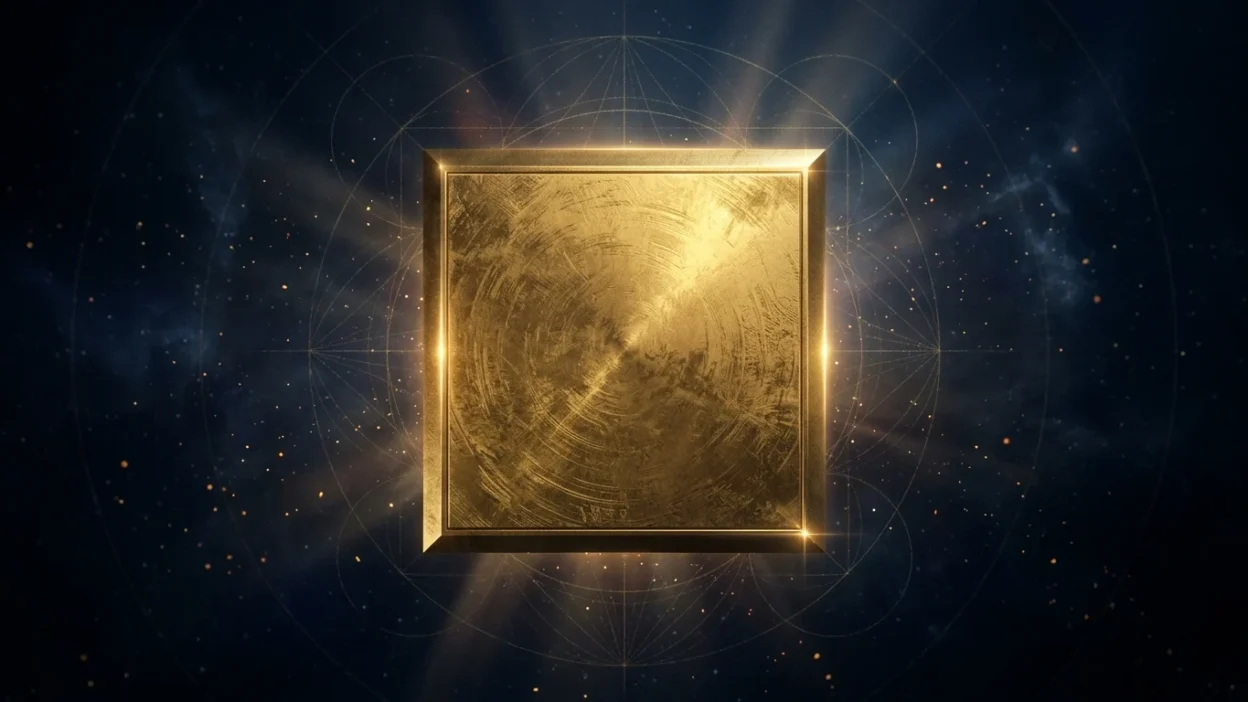
Square symbolism is commonly associated with stability, balance, order, security, and a strong foundation. With four equal sides and four right angles, the square represents structure, reliability, and the idea of having a firm place in the world. Depending on its context, it may also symbolize honesty, boundaries, practicality, and the relationship between the physical and spiritual worlds.
Squares appear in architecture, religious artwork, cultural patterns, mathematics, logos, and everyday objects. Their meanings can vary between traditions and individuals. A square building foundation may represent security, while a square pattern in artwork may communicate order or organization Understanding square symbolism means exploring these different interpretations without assuming that every culture or spiritual tradition assigns the shape the same meaning.
Square Symbolism Meaning (Clear Definition)
Square symbolism refers to the meanings people associate with the square shape, including stability, balance, order, protection, structure, and reliability.
A square has four equal sides and four right angles. Its regular shape creates a sense of symmetry and predictability, which helps explain why people often connect it with dependability and organization.
Common meanings of square symbolism include:
- Stability: Representing a firm foundation or something dependable.
- Balance: Suggesting symmetry, proportion, and an organized arrangement.
- Security: Symbolizing shelter, boundaries, and a sense of safety.
- Order: Representing rules, structure, and clear systems.
- Practicality: Reflecting realistic thinking and attention to everyday needs.
- Equality: Suggesting fairness or equal consideration, depending on the context.
- Grounding: Representing a connection with physical reality and everyday life.
- Boundaries: Showing where one space, responsibility, or idea ends and another begins.
These meanings are interpretations rather than universal rules. A square on a mathematical worksheet is simply a geometric shape, while a square used in a spiritual diagram may carry a more specific meaning.
What Does Square Symbolism Represent?
The square can represent several ideas because of its regular shape, firm edges, and equal sides.
1. Stability and Strong Foundations
One of the most familiar meanings of square symbolism is stability. Squares are often associated with structures that have clear boundaries and a dependable base.
In architecture, rectangular and square layouts can help organize rooms, buildings, and public spaces. This practical use has contributed to the square’s symbolic association with strength and reliability.
In personal life, a square might represent steady relationships, consistent habits, or the foundations needed to achieve a long-term goal.
For example, someone starting a business might use a square in a logo to communicate dependability and professionalism.
2. Balance and Equality
A square has four equal sides and four equal angles. Its regular structure can suggest fairness, balance, and equal treatment.
In symbolic artwork, the shape may represent a situation in which different elements receive equal consideration. It can also suggest a balanced arrangement of responsibilities, priorities, or resources.
However, a square does not automatically represent fairness. Its meaning depends on how it is used and what the surrounding imagery communicates.
3. Order and Organization
Squares are useful for arranging information because they create clear, consistent spaces.
Calendars, grids, floor plans, charts, and many digital interfaces rely on square or rectangular sections to organize content. These everyday uses make the square a natural visual association for structure and order.
Symbolically, a square may represent planning, discipline, routine, or a preference for clear systems.
4. Security and Protection
The square’s closed boundary can suggest an enclosed or defined space. In some settings, this may communicate security, privacy, or protection.
For example, a courtyard surrounded by buildings can feel sheltered, while a square frame can visually separate an important object from its surroundings.
In symbolic interpretation, the square may therefore represent a safe foundation or the boundaries that help a person feel secure.
5. Practicality and Reliability
Square shapes often appear in tools, furniture, buildings, containers, and other functional objects. Their association with practical design can contribute to a symbolic meaning of usefulness and reliability.
In personal symbolism, the square may represent a realistic approach to problems, careful planning, and a preference for solutions that work in everyday life.
This interpretation is particularly common in modern design discussions, although it is not a fixed meaning across all cultures.
6. Boundaries and Limitations
A square has clearly defined edges. These boundaries can represent healthy limits, personal space, or a structured environment.
However, boundaries can also feel restrictive. A square enclosure in an artwork might suggest confinement, rules, or a situation in which freedom is limited.
This dual meaning shows that the square can symbolize both security and restriction, depending on the context.
Spiritual Meaning of Square Symbolism
The spiritual meaning of square symbolism varies according to the belief system and the way the shape is used. Common interpretations include grounding, stability, balance, and the relationship between spiritual ideas and the physical world.
Squares appear in some sacred diagrams, religious buildings, and contemplative designs. Their significance should be understood within the relevant tradition rather than treated as a universal spiritual rule.
The Square as a Symbol of Grounding
In some modern spiritual interpretations, the square represents a connection with the physical world.
Its solid, regular shape may serve as a metaphor for staying grounded, maintaining routines, and paying attention to practical responsibilities.
For someone reflecting on personal growth, the square can be a reminder that meaningful goals often require patience, structure, and consistent effort.
Square Symbolism and Stability
The square’s regular geometry can suggest a steady foundation. Some people use it as a visual reminder to build their lives around reliable values, supportive relationships, and realistic plans.
This interpretation can be useful during periods of uncertainty because it encourages reflection on what feels dependable.
However, a square does not guarantee spiritual protection or a particular outcome. Its meaning comes from personal intention and the tradition in which it appears.
The Square and the Physical World
Some symbolic systems contrast the square with the circle. In certain interpretations, the circle represents eternity or the heavens, while the square represents the earth, material existence, or an organized physical space.
These associations appear in particular philosophical, religious, and artistic contexts, but they are not universal definitions.
When interpreting a square alongside a circle, it is important to consider the specific design and the beliefs associated with it.
The Square as a Symbol of Inner Balance
A square may also represent the effort to create balance between different areas of life.
For example, someone might use its four sides as a personal metaphor for health, relationships, work, and reflection. This is a modern interpretive framework rather than an established meaning shared by every spiritual tradition.
The shape can still be useful as a reminder to consider whether important responsibilities are receiving appropriate attention.
Biblical and Religious Meaning of Square Symbolism
The Bible does not provide one universal definition of the square as a symbolic shape. However, square and rectangular forms appear in biblical descriptions of sacred spaces and objects.
It is important to distinguish the descriptions found in religious texts from later symbolic interpretations.
The Square in Biblical Descriptions
In the Bible, certain sacred structures and objects are described using square dimensions.
For example, Revelation 21:16 describes the New Jerusalem as having equal length and width, with its length also equal to its height. This description presents the city as a cube, emphasizing its extraordinary geometric form.
Some Christian interpretations connect this ordered shape with completeness, perfection, or sacred harmony. These are interpretations of the imagery rather than a universal biblical definition of square symbolism.
The Square and Sacred Space
The Old Testament describes parts of the tabernacle and temple using specific measurements and carefully organized layouts.
Such descriptions show that geometry and spatial arrangement were important in the construction of sacred places. The precise meaning of each shape, however, must be understood within the relevant passage and historical context.
It would be inaccurate to claim that every square in the Bible represents the same spiritual concept.
Squares in Other Religious Traditions
Square forms appear in several religious and cultural settings, including temple layouts, sacred diagrams, and traditional architectural designs.
In some Hindu traditions, for example, square arrangements form part of yantras and architectural planning systems. Their meaning depends on the particular diagram, its proportions, and its role in the tradition.
In Buddhist art and architecture, squares may also appear within structured designs. Their significance varies according to the specific practice and visual context.
The square’s religious meaning is therefore best understood through the tradition in which it appears, not through a single explanation applied to every religion.
Square Symbolism in History and Culture
Squares have played important roles in construction, measurement, art, and cultural design throughout history. Their uses include practical functions as well as symbolic associations.
Squares in Ancient Architecture
Many ancient buildings used rectangular or square layouts because these shapes could help organize rooms, courtyards, walls, and other structural elements.
In some societies, the arrangement of buildings also reflected religious beliefs, political organization, or ideas about the relationship between humans and the cosmos.
However, not every square building had a spiritual purpose. Practical construction needs, available materials, and local traditions also influenced architectural design.
The Square in Traditional Patterns
Square patterns appear in textiles, ceramics, mosaics, decorative arts, and architecture around the world.
Depending on the tradition, these patterns may communicate identity, status, regional style, or specific cultural ideas. In other cases, squares simply provide an attractive and repeatable design.
Similar patterns can develop independently in different places, so a square motif should not automatically be assigned the same meaning across cultures.
Squares in Maps and Measurement
Squares have long been useful for dividing space into manageable sections.
Grids can help organize land surveys, maps, game boards, and mathematical diagrams. These practical applications contribute to the square’s association with planning, precision, and order.
The connection is based on the shape’s usefulness rather than a universal symbolic belief.
Square Symbolism in Modern Culture
Today, squares appear in business logos, packaging, digital icons, signs, and interior design.
A square logo may communicate reliability, organization, or professionalism. A square frame may emphasize a photograph or separate one section of a page from another.
In many modern settings, squares are chosen because they are simple, recognizable, and easy to arrange. Symbolic meaning may be one consideration among several.
Square Symbolism in Literature and Art
Writers and artists may use squares to explore ideas about order, control, safety, confinement, or the contrast between structure and freedom.
The meaning usually depends on the larger work rather than the shape alone.
The Square as a Symbol of Order
A square can represent a carefully organized world in which rules and boundaries are clearly defined.
In a story, a character who prefers predictable routines might be associated with square rooms, neat grids, or symmetrical objects. Such imagery can reinforce themes of discipline, responsibility, or the desire for control.
Squares and Confinement
A square enclosure may represent a limited space or a life shaped by strict expectations.
An artist might place a figure inside a rigid square frame to suggest isolation or restricted choices. In another work, the same frame might communicate safety and belonging.
The difference depends on the character’s experience and the surrounding visual details.
The Square and the Circle in Art
Artists sometimes contrast squares and circles to explore opposing ideas.
A square may suggest structure, order, or material stability, while a circle may suggest continuity, movement, or wholeness. These are common interpretive possibilities, not universal meanings.
When the shapes appear together, their relationship may be more important than either shape individually.
Squares in Modern Visual Design
Square compositions are common in photography, illustration, and digital media. Their balanced proportions can help create a focused, orderly appearance.
Designers may also use repeated squares to communicate rhythm, organization, or consistency. In some artworks, breaking the pattern can create tension or suggest a departure from established rules.
Square Symbolism in Dreams
Dreams involving squares may bring to mind order, boundaries, stability, or restrictions. However, there is no scientifically established universal meaning for a square in a dream, and dreams should not be treated as reliable predictions of future events.
Your own experiences and feelings are more useful starting points than a fixed dream dictionary.
Dreaming of a Perfect Square
A clear, complete square may remind you of stability, routine, or a desire for order.
You might consider whether you are working toward a dependable situation or trying to organize an area of your life that feels uncertain.
Dreaming of a Broken Square
A broken or incomplete square could reflect a plan that feels unfinished or a situation in which your usual sense of stability has changed.
It might relate to work, relationships, personal goals, or simply an image you encountered recently. It does not necessarily indicate that something negative will happen.
Dreaming of Being Inside a Square
Being inside a square may suggest a desire for security, clear boundaries, or a predictable environment.
If you felt trapped, the dream might bring to mind pressure, restrictions, or a lack of freedom. If you felt comfortable, it may reflect a sense of safety or belonging.
Dreaming of Repeating Squares
Repeated squares may draw attention to routines, patterns, or a strong preference for structure.
Think about whether your daily schedule is helping you feel organized or whether repetition has started to feel limiting. The dream’s emotional tone may offer more insight than the shape itself.
Positive Symbolism of the Square
The square is often associated with positive qualities because of its regular shape and practical uses.
Common positive interpretations include:
- Stability: Building a dependable foundation.
- Security: Creating a sense of safety and protection.
- Balance: Maintaining proportion among different priorities.
- Order: Organizing information, responsibilities, or plans.
- Reliability: Representing consistency and dependability.
- Grounding: Staying connected to practical needs and everyday reality.
- Equality: Suggesting equal sides or balanced consideration.
- Discipline: Following a clear plan or routine.
- Structure: Establishing boundaries that support progress.
For example, a square design on a business card may communicate professionalism and reliability. A square pattern in a home may create a feeling of order and visual consistency.
These positive meanings are symbolic interpretations, not guarantees that a square will bring security, success, or good fortune.
Negative or Hidden Symbolism of the Square
Although squares often suggest stability and order, they can also represent less comfortable experiences.
Rigidity and Resistance to Change
A highly structured square can symbolize strict rules or a preference for predictability.
In an artistic or personal context, it may suggest difficulty adapting when circumstances change. The same quality that creates stability can sometimes make a situation feel inflexible.
Restriction and Confinement
The square’s clear boundaries may represent limitations when a person feels unable to move beyond a particular situation.
A square room in a story might feel safe to one character but restrictive to another. Context determines whether the boundary is experienced as protective or confining.
Excessive Control
Squares and grids can represent systems that rely heavily on order and regulation.
In some artworks, repeated square patterns may suggest a world in which everything is controlled or expected to fit a rigid framework. This is an artistic interpretation, not an inherent negative meaning of the shape.
Emotional Distance
In certain modern interpretations, the square’s straight edges and regular structure may suggest formality or emotional restraint.
For example, a visual design made entirely of rigid grids may feel less playful than one with flowing, irregular forms. Such impressions depend on the composition and the viewer’s associations.
Common Interpretations of Square Symbolism
A square’s meaning can change according to its setting, appearance, and relationship with other symbols.
| Square image or context | Possible symbolic meaning |
| A perfect square | Balance, order, or stability |
| A square foundation | Security, support, or reliability |
| A square boundary | Protection, privacy, or restriction |
| A square grid | Organization, planning, or structure |
| A broken square | Change, disruption, or something unfinished |
| A square inside a circle | A relationship between structure and wholeness in some interpretations |
| A square building | Practicality, stability, or functional design |
| A square in religious art | A meaning specific to the tradition or artwork |
| Repeating squares | Routine, consistency, or rigid systems |
| A square in a dream | Personal associations with order, security, or boundaries |
These interpretations are general possibilities rather than universal definitions. A square may have a specific meaning in a religious tradition, artwork, organization, or personal experience.
Why Does Square Symbolism Matter Today?
Square symbolism remains relevant because squares are both practical shapes and recognizable visual forms. They help organize physical spaces and digital information while also communicating ideas about stability and order.
Personal Identity and Self-Expression
People may choose square designs in tattoos, jewelry, artwork, or personal logos to represent reliability, balance, or a strong foundation.
For someone rebuilding their life after a difficult period, a square might serve as a reminder to establish healthy routines and dependable relationships. The meaning comes from the person’s intention rather than a universal rule.
Branding and Communication
Businesses often use squares and rectangles in logos, packaging, and websites.
A square design may communicate structure, professionalism, or consistency. It can also create a convenient frame for text and images.
Not every square logo carries a hidden message. Sometimes the shape is simply a practical design choice.
Architecture and Interior Design
Square layouts can help organize rooms, furniture, and public spaces.
Their regular geometry can make it easier to arrange objects and create visual order. In some settings, square patterns also contribute to a feeling of stability or formality.
Digital Life and Technology
Squares are common in app icons, image formats, buttons, grids, and user interfaces.
Their familiar shape makes information easier to organize and recognize. This everyday role reinforces the square’s association with structure, although practical function is often the main reason designers use it.
Personal Growth and Everyday Balance
The square can serve as a simple metaphor for building a stable life.
You might use its four sides to reflect on health, relationships, work, and personal development. This is a personal framework rather than a traditional meaning, but it can help organize priorities and identify areas that need attention.
FAQs:
1. What does a square symbolize spiritually?
A square may symbolize stability, grounding, balance, structure, and connection with the physical world. Its meaning depends on the spiritual tradition or personal interpretation involved.
2. What does a square represent in the Bible?
The Bible includes descriptions of square and rectangular sacred structures and objects. Revelation 21:16 describes the New Jerusalem as a cube. Some Christian interpretations associate this ordered geometry with completeness or sacred harmony, but the Bible does not establish one universal meaning for every square.
3. Why does a square symbolize stability?
A square has equal sides and right angles, giving it a regular, orderly appearance. Squares and rectangles are also widely used in construction and design, helping create an association with structure, reliability, and strong foundations.
4. What does a square symbolize in dreams?
A square in a dream may bring to mind security, routines, boundaries, or restrictions. Its meaning depends on your emotions and experiences, and there is no scientifically established universal interpretation.
5. What is the difference between square and circle symbolism?
Square symbolism is commonly associated with stability, structure, boundaries, and order. Circle symbolism often relates to wholeness, unity, continuity, and cycles. These are common interpretations, not universal rules.
6. Does a square symbolize protection?
A square may represent protection because its closed boundary can suggest an enclosed or defined space. In some contexts, it may communicate safety, while in others it may suggest restriction.
7. What does a square with four equal sides represent?
A square with four equal sides can symbolize balance, equality, order, or stability in certain interpretations. In mathematics, however, it is simply a quadrilateral with four equal sides and four right angles.
8. Is square symbolism positive or negative?
Square symbolism can be positive or negative depending on the context. It may represent security, reliability, and organization, but it can also suggest rigidity, confinement, or excessive control.
Conclusion
Square symbolism is commonly associated with stability, balance, order, protection, and strong foundations. Its regular shape makes it useful in architecture, mathematics, design, and everyday organization, while its symbolic meanings appear in some spiritual, religious, artistic, and cultural contexts.
The square can suggest security and reliability, but it may also represent boundaries or restrictions. Understanding its meaning requires looking at the setting, cultural tradition, and intention behind its use. Whether it appears in a building, a piece of art, a dream, or a logo, the square offers a simple way to explore the relationship between structure, balance, and everyday life.

Henry Jack is a passionate writer at SymbolTrue, dedicated to exploring the meanings, history, and cultural significance of symbols. He creates clear, engaging, and well-researched content that helps readers understand symbols from around the world.