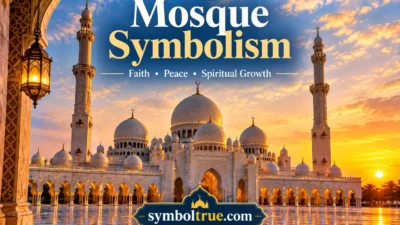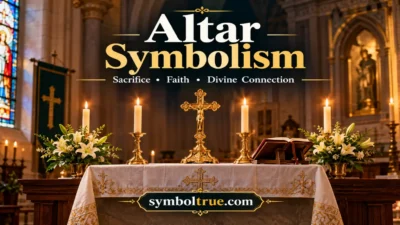

Temples have been symbols of sacred space, spiritual connection, protection, wisdom, and inner peace for thousands of years. Across different religions and cultures, a temple often represents a place where people step away from ordinary life and connect with something greater.
The meaning of temple symbolism can vary depending on the religion, culture, architecture, and personal experience involved. A temple may symbolize devotion, divine presence, enlightenment, community, or the journey toward understanding oneself.
Temple Symbolism Meaning (Clear Definition)
Temple symbolism refers to the meanings associated with temples, their architecture, sacred objects, spaces, rituals, and spiritual purposes.
At its simplest, a temple represents a sacred meeting place between the human and the divine. It can symbolize both an external place of worship and an internal spiritual sanctuary.
Temples often communicate meaning through their design. Doors, towers, domes, columns, statues, gardens, altars, light, water, and pathways may all carry symbolic importance.
Common meanings associated with temples include:
| Temple Symbolism | Common Meaning |
|---|---|
| Sacred space | Connection with the divine |
| Temple entrance | Beginning of a spiritual journey |
| Tower or spire | Reaching toward heaven or higher consciousness |
| Inner sanctuary | Inner self and spiritual awareness |
| Light | Wisdom, truth, and divine presence |
| Water | Purification and renewal |
| Temple path | Personal or spiritual journey |
| Bells or sacred sounds | Awakening and attention |
| Temple garden | Peace, balance, and harmony |
Because temples appear in many traditions, there is no single meaning that applies to every temple.
What Does Temple Symbolism Represent?
Temple symbolism can represent several powerful ideas at once. The specific meaning depends on cultural and religious context, but several themes appear repeatedly.
Divine connection: A temple can represent a place where people seek closeness to God, gods, ancestors, or a higher spiritual reality.
Peace and refuge: Temples often provide a quiet environment away from everyday distractions. This makes them symbols of calmness, reflection, and emotional restoration.
Wisdom and learning: Many temples have historically been associated with religious teachings, philosophical discussions, meditation, and the preservation of traditions.
Transformation: Entering a sacred building can symbolize leaving ordinary concerns behind and beginning a more meaningful inner journey.
Community: A temple is not always only a private spiritual space. It can bring people together through worship, festivals, ceremonies, celebrations, and shared traditions.
Protection: Sacred buildings can symbolize spiritual protection, guidance, and a safe place for people seeking comfort.
The temple therefore represents more than a physical structure. It can become a symbol of the human desire to find meaning, belonging, and connection.
Spiritual Meaning of Temple Symbolism
The spiritual meaning of a temple is closely connected with the idea of creating space for the sacred.
A temple may represent the inner sanctuary of the human spirit. In this interpretation, the physical building becomes a reminder that people also need an inner place for silence, reflection, prayer, and self-understanding.
Temple symbolism can also represent spiritual growth. A person entering a temple may symbolically move from distraction toward awareness, from uncertainty toward understanding, or from ordinary concerns toward deeper reflection.
The upward design of some temples, towers, and sacred structures can symbolize spiritual elevation. Moving upward may represent the desire to rise above fear, ignorance, selfishness, or worldly distractions.
Light is another important spiritual symbol. Sunlight entering a sacred space can represent truth, hope, divine wisdom, and awakening.
Water may symbolize cleansing and renewal. In traditions where water is used for ritual purification, it can represent preparation before entering a sacred experience.
Overall, temples can remind people that spirituality is not only about external worship. It can also involve developing peace, awareness, compassion, and wisdom within oneself.
Biblical / Religious Meaning of Temple Symbolism
The temple has deep religious significance in several traditions, including Judaism, Christianity, Hinduism, Buddhism, Jainism, and other religious cultures.
In the Hebrew Bible, the Temple in Jerusalem held a central place in Israelite worship. It was associated with God’s presence, sacrifice, prayer, and the sacred relationship between God and the people.
In Christianity, the idea of a temple also developed beyond a physical building. The New Testament uses temple imagery in describing the human body and the community of believers as places associated with God’s presence. This gives temple symbolism an important inner and communal dimension.
In Hindu traditions, temples are often understood as sacred spaces connected with particular deities. Temple architecture can symbolize the relationship between the earthly and cosmic worlds. The central sacred area, often containing the deity’s image, is treated as especially significant.
In Buddhism, temples and related sacred structures may represent places for meditation, teaching, devotion, and the pursuit of awakening. Their imagery can communicate Buddhist teachings about wisdom, compassion, impermanence, and liberation.
In other religious traditions, sacred buildings similarly create a physical setting for prayer, ritual, contemplation, and community.
Because religious meanings differ, it is important to understand temple symbolism within the specific tradition rather than assuming that every temple has the same meaning.
Temple Symbolism in History and Culture
Temples have played important roles in human history for thousands of years.
Ancient civilizations built temples not only as places of worship but also as important cultural and social centers. Temples could be connected with festivals, offerings, religious leadership, education, art, astronomy, architecture, and community life.
Ancient Egyptian temples, for example, were closely connected with religious beliefs about gods, kingship, cosmic order, and sacred rituals.
Greek and Roman temples were associated with particular deities and often used carefully planned architecture to communicate religious and cultural ideals.
Across South Asia, temple architecture developed into highly detailed traditions involving sculpture, sacred geometry, symbolic layouts, and elaborate entrances and towers.
In East Asia, Buddhist and other religious traditions produced distinctive temple complexes that incorporated buildings, courtyards, gardens, gates, statues, and natural landscapes.
These differences show why sacred architecture symbolism is so rich. A temple can preserve the beliefs and values of an entire culture through stone, wood, sculpture, space, and ritual.
Temples can also represent continuity. Even when societies change, historic temples may preserve stories, artistic traditions, religious practices, and collective memories.
Temple Symbolism in Literature and Art
Temples frequently appear in literature, painting, sculpture, film, and other forms of art.
In stories, a temple may represent mystery, wisdom, discovery, or transformation. A character entering a temple may be entering a place where important knowledge or spiritual change occurs.
Artists may use temple architecture to create a sense of peace, age, mystery, grandeur, or sacredness.
A temple surrounded by mountains may symbolize a search for higher understanding. A temple illuminated by sunlight may suggest hope or divine wisdom. An abandoned temple may symbolize lost traditions, forgotten memories, or the passage of time.
The temple can also become a metaphor for the human mind. A quiet inner sanctuary may represent a person’s deepest thoughts, values, memories, or spiritual beliefs.
This makes temple imagery powerful because it can communicate both physical and emotional journeys.
Dream Meaning of Temple Symbolism
Dreaming about a temple can have different meanings depending on the dreamer’s emotions, experiences, beliefs, and circumstances.
A beautiful or peaceful temple may symbolize inner calm, spiritual curiosity, hope, or a desire for guidance.
Entering a temple may represent beginning a period of self-reflection or searching for answers.
Praying inside a temple can symbolize a desire for support, forgiveness, direction, or emotional comfort.
Climbing temple steps may represent personal growth, perseverance, or the effort to reach a higher level of understanding.
Seeing an abandoned temple may suggest forgotten values, memories, traditions, or parts of oneself that have been neglected.
A damaged temple may symbolize uncertainty about beliefs, loss, change, or emotional disruption.
Dream symbolism is personal rather than universal. The strongest interpretation usually comes from considering what the temple looked like, how you felt in the dream, and what is happening in your waking life.
Modern Meaning of Temple Symbolism
Today, temple symbolism continues to have meaning even outside formal religious settings.
Modern people may see a temple as a symbol of peace, mindfulness, reflection, heritage, identity, and spiritual balance.
The idea of a temple can also be used metaphorically. Someone may describe the body as a temple to express the importance of caring for physical and mental well-being.
A personal room, meditation space, garden, or quiet place can also function as a symbolic temple when it provides an environment for reflection and renewal.
Modern temple symbolism therefore connects ancient ideas with contemporary life. It reminds people that even in a busy world, there is value in creating moments of silence and intentional reflection.
Key Symbolic Meanings of Temples
- Spirituality — connection with sacred beliefs
- Peace — refuge from noise and distraction
- Wisdom — learning and deeper understanding
- Protection — safety and spiritual guidance
- Transformation — personal and spiritual growth
- Community — shared faith and cultural identity
- Purification — renewal and preparation
- Enlightenment — movement toward greater awareness
- Sacredness — recognition of something greater than ordinary life
- Inner sanctuary — the peaceful and reflective part of oneself
FAQs:
What does a temple symbolize?
A temple commonly symbolizes sacredness, spiritual connection, peace, wisdom, protection, and personal transformation. Its specific meaning depends on the religious and cultural tradition.
What is the spiritual meaning of a temple?
Spiritually, a temple can represent a meeting place between the human and the divine. It may also symbolize the inner sanctuary where a person finds reflection, prayer, peace, and wisdom.
What does a temple symbolize in a dream?
A temple in a dream may symbolize spiritual searching, guidance, peace, personal growth, or a desire for deeper understanding. The dreamer’s feelings and circumstances are important for interpreting it.
What does temple architecture symbolize?
Temple architecture can symbolize sacred order, connection between earth and heaven, spiritual progression, divine presence, and cultural beliefs. Specific architectural elements have different meanings across traditions.
Why are temples considered sacred?
Temples are considered sacred because they are traditionally dedicated to worship, ritual, prayer, meditation, or connection with divine or spiritual realities. They can also serve as important centers of community and cultural identity.
Conclusion
Temple symbolism ultimately points toward the human search for meaning, connection, peace, and spiritual understanding. Whether viewed as a religious building, cultural landmark, artistic image, or metaphor for the inner self, the temple represents a space where ordinary life meets something deeper.
Its most enduring message is simple: sometimes we need to step away from the noise of the world to reconnect with what matters most.

Ryan Thomas is a passionate writer at SymbolTrue, dedicated to exploring the meanings, history, and cultural significance of symbols worldwide. He creates engaging, well-researched content that helps readers discover the stories and symbolism behind everyday signs, icons, and traditions.